
Aquatic Plant
Bacopa Amplexicaulis
Bacopa amplexicaulisPlantaginaceaeStem plants
Price: $6.99 USD
Add from My tanks →1 photos
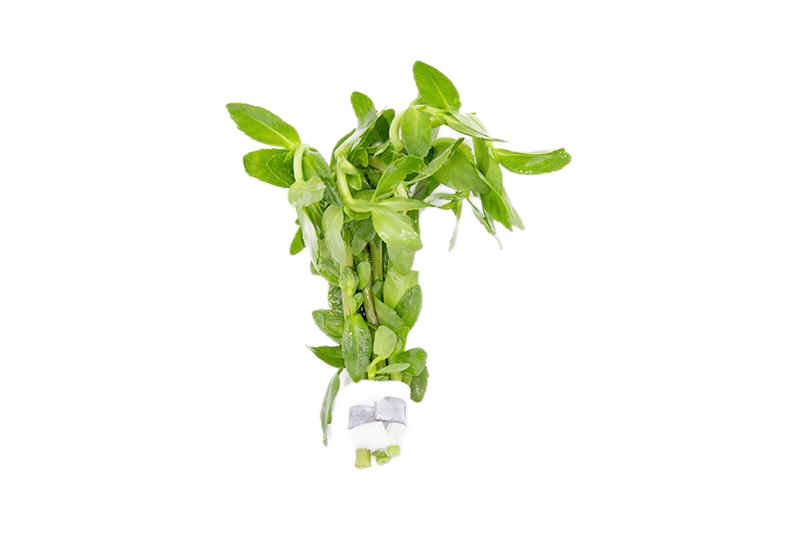
Bacopa amplexicaulis, known as Lemon Bacopa, is a hardy aquatic stem plant from the Southeastern United States that releases a pleasant citrus aroma when its thick, fleshy oval leaves are crushed or pruned. Beginner-friendly and low-tech compatible, its lime-green foliage blushes bronze, copper, and pink under high light or low phosphate levels.
Quick facts
Identity
- Also known as
- Blue Waterhyssop; Mint Bacopa; Lemon Bacopa
- Synonyms
- Bacopa caroliniana (often treated as synonym in trade); Herpestes amplexicaulis; Obolaria caroliniana; Herpestes caroliniana
- Environment
- Freshwater
- Native to
- Southeastern United States (Florida, Texas, Louisiana, Mississippi, Alabama, Georgia, South Carolina, North Carolina)
- Habitat
- Shorelines, marshes, ponds, and slow-moving streams, growing both emersed along wet margins and fully submersed in shallow water
- Sourcing
- Aquacultured
- Conservation
- Not Evaluated
Care
- Care level
- Easy
- Growth form
- Stem
- Max height
- 4 – 16 in (10 – 41 cm)
- Spread
- 4 in (10 cm)
- Growth rate
- Moderate
- Placement
- Midground, Background
Water
- Temperature
- 68 – 82 °F (20 – 28 °C)
- pH
- 6.0 – 7.5
- GH
- 3 – 12 dGH
- Flow
- Low-Moderate
- Light
- Medium
- CO₂
- Beneficial
Planting
- Substrate
- Nutrient-rich preferred
- Feeds from
- Both
- Fertilizer needs
- Medium
- Colors
- Green, Pink, Orange
Feeding & breeding
- Propagation
- Cuttings, Runners
Something wrong or missing? Submit a correction
Care guide
Overview
Suited to low-tech and long-term aquascapes alike, this stem plant carries thick, fleshy oval leaves that smell of citrus when crushed. Growth is moderate rather than fast, so trimming demands stay low, and foliage shifts from lime-green toward bronze, copper, or pink depending on light and nutrient levels. A nutrient-rich substrate with liquid fertilization keeps leaves full and well-colored.
Care
Lemon bacopa is a sturdy stem plant with thick, fleshy oval leaves that release a citrus-like scent when bruised or trimmed. It tolerates a wide range of water conditions and lighting levels, though brighter light produces denser, more compact growth and richer leaf color. Because it grows relatively slowly for a stem plant, it does not require constant trimming and suits long-term aquascapes as well as low-tech setups.
Planting & trimming
Plant stem cuttings directly into the substrate with aquascaping tweezers, burying the lower nodes so roots can establish while keeping several sets of leaves above the substrate line. Space stems in small groups for a fuller look in the midground or background, and trim from the top or lateral shoots once stems approach the surface to encourage bushier regrowth. Trimmed portions root readily and can be replanted to expand the colony.
Fertilizing
Growth improves with a nutrient-rich substrate combined with regular liquid fertilization, since the plant feeds through both roots and leaves. Low nitrogen levels tend to bring out a bronze cast in the foliage, while low phosphate encourages pink to reddish tones, so these color shifts can be read as informal nutrient indicators. Without supplemental iron and micronutrients, new growth may appear pale or yellowed.
Propagation
Propagation is straightforward by cutting healthy stem tops and replanting them in substrate, where they root within one to two weeks. The plant also produces runners from the base of established stems that can be separated and replanted as new specimens. Because growth is comparatively slow, propagation is less frequent than with fast-growing stem plants but still reliable.
Problems
Insufficient light causes stems to stretch and become leggy with sparse leaves, so trimming tops and replanting cuttings helps maintain a fuller form. Nutrient deficiencies show up as pale, yellowing, or undersized leaves and are corrected with a balanced liquid fertilizer. Algae can settle on the thicker, slower-growing leaves if lighting duration is excessive, so pairing the plant with grazers or adjusting the photoperiod helps keep foliage clean.
Sources
More Stem plants
Something wrong or missing? Submit a correction
In the community
Popular tanks using Bacopa Amplexicaulis
No public tanks are showcasing Bacopa Amplexicaulis yet.