
Aquatic Plant
Aponogeton Natans
Aponogeton natansAponogetonaceaeAponogetons
Price: $5.99 USD
Add from My tanks →1 photos
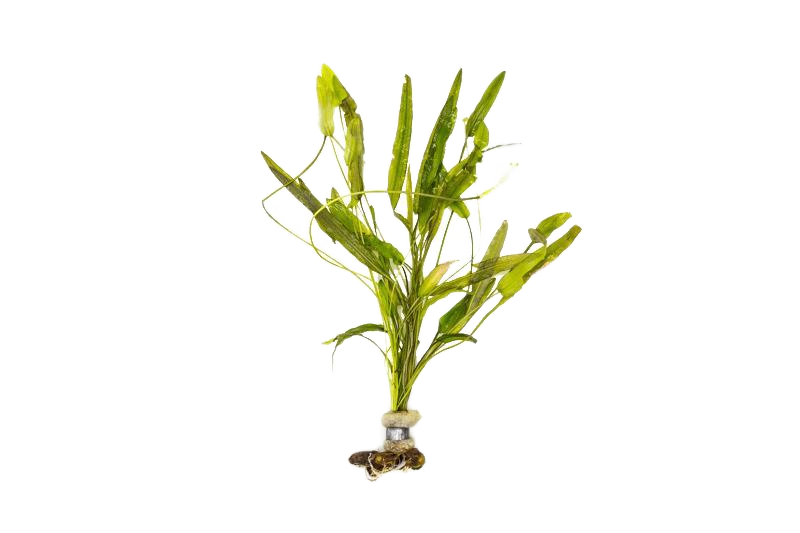
Aponogeton natans is an easy aquatic bulb plant from India and Sri Lanka with long, wavy green leaves, growing large enough to serve as a background focal point. Plant half the bulb into the substrate to avoid rot; it needs moderate to high light, flowers frequently with good care, and grows at a medium rate.
Quick facts
Identity
- Also known as
- Floating Cape Lily
- Synonyms
- Antholyza natans
- Environment
- Freshwater
- Native to
- India, Sri Lanka, Bangladesh
- Habitat
- Seasonal ponds, swamps, and slow-moving rivers and streams across the Indian subcontinent, subject to monsoon-driven wet and dry cycles
- Sourcing
- Aquacultured
- Conservation
- Not Evaluated
Care
- Care level
- Easy
- Growth form
- Bulb
- Max height
- 6 – 20 in (15 – 51 cm)
- Spread
- 16 in (41 cm)
- Growth rate
- Fast
- Placement
- Midground, Background
Water
- Temperature
- 68 – 82 °F (20 – 28 °C)
- pH
- 6.0 – 7.5
- GH
- 2 – 12 dGH
- dKH
- 2 – 12 dKH
- Flow
- Low-Moderate
- Light
- Medium
- CO₂
- Beneficial
Planting
- Substrate
- Nutrient-rich preferred
- Feeds from
- Roots
- Fertilizer needs
- High
- Colors
- Green
Feeding & breeding
- Propagation
- Seeds, Splitting
Something wrong or missing? Submit a correction
Care guide
Overview
Reaching up to 20 inches with wavy, strap-like submerged leaves and oval floaters once mature, this bulb plant builds a large background rosette over time. It draws nutrition mainly through its roots, so regular root tabs near the bulb matter more than water-column dosing. Periodic dormancy is normal; leave the bulb undisturbed and new growth resumes after a rest.
Care
A bulb plant that grows a rosette of wavy, strap-like submerged leaves and, once mature or in shallower water, oval leaves that reach and float on the surface. It tolerates a wide pH and hardness range and does not need CO2, though supplementation produces denser, more compact submerged foliage. Provide medium to fairly strong light and expect the plant to periodically go dormant, dying back to the bulb before resprouting after a rest period.
Planting & trimming
Set the bulb on top of the substrate or bury only its lower half, with the crown left exposed, since fully burying it invites rot. Give it plenty of open space in the midground to background, as its floating leaves spread wide and can shade out plants growing beneath it. Trim old or melting leaves at the base as needed to keep the plant tidy and redirect energy to new growth.
Fertilizing
This is a heavy root feeder that draws most of its nutrition through the bulb and root system rather than the water column. Push root tabs rich in iron and potassium into the substrate near the bulb every few weeks, and supplement with a liquid all-in-one fertilizer for the leaves. Pale or yellowing new growth, holes in leaves, or stunted petioles usually point to a nutrient shortfall rather than disease.
Propagation
In aquariums Aponogeton natans occasionally sends up a flower stalk above the waterline; hand-pollinating the flowers with a soft brush can yield seed pods that are collected once mature and sown in moist substrate. Mature bulbs also sometimes produce small offset bulbs that can be separated and replanted. Growth from seed is slow, so most hobbyists simply propagate by sharing offset bulbs.
Problems
Expect an adjustment period after planting during which some outer leaves melt or yellow while the plant converts from emersed nursery growth to submerged form. The bulb can enter dormancy and drop all its leaves; leave it in place undisturbed (or store it cool and moist in sand) and new shoots will emerge after a few weeks to months. Algae on the leaves is usually a sign of excess light or weak flow rather than a problem with the plant itself.
Sources
More Aponogetons
Something wrong or missing? Submit a correction
In the community
Popular tanks using Aponogeton Natans
No public tanks are showcasing Aponogeton Natans yet.