
Aquatic Plant
Aponogeton Crispus
Aponogeton crispusAponogetonaceaeAponogetons
Price: $8.99 USD
Add from My tanks →1 photos
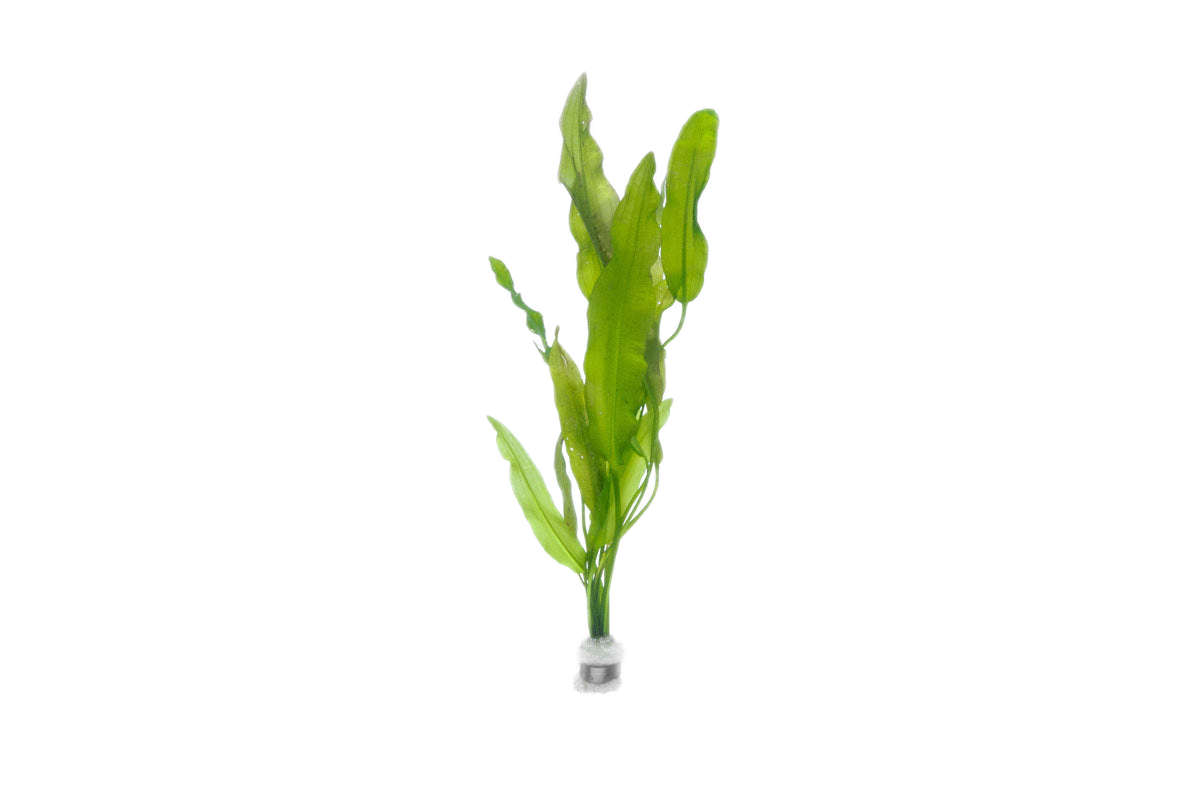
Aponogeton Crispus is a beautiful Sri Lankan aquarium plant with slightly transparent, light green, large leaves, growing 12 to 24 inches tall. Fairly undemanding, it prefers soft, slightly acidic water with a nutrient-dense bottom and makes an excellent background choice for larger planted tanks.
Quick facts
Identity
- Also known as
- Ruffled Sword Plant; Crisp Aponogeton; Wavy-leaved Aponogeton
- Synonyms
- Aponogeton undulatus
- Environment
- Freshwater
- Native to
- Sri Lanka, Southern India
- Habitat
- Submersed in streams, ponds, and seasonal pools that dry down part of the year, favoring soft, nutrient-rich water
- Sourcing
- Aquacultured
- Conservation
- Not Evaluated
Care
- Care level
- Easy
- Growth form
- Rosette
- Max height
- 8 – 20 in (20 – 51 cm)
- Spread
- 12 in (30 cm)
- Growth rate
- Fast
- Placement
- Midground, Background
Water
- Temperature
- 72 – 82 °F (22 – 28 °C)
- pH
- 5.5 – 7.5
- GH
- 2 – 12 dGH
- Flow
- Low-Moderate
- Light
- Medium
- CO₂
- Beneficial
Planting
- Substrate
- Nutrient-rich preferred
- Feeds from
- Roots
- Fertilizer needs
- Medium
- Colors
- Green, Brown
Feeding & breeding
- Propagation
- Seeds, Rhizome division
Something wrong or missing? Submit a correction
Care guide
Overview
Unfurls long, wavy-margined leaves from a central rosette, quickly filling the upper background of a tank within weeks of planting. Leaves show a light, slightly translucent green and tolerate low to medium light, though color and vigor pick up under stronger lamps and root tabs. Periodic dormancy after flowering is normal; the tuber regrows once conditions settle.
Care
A hardy rosette plant grown from a bulb-like tuber, it produces long, wavy-edged leaves that reach the middle to back of the tank within weeks of planting. It tolerates a broad temperature range and adapts to low or medium light, though growth and leaf color improve under stronger lighting. Expect an occasional dormancy where the plant sheds its leaves after flowering; leave the tuber in the substrate and new growth typically resumes within a few weeks to a couple months.
Planting & trimming
Set the tuber on top of the substrate or bury it only partway with the growing tip exposed, since fully burying it invites rot. Once roots take hold the plant anchors itself, after which surrounding substrate can be built up slightly around the base. Give it generous spacing, as mature leaves spread wide and can shade out smaller foreground plants.
Fertilizing
The tuber carries enough stored energy to fuel the first few months of growth, but ongoing vigor depends on a nutrient-rich substrate and regular root tabs, since this species feeds primarily through its roots. A weekly liquid fertilizer with iron helps offset any gaps in the substrate, and pale or yellowing new leaves usually signal a need for more iron or a richer root zone. In fish-stocked tanks, waste and mulm buildup in the substrate often supplies enough nitrogen on its own.
Propagation
New plants form from seed after hand-pollinating the emergent flower spike, with seedlings taking several weeks to germinate before being potted. Mature tubers sometimes produce small offset bulbs that can be separated and replanted once they develop their own roots. Careful splitting of the rhizome is also possible, though it is used less often than seed propagation or offset removal.
Problems
Leaf loss shortly after planting is a normal adjustment as the plant converts from emersed nursery growth to submersed leaves, not a sign of disease. Algae film on older leaves is common and usually traces back to excess light relative to available nutrients or weak flow rather than a fault of the plant itself. A gradual yellowing and dying back of leaves signals the onset of natural dormancy rather than a health problem.
Sources
More Aponogetons
Something wrong or missing? Submit a correction
In the community
Popular tanks using Aponogeton Crispus
No public tanks are showcasing Aponogeton Crispus yet.