
Aquatic Plant
Aponogeton Madagascariensis / Madagascar Lace Bulb
Aponogeton madagascariensisAponogetonaceaeAponogetons
Price: $12.99 USD
Add from My tanks →1 photos
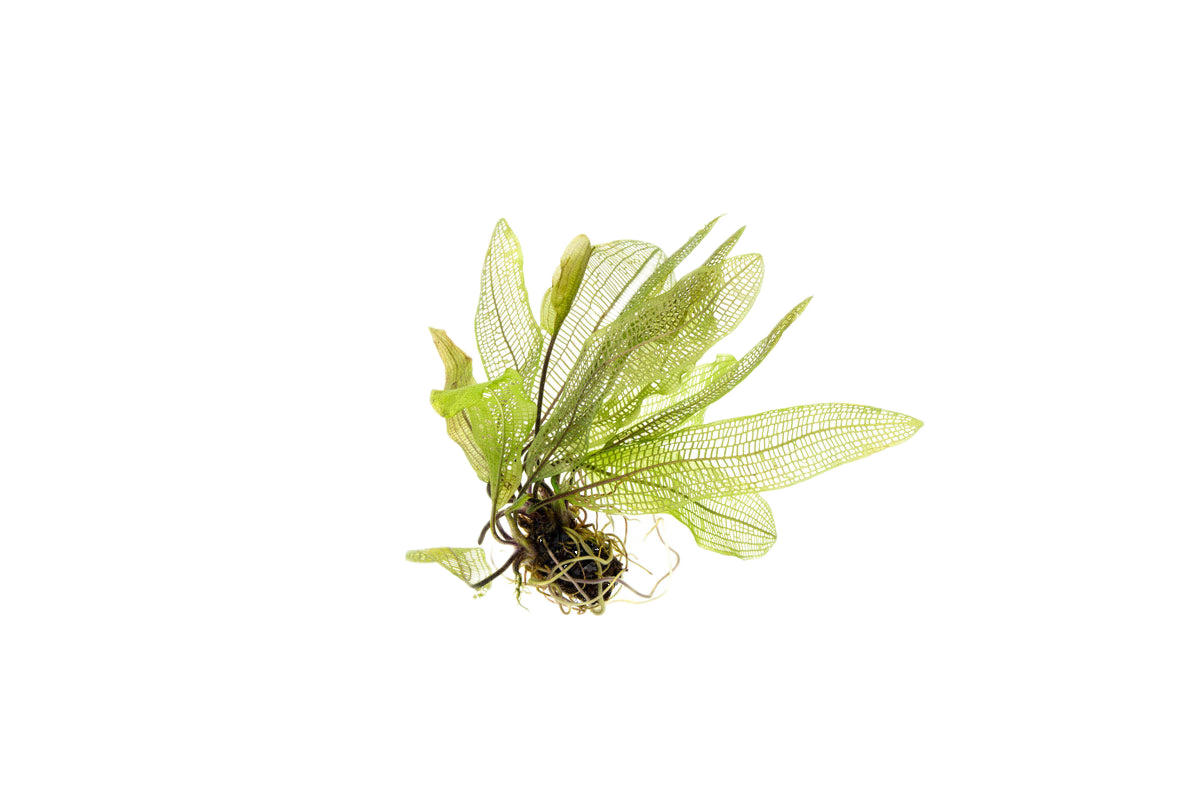
Aponogeton madagascariensis (Madagascar Lace) is a unique aquarium plant named for its skeletonized, lace-like leaves; with proper care it grows large quickly and flowers frequently. It is moderately demanding, needing quality lighting, nutrient-dense soil, good water flow, and regular trimming, with only half the bulb buried to prevent rot.
Quick facts
Identity
- Also known as
- Lattice Leaf Plant; Lace Leaf Plant; Madagascar Lattice Plant
- Synonyms
- Ouvirandra fenestralis
- Environment
- Freshwater
- Native to
- Madagascar
- Habitat
- Slow to moderately fast-flowing rivers and clear, soft streams in Madagascar, sometimes in shaded areas beneath overhanging vegetation.
- Sourcing
- Both
- Conservation
- Not Evaluated
Care
- Care level
- Difficult
- Growth form
- Rosette
- Max height
- 8 – 24 in (20 – 61 cm)
- Spread
- 16 in (41 cm)
- Growth rate
- Moderate
- Placement
- Midground, Background
Water
- Temperature
- 64 – 75 °F (18 – 24 °C)
- pH
- 5.5 – 7.0
- GH
- 2 – 8 dGH
- Flow
- Moderate
- Light
- Medium
- CO₂
- Beneficial
Planting
- Substrate
- Nutrient-rich preferred
- Feeds from
- Roots
- Fertilizer needs
- Medium
- Colors
- Green
Feeding & breeding
- Propagation
- Rhizome division, Seeds
Something wrong or missing? Submit a correction
Care guide
Overview
Madagascar Lace grows from a tuberous bulb into a rosette of fenestrated leaves whose tissue between the veins is naturally absent, leaving a skeletal, lattice pattern. It prefers cooler, soft, slightly acidic water with moderate flow and roots-based feeding, and periodically sheds leaves to rest. Best kept solitary as a specimen plant in medium to large tanks.
Care
This species is grown from a tuberous bulb and forms a rosette of long, fenestrated leaves in which the tissue between the veins is naturally absent, giving a lattice or skeleton appearance. It prefers cooler water than most tropical plants, generally staying healthiest between about 64 and 75°F, since warmer temperatures accelerate its metabolism beyond what the bulb can sustain and lead to rot. Soft, slightly acidic water, steady flow, and good filtration help keep the delicate leaves clean of algae and debris, and the plant may periodically shed its leaves and rest even when conditions are otherwise stable.
Planting & trimming
Plant the bulb at a slight angle with only the lower half to two-thirds buried in the substrate, leaving the crown exposed to prevent rot. Use a nutrient-rich substrate or add root tabs beneath the bulb, and provide moderate water flow to keep the leaves clean and well oxygenated. As the plant grows large, it works best as a solitary specimen with ample space in the midground to background of medium to large tanks.
Fertilizing
Root feeding matters more than water column dosing for this species, so tuck root tabs or nutrient-rich substrate beneath the bulb to support the extensive root system. Liquid fertilization with iron and trace elements benefits leaf development, and pale or thin new growth often signals a lack of nutrients at the roots. CO2 supplementation is not mandatory but tends to produce fuller, faster growth and larger leaves.
Propagation
Propagation is most commonly achieved from seed after hand-pollinating the emergent flower spike with a small brush, since the plant rarely self-pollinates reliably underwater. Some varieties with a more rhizomatous tuber can be divided by cutting the rhizome to produce additional plants, though this is slower and less common in the trade. Tissue culture has also been used commercially to produce more consistent, disease-free stock.
Problems
Bulb rot is the most common problem, usually caused by burying the bulb too deeply or keeping the tank too warm, so only the lower half to two-thirds of the bulb should sit in the substrate. The open lattice leaves have a large surface area relative to their tissue and easily trap algae or debris, so stable water quality and gentle cleaning are important. Periodic leaf loss and dormancy are natural rather than a sign of disease, and the bulb should not be discarded during these rest periods.
Sources
More Aponogetons
Something wrong or missing? Submit a correction
In the community
Popular tanks using Aponogeton Madagascariensis / Madagascar Lace Bulb
No public tanks are showcasing Aponogeton Madagascariensis / Madagascar Lace Bulb yet.