
Aquatic Plant
Ammania Senegalensis
Ammannia senegalensisLythraceaeStem plants
Price: $23.99 USD
Add from My tanks →1 photos
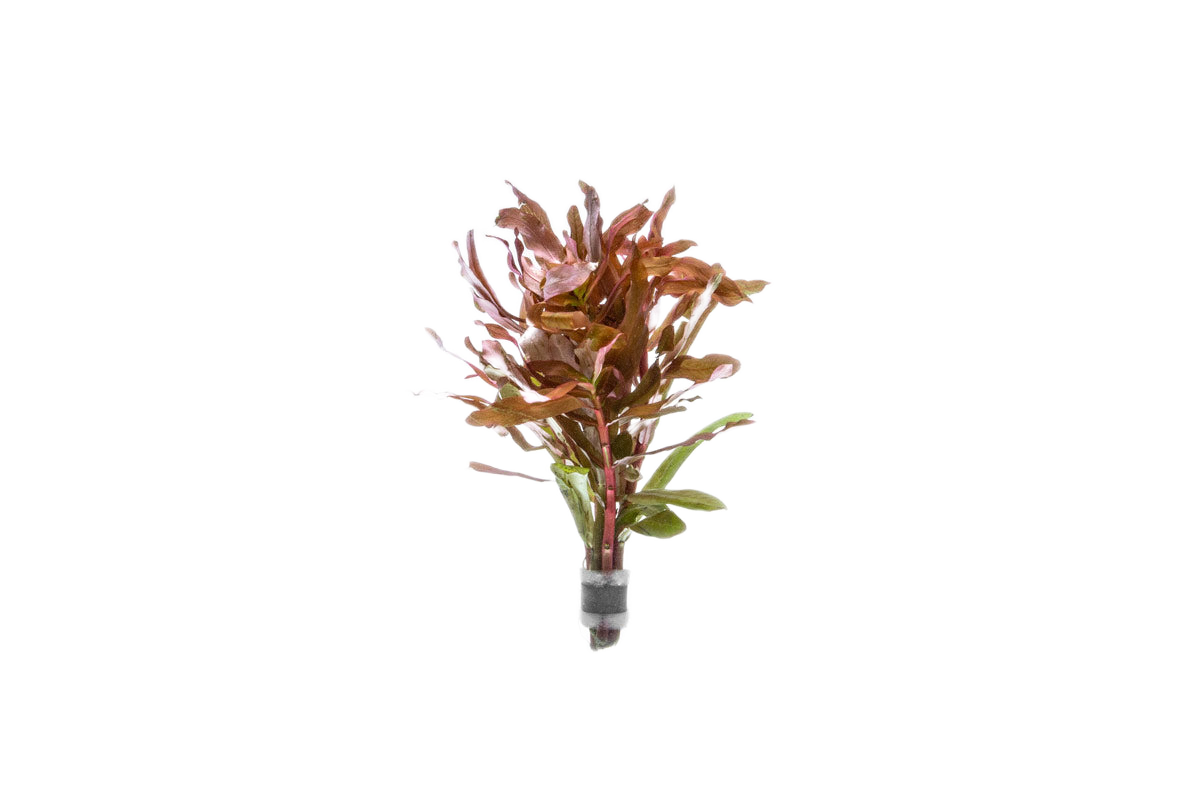
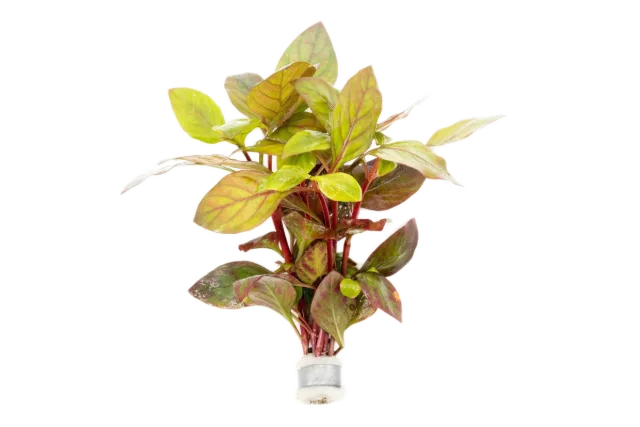
Ammania senegalensis (Copper Leaf Ammania) is an aquatic stem plant from Western and Central Africa whose wavy, oval leaves turn from olive-green, gold, and orange to deep copper-red under high light, reaching 3-5 inches or more. It is a difficult plant that benefits from moderate to high light with CO2 and iron dosing, and propagates from cuttings.
Quick facts
Identity
- Also known as
- Senegal ammannia; Copperleaf ammannia
- Environment
- Freshwater
- Native to
- Senegal, Western Africa, Central Africa
- Habitat
- Marshes, seasonally flooded rice paddies, and shallow floodplains in tropical and subtropical Africa, often growing emersed as water levels drop.
- Sourcing
- Aquacultured
- Conservation
- Not Evaluated
Care
- Care level
- Difficult
- Growth form
- Stem
- Max height
- 4 – 20 in (10 – 51 cm)
- Spread
- 8 in (20 cm)
- Growth rate
- Moderate
- Placement
- Midground, Background
Water
- Temperature
- 72 – 82 °F (22 – 28 °C)
- pH
- 5.5 – 7.5
- GH
- 2 – 12 dGH
- dKH
- 0 – 14 dKH
- PAR
- 40 – 80 PAR
- Flow
- Moderate
- Light
- High
- CO₂
- Required
Planting
- Substrate
- Nutrient-rich preferred
- Feeds from
- Both
- Fertilizer needs
- High
- Colors
- Green, Orange, Red, Brown
Feeding & breeding
- Propagation
- Cuttings
Something wrong or missing? Submit a correction
Care guide
Overview
Reaches 4 to 20 inches tall as a background or midground stem, spreading into upright clusters of wavy, oval leaves that shift from olive-green through gold and orange to deep copper-red under strong light. It demands pressurized CO2, steady iron dosing, and frequent trimming to stay dense rather than leggy. Best grouped for a curtain effect in nutrient-rich substrate.
Care
This stem plant needs strong, consistent lighting to hold its copper and red tones; under weaker light it reverts to plain green and stretches. Pressurized CO2 makes a substantial difference to both growth rate and coloration, and while it can survive without it, results are noticeably poorer. It rewards steady iron and potassium dosing, and regular trimming keeps the lower stems from thinning out and shading themselves.
Planting & trimming
Plant stems directly into the substrate with a few inches of space between them so light can reach the lower leaves, and place root tabs nearby to support establishment. It works best as a vertical accent or grouped background curtain, planted in clusters for visual impact. Trim the growing tips every one to four weeks depending on growth rate and replant the healthiest tops, discarding leggy lower sections.
Fertilizing
Root tabs pushed near the base help establish new plantings, but this species draws nutrients through both roots and leaves, so a complete liquid fertilizer routine matters as much as substrate feeding. Iron supplementation is particularly important for maintaining the copper-red leaf color, and a deficiency usually shows first as pale or yellowing new growth. Potassium and micronutrients should be dosed on a consistent schedule rather than sporadically, since inconsistent feeding leads to weak, leggy stems.
Propagation
Propagation is simple: cut a healthy top section a few inches long and push the stripped lower stem into the substrate, where it will root and produce new lateral growth. The parent stem left behind will typically branch below the cut, so a single plant can be multiplied repeatedly over time. Fresh cuttings root fastest when light and CO2 are stable rather than newly adjusted.
Problems
New stems commonly drop some lower leaves and pause growth for a few weeks after planting while adjusting from emersed nursery growth to fully submerged life, which is normal rather than a sign of disease. Algae readily colonizes older or slow-growing leaves when light is too strong relative to available nutrients and flow, so balancing these factors matters more than treating the algae itself. Any mushy or discolored leaves should be removed promptly to prevent fouling the water around the base of the stems.
Sources
More Stem plants
Something wrong or missing? Submit a correction
In the community
Popular tanks using Ammania Senegalensis
No public tanks are showcasing Ammania Senegalensis yet.