
Marine Invertebrates
Spider Decorator Crab
Camposcia retusaInachidaeDecorator crabs
Price: $21.15 USD
Add from My tanks →1 photos
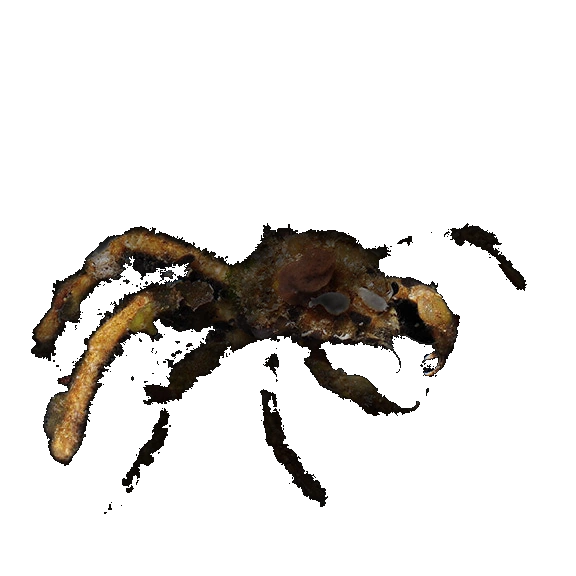
The Spider Decorator Crab (Camposcia retusa), also called the Camposcia Decorator Crab, decorates its brown body with sponges, shells, rocks, and other items as camouflage. It is nocturnal, hunting at night, and harvests algae, soft corals, and invertebrates to adorn its shell, which may harm some soft corals but also helps propagate them in large reef aquariums; feed meaty foods such as chopped fish and clams.
Quick facts
Identity
- Also known as
- Camposcia Decorator Crab
- Synonyms
- Camposcia hirsuta
- Environment
- Saltwater
- Native to
- Red Sea, East Africa, Indo-West Pacific, Japan, Australia
- Habitat
- Coral reefs, rubble fields, lagoons, and mangrove roots rich in algae and sponges, from shallow water to over 200 m depth.
- Sourcing
- Wild-caught
- Conservation
- Not Evaluated
Care
- Care level
- Easy
- Temperament
- Semi-Aggressive
- Adult size
- 1 – 4 in (2.5 – 10 cm)
- Lifespan
- 3 – 5 yrs
- Min tank
- 26 gal (98 L)
- Growth rate
- Slow
- Placement
- Bottom, Rock & glass
Water
- Temperature
- 72 – 78 °F (22 – 26 °C)
- pH
- 8.1 – 8.4
- dKH
- 8 – 12 dKH
- Salinity
- 1.023 – 1.025 SG
- Flow
- Low-Moderate
Behavior & compatibility
- Social
- Solitary
- Aggression to own kind
- Low
- Active
- Night
- Reef safe
- With caution
- Invert safe
- With caution
- Shrimp safe
- With caution
- Clean-up role
- Detritus, Leftover food, Algae
- Population boom risk
- Low
Feeding & breeding
- Diet
- Carnivore
- Foods
- Frozen, Live, Freeze-dried, Algae
- Breeding type
- Larval (brackish)
- Breeding difficulty
- Not bred in captivity
- Sexing
- Not typically distinguishable by hobbyists; males may have slightly larger claws, but sexing is not commercially relevant.
- Target feeding
- Beneficial
Something wrong or missing? Submit a correction
Care guide
Overview
Reaching roughly 1 to 4 inches across a spindly, tan-brown carapace, this crab builds a living camouflage coat from sponge bits, algae, and rubble picked off the rockwork. By day it sits motionless among live rock, emerging after lights-out to forage detritus and target-fed meaty scraps. A mature reef with ample debris and tight hiding spots suits it better than a bare or frag-heavy system.
Care
This spider crab spends most daylight hours motionless, tucked among rock and rubble, and becomes active only after the lights go down. It relies on loose material in the tank, such as macroalgae, sponge fragments, and coral rubble, to decorate its carapace and legs, so a mature reef with plenty of live rock and debris suits it far better than a bare tank. Stable calcium, magnesium, and iodine levels support successful molting, and a secure hiding spot is important while the new shell hardens. It does poorly with copper-based medications, so these should never be used in a tank housing this crab.
Feeding
Camposcia retusa is an opportunistic scavenger that will pick at leftover fish food and detritus, but a few weekly target feedings of chopped clam, shrimp, fish, or mysis keep it from turning to coral tissue or slow-moving invertebrates. Offering food directly after the lights go out matches its nocturnal foraging habit and reduces competition with diurnal tankmates. It also grazes algae and biofilm off rock and rubble surfaces during its nightly wanderings.
Tank mates
It generally ignores fish and larger invertebrates, making it compatible with most peaceful reef community members. The main caution concerns soft corals, zoanthids, and sponges, since it may snip off pieces of these to attach to its own body for camouflage, occasionally stripping small colonies. In frag-heavy or high-value coral tanks this habit can be a nuisance, though in larger display tanks with hardy soft corals the clipping can actually help spread coral fragments around the aquarium.
Breeding
Reproduction in home aquariums essentially does not happen, since the larvae pass through several planktonic zoeal stages that are almost always lost to filtration or predation. Research institutions have reared larvae under controlled conditions using live prey such as Artemia nauplii and copepods at specific salinities, but this is well beyond typical hobbyist capability. All specimens in the trade are wild-caught rather than captive-bred.
Health
Molting is the riskiest period in this crab's life in captivity, since it is vulnerable and defenseless until the new exoskeleton hardens, so rockwork with tight crevices for cover is important. Copper exposure, even at levels tolerated by fish, is lethal and must be avoided entirely. Sudden swings in salinity or pH during acclimation can also stress newly imported specimens, so slow drip acclimation is recommended.
Sources
- Decorator crab care: tank size, temperature and tankmates · TankBud
- Spider Decorator Crab (Camposcia Decorator Crab): Saltwater Aquarium Invertebrates – LiveAquaria
- CRAB - SPIDER DECORATOR Camposcia retusa - Aquatics Unlimited
- Development of captive rearing techniques for decorator crab, Camposcia retusa, for marine aquarium trade
More Decorator crabs
Something wrong or missing? Submit a correction
In the community
Popular tanks using Spider Decorator Crab
No public tanks are showcasing Spider Decorator Crab yet.