
Marine Invertebrates
Decorator Crab
Macrocoeloma trispinosumEpialtidaeDecorator crabs
Price: $49.35 USD
Add from My tanks →1 photos
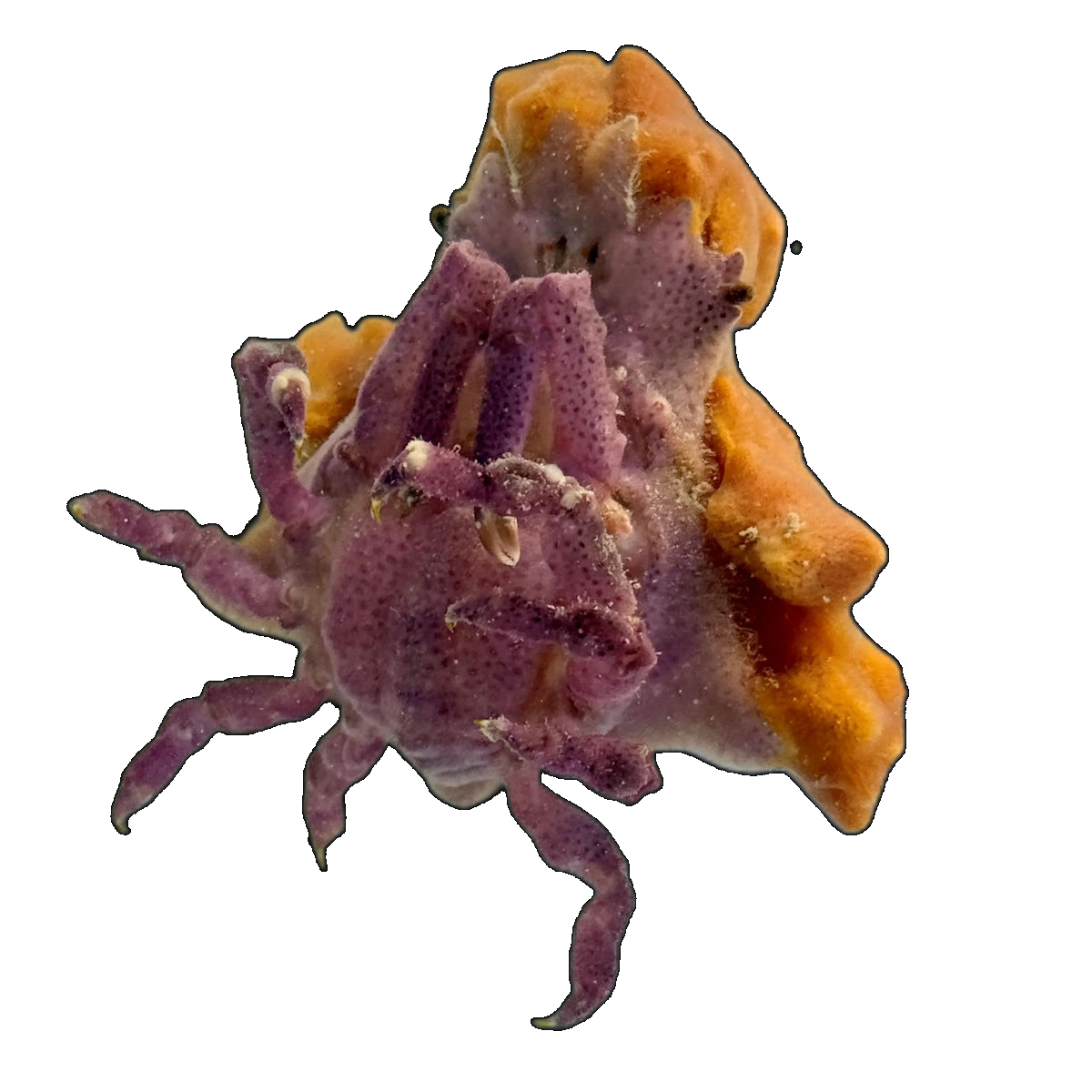
The Decorator Crab (Macrocoeloma trispinosum) disguises itself by attaching algae, sponges, or dead coral pieces to its carapace and is native to Western Atlantic and Caribbean reefs. It is an excellent detritivore that helps clean aquariums, but it is opportunistic and should be monitored in reef tanks since it may occasionally prey on small invertebrates or soft corals.
Quick facts
Identity
- Also known as
- Sponge Crab; Decor Crab; Decorator Sponge Crab
- Synonyms
- Marcocoeloma trispinosum (common misspelling)
- Environment
- Saltwater
- Native to
- Caribbean, Western Atlantic, Gulf of Mexico
- Habitat
- Coral reefs, rubble, and live rock areas, often found among sponges and macroalgae growth where materials for camouflage are abundant
- Sourcing
- Wild-caught
- Conservation
- Not Evaluated
Care
- Care level
- Easy
- Temperament
- Peaceful
- Adult size
- 1 – 3 in (2.5 – 7.6 cm)
- Lifespan
- 2 – 4 yrs
- Min tank
- 30 gal (114 L)
- Growth rate
- Slow
- Placement
- Bottom
Water
- Temperature
- 75 – 80 °F (24 – 27 °C)
- pH
- 8.1 – 8.4
- dKH
- 8 – 12 dKH
- Salinity
- 1.023 – 1.026 SG
- Flow
- Low-Moderate
Behavior & compatibility
- Social
- Solitary
- Aggression to own kind
- Low
- Active
- Night
- Reef safe
- With caution
- Invert safe
- With caution
- Shrimp safe
- With caution
- Clean-up role
- Algae, Detritus, Leftover food
- Population boom risk
- Low
Feeding & breeding
- Diet
- Omnivore
- Foods
- Pellets, Frozen, Algae, Live, Freeze-dried
- Breeding type
- Larval (brackish)
- Breeding difficulty
- Not bred in captivity
- Sexing
- No reliable external sexing traits commonly described; males may have slightly larger claws than females
- Target feeding
- Beneficial
Something wrong or missing? Submit a correction
Care guide
Overview
Dresses its shell with bits of sponge, algae, and rubble collected from the rockwork, staying motionless by day and foraging only after lights out. Wild-caught and slow-growing, it suits mature reef systems with low to moderate flow and plenty of live rock for camouflage material. Reef safe with caution, as an under-decorated individual may nip soft coral or small snails.
Care
This crab does best in a mature reef tank with plenty of live rock, rubble, and access to sponge or macroalgae growth it can harvest to dress its carapace. It is mostly nocturnal, resting motionless during the day and becoming active after lights out, so daytime sightings are uncommon in a well-decorated tank. Keep temperature and salinity stable and avoid strong current, since it prefers low to moderate flow areas where it can forage undisturbed.
Feeding
Offer a mix of sinking pellets, frozen meaty foods such as mysis or chopped clam, and occasional algae sheets to cover its omnivorous needs. Feeding after lights out reduces the chance it will pick at coral tissue or small tankmates out of hunger. It also grazes naturally on detritus and biofilm found on live rock, supplementing whatever is offered directly.
Tank mates
Generally peaceful toward fish and considered reef safe with caution, since a hungry or under-decorated individual may occasionally nip at soft coral tissue, small snails, or sponge used by other tankmates. Avoid pairing with aggressive crabs, mantis shrimp, or crustacean-eating fish such as triggerfish and large wrasses. Multiple individuals can be kept together in a large enough tank with ample hiding spots to reduce conflict, particularly around molting periods.
Breeding
Breeding in home aquariums has not been documented, largely because the larvae go through a planktonic development stage that is difficult to replicate outside of a reef system. No sexual dimorphism or courtship behavior has been reliably described in aquarium settings. Most specimens in the trade are wild-collected rather than captive-produced.
Health
Molting is the most vulnerable period, during which the crab is soft-bodied and needs to redecorate its new exoskeleton quickly to avoid predation or stress. Stable calcium, alkalinity, and salinity support successful molts, and leaving shed exoskeletons in the tank lets the crab reabsorb minerals from them. Sudden parameter swings during acclimation or shipping stress are the main causes of early losses.
Sources
More Decorator crabs
Something wrong or missing? Submit a correction
In the community
Popular tanks using Decorator Crab
No public tanks are showcasing Decorator Crab yet.