
Marine Invertebrates
Sally Lightfoot Crab
Percnon gibbesiPercnidaeCrabs
Price: $14.10 USD
Add from My tanks →1 photos
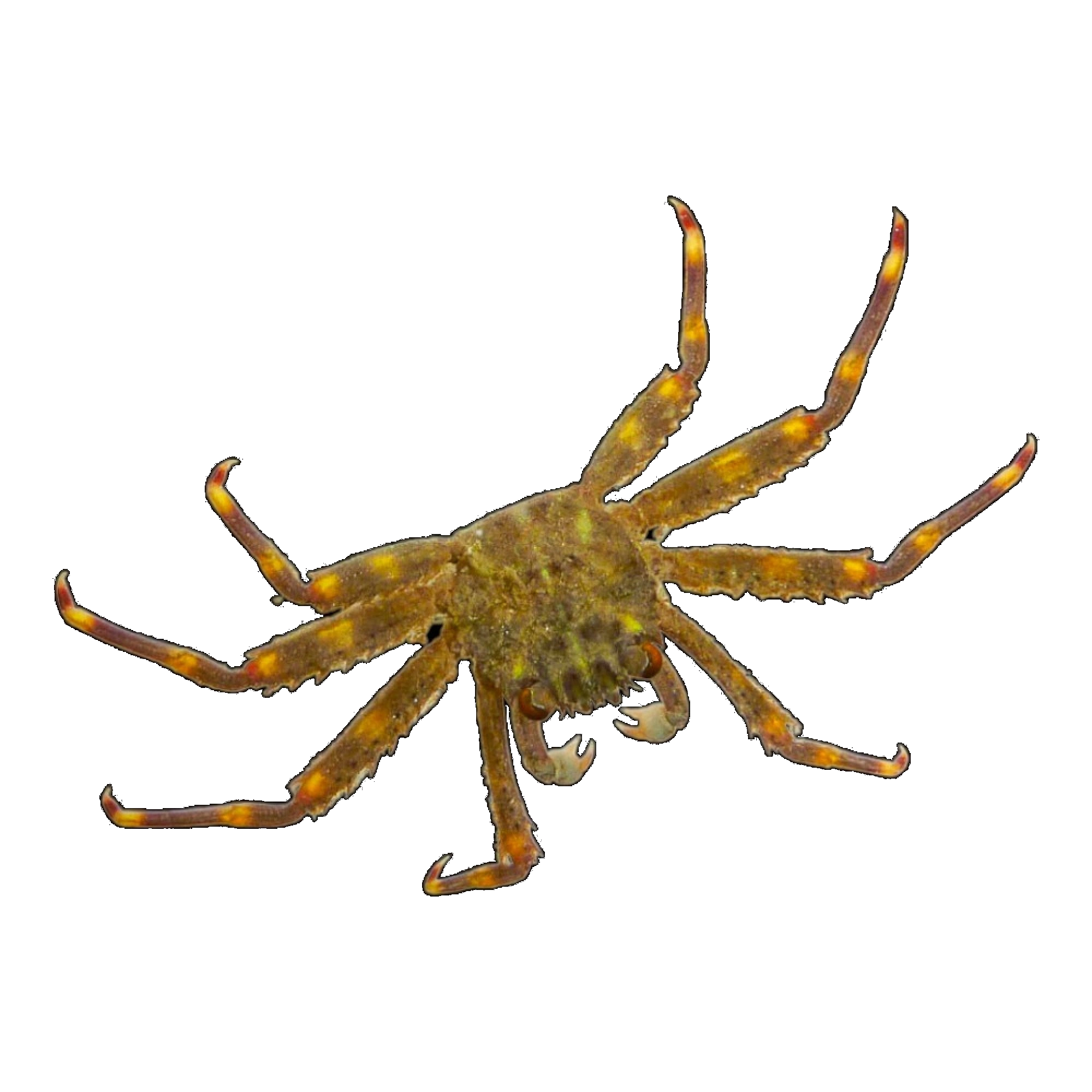
The Sally Lightfoot Crab is a fast, active, and highly mobile marine crab known for its bright coloration, agility, and constant movement across rocks, glass, and aquarium surfaces; in nature it inhabits tropical and subtropical coastal regions, controlling algae and consuming organic detritus. It is an omnivorous scavenger feeding on algae and leftover food, helping clean live rock and aquarium glass; keep a stable mature marine aquarium with plenty of live rock for grazing and shelter, supplemental feeding if algae is insufficient, and a peaceful tank environment; generally reef safe but monitor in delicate setups as it may disturb small or weak tank inhabitants if underfed; it is very fast and can be difficult to catch.
Quick facts
Identity
- Also known as
- Nimble Spray Crab; Urchin Crab; Spray Crab
- Synonyms
- Percnon gibbesii; Acanthopus gibbesi
- Environment
- Saltwater
- Native to
- Western Atlantic (Florida to Brazil), Caribbean Sea, eastern Pacific, West Africa; introduced to the Mediterranean Sea
- Habitat
- Shallow intertidal and subtidal rocky shores, typically 1-2 m deep, hiding in narrow crevices among wave-swept rocks
- Sourcing
- Wild-caught
- Conservation
- Not Evaluated
Care
- Care level
- Easy
- Temperament
- Semi-Aggressive
- Adult size
- 1.5 – 4 in (3.8 – 10 cm)
- Lifespan
- 2 – 4 yrs
- Min tank
- 30 gal (114 L)
- Growth rate
- Moderate
- Placement
- Rock & glass
Water
- Temperature
- 72 – 78 °F (22 – 26 °C)
- pH
- 8.1 – 8.4
- dKH
- 8 – 12 dKH
- Salinity
- 1.023 – 1.025 SG
- Flow
- Moderate-High
Behavior & compatibility
- Social
- Solitary
- Aggression to own kind
- High
- Active
- Daytime
- Reef safe
- With caution
- Invert safe
- With caution
- Shrimp safe
- With caution
- Clean-up role
- Algae, Detritus, Leftover food
- Population boom risk
- Low
Feeding & breeding
- Diet
- Omnivore
- Foods
- Algae, Frozen, Pellets, Freeze-dried
- Breeding type
- Larval (brackish)
- Breeding difficulty
- Not bred in captivity
- Sexing
- Adult males have larger, unequal chelipeds compared to the smaller, more uniform chelipeds of females
- Target feeding
- Beneficial
Something wrong or missing? Submit a correction
Care guide
Overview
Reef tanks with mature, heavily stacked rockwork suit this crab best, giving it the narrow crevices its flattened body needs to escape into between bursts of activity. Mottled green, brown, orange and yellow coloring accompanies constant, rapid movement across rock and glass rather than hiding. Solitary by nature, it tolerates no rival of its own kind and requires a tight lid to prevent escapes.
Care
This crab is one of the fastest movers commonly kept in marine aquariums, spending most of its time skittering across live rock and glass rather than hiding. It needs a mature tank with plenty of stacked rockwork offering narrow crevices to retreat into, since its flattened body lets it wedge into gaps that would stop a bulkier crab. A tight-fitting lid is worth the trouble, as it climbs pipes and cords with ease and will exploit any opening to escape. Stable calcium, alkalinity, and magnesium levels support clean molts, and copper-based medications must be avoided entirely.
Feeding
Juveniles graze mainly on filamentous algae, biofilm, and detritus on rock and glass, making them useful for controlling nuisance algae early on. As they grow, they become more opportunistic and will readily take meaty foods, so offering algae sheets, pellets, and occasional frozen fare keeps them from turning to hunting tankmates. Feeding should be frequent enough that the crab is not left searching for protein on its own.
Tank mates
Adults are best kept singly or as an established pair, since two same-sex individuals sharing a small tank often results in fighting. Small, slow-moving snails, hermit crabs, feather dusters, and resting fish are at some risk once the crab reaches full size, particularly if it is underfed. Avoid pairing with aggressive nippers such as triggerfish or large wrasses that may target its legs, and keep an eye on interactions in smaller or more delicate reef setups.
Breeding
Breeding in home aquariums is essentially unheard of, as females release planktonic larvae that pass through multiple developmental stages in open water. These larvae are almost always lost to filtration or predation long before settling, so captive populations are not sustained through home breeding. All specimens in the trade originate from wild collection rather than aquaculture.
Health
Molting is the period of greatest vulnerability, and a crab caught mid-molt by aggressive tankmates can lose limbs or fail to complete the shed. Leaving the discarded exoskeleton in the tank lets the crab reabsorb minerals from it rather than removing it right away. Stress, unstable salinity, or iodine deficiency can lead to incomplete or failed molts, so consistent water parameters matter more for this species than for many other cleanup crew inverts.
Sources
More Crabs
Something wrong or missing? Submit a correction
In the community
Popular tanks using Sally Lightfoot Crab
No public tanks are showcasing Sally Lightfoot Crab yet.