
Aquatic Plant
Sagittaria Pusillus
Sagittaria subulataAlismataceaeSagittarias
Price: $7.99 USD
Add from My tanks →1 photos
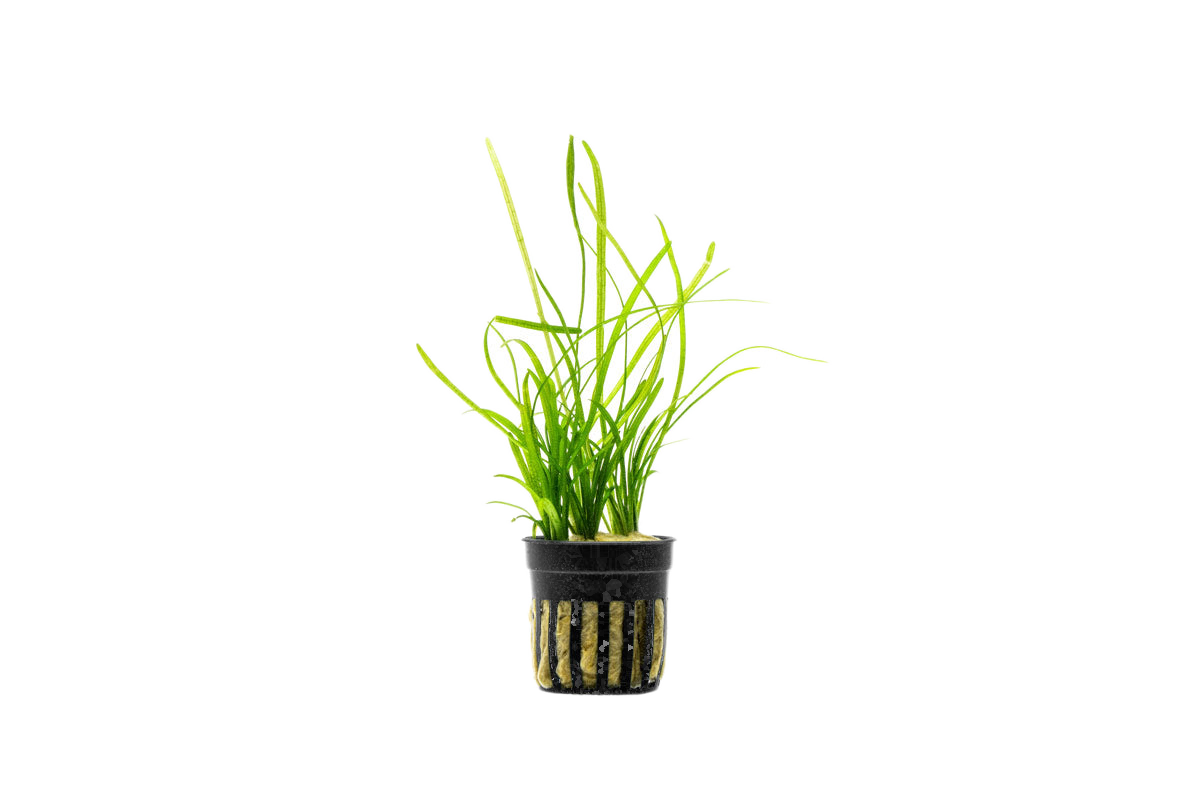
Sagittaria pusilla (Arrowhead) is a hardy, beginner-friendly carpeting plant with bold green, ribbon-like leaves that spreads via runners into a tall grass carpet. It adapts to a wide range of parameters, needs low to medium light (high light brings red hues), and propagates by separating horizontal runners.
Quick facts
Identity
- Also known as
- Dwarf sag; Narrow-leaved arrowhead; Awl-leaf arrowhead
- Synonyms
- Sagittaria subulata var. pusilla; Sagittaria pusilla; Sagittaria natans
- Environment
- Freshwater
- Native to
- United States, Eastern Canada, Central America
- Habitat
- Shallow riverbanks, streams, ponds, and lake margins with muddy or sandy substrate, often growing partially emergent along fluctuating shorelines
- Sourcing
- Aquacultured
- Conservation
- Not Evaluated
Care
- Care level
- Easy
- Growth form
- Rosette
- Max height
- 2 – 8 in (5.1 – 20 cm)
- Spread
- 6 in (15 cm)
- Growth rate
- Moderate
- Placement
- Foreground, Carpet, Midground
Water
- Temperature
- 64 – 82 °F (18 – 28 °C)
- pH
- 5.5 – 8.0
- GH
- 2 – 15 dGH
- dKH
- 2 – 20 dKH
- PAR
- 30 – 80 PAR
- Flow
- Low-Moderate
- Light
- Medium
- CO₂
- Beneficial
Planting
- Substrate
- Nutrient-rich preferred
- Feeds from
- Both
- Fertilizer needs
- Medium
- Colors
- Green
Feeding & breeding
- Propagation
- Runners
Something wrong or missing? Submit a correction
Care guide
Overview
Slender, grass-like green blades rise in loose rosettes that thicken over time into a tall carpet as runners spread through the substrate. It handles a broad range of water parameters, making it forgiving in new or established tanks, and adapts its height to available light. Root tabs near the crowns speed runner production and fill-in.
Care
Dwarf sagittaria tolerates a wide range of temperatures, pH, and hardness, making it forgiving for beginners setting up a new tank. Moderate to high lighting keeps the grassy blades short and dense for a true carpet, while lower light lets the leaves grow taller and more upright. It grows well without added CO2 but fills in faster and stays lower when CO2 and root nutrients are supplied.
Planting & trimming
Plant individual crowns a few inches apart directly into the substrate, keeping the crown itself uncovered, and let the runners fill in the gaps over time. Overly dense mats benefit from thinning or a hard trim close to the substrate to keep the carpet looking tidy and prevent shading of lower leaves. Runners that produce taller daughter plants can be clipped and replanted elsewhere or discarded to maintain a low profile.
Fertilizing
Root tabs pushed into the substrate near the crowns support the runner network and encourage denser spreading, since this plant draws a large share of its nutrition through its roots. Liquid fertilizers supplying iron and micronutrients help prevent pale or yellowing new leaves in low-tech setups. Nutrient-rich substrate reduces the need for heavy dosing but is not strictly required.
Propagation
New plantlets form along horizontal runners sent out from the parent crown and can be severed once they have developed their own root system. Separated runners are simply replanted a short distance away to expand the carpet. Under favorable conditions a single plant can colonize an entire foreground within a few months.
Problems
Newly imported specimens grown emersed often shed their original leaves and pale slightly as they convert to submersed growth, which is a normal transition rather than a sign of poor health. Thin, leggy growth with long internodes between runners usually indicates insufficient light. Persistent yellowing of new leaves points to an iron or micronutrient deficiency.
Sources
Varieties in the catalog
More Sagittarias
Something wrong or missing? Submit a correction
In the community
Popular tanks using Sagittaria Pusillus
No public tanks are showcasing Sagittaria Pusillus yet.