
Coral
ORA Kenya Tree Coral
Capnella sp.NephtheidaeSoft corals
Add from My tanks →1 photos
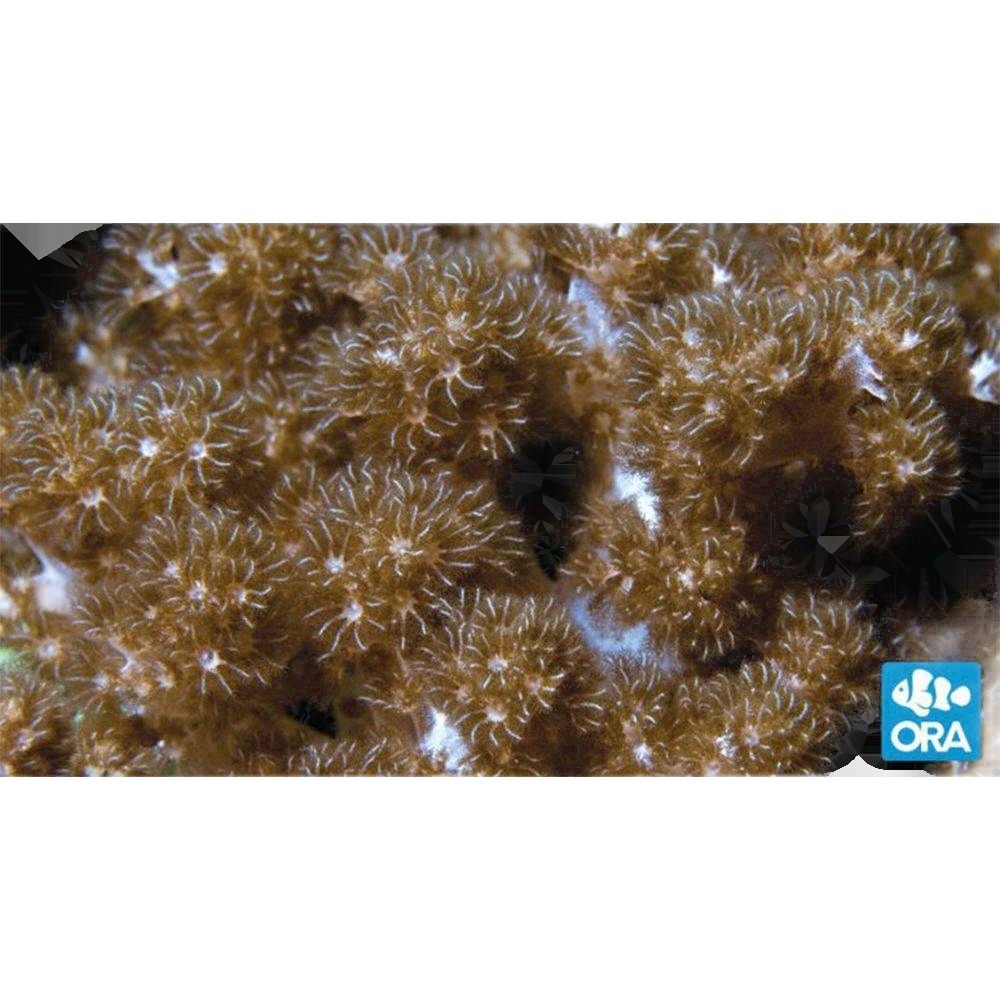
An aquacultured soft coral known for being hardy, fast-growing and easy to care for; thrives in medium to high light and flow, but can become prolific so it should be spaced from other corals.
Quick facts
Identity
- Also known as
- Cauliflower coral; Nepthea coral; Colt coral; Cabbage coral
- Synonyms
- Nephthea sp. (often confused in trade)
- Environment
- Saltwater
- Native to
- Indo-Pacific, Red Sea
- Habitat
- Found on reef slopes and lagoons in clear water with strong currents, often forming large spreading colonies over rock and coral rubble.
- Sourcing
- Aquacultured
- Conservation
- Not Evaluated
Care
- Care level
- Easy
- Coral type
- Soft
- Temperament
- Semi-Aggressive
- Growth form
- Branching
- Adult size
- 2 – 12 in (5.1 – 30 cm)
- Spread
- 24 in (61 cm)
- Growth rate
- Fast
- Placement
- Low, Middle
Water
- Temperature
- 73 – 82 °F (23 – 28 °C)
- pH
- 8.1 – 8.4
- dKH
- 8 – 12 dKH
- Salinity
- 1.023 – 1.025 SG
- PAR
- 50 – 150 PAR
- Flow
- Moderate-High
- Light
- Medium
Reef care
- Nutrient preference
- Medium
- Alk/Ca uptake
- Low
- Target feeding
- Beneficial
- Give it room
- 6 in (15 cm)
- Colors
- Brown, Cream, Green
Feeding & breeding
- Diet
- Photosynthetic
- Foods
- Coral food, Zooplankton, Phytoplankton
- Propagation
- Fragging, Splitting
Something wrong or missing? Submit a correction
Care guide
Overview
Expands quickly once settled, sending up a central stalk that branches into feathery, polyp-tipped arms swaying in moderate to high flow. ORA-propagated stock adapts readily to established reef tanks and tolerates a broad light range. Space it well from neighbors, as dropped branch tips root and spread on their own.
Care
Kenya tree coral is one of the toughest soft corals available in the hobby, tolerating a wide range of light and flow conditions and adapting to nearly any established reef tank. It grows a central stalk that branches into feathery, polyp-tipped arms and expands quickly once settled in. The main challenge is not keeping it alive but keeping it contained, since it drops small branch tips that drift off and root elsewhere in the tank. Give it its own space away from slower-growing or sensitive corals and prune periodically to control spread.
Placement & acclimation
Acclimate by matching temperature and salinity; light acclimation is not critical since this species tolerates a broad PAR range. Mount fragments or the base colony securely to live rock in a low to mid position with moderate to high flow, leaving ample clearance from other corals to accommodate its rapid spread.
Feeding
Although it carries zooxanthellae and gets a portion of its energy from light, this coral relies more heavily on captured particulate food than many other soft corals. Occasional target feeding with small zooplankton or coral foods supports growth and coloration, though it survives fine on ambient nutrient uptake in most reef systems. It does not require particularly pristine water and tolerates modest nutrient levels better than sensitive stony corals.
Neighbors
Despite lacking sweeper tentacles, this species releases chemical compounds that can irritate neighboring corals, particularly sensitive SPS, so it is best treated as semi-aggressive rather than purely passive. Give it generous clearance from other corals since its rapid growth and self-propagating branch tips let it encroach on nearby colonies over time. Running carbon and maintaining regular water changes helps dilute any allelopathic output.
Fragging
This coral frags itself by dropping small branch tips that drift and root wherever they settle, making unintentional propagation common. Deliberate fragging is simple: cut a branch from the main colony and attach it to a rock or plug with rubber bands or coral glue until it adheres.
Pests & problems
Periodic deflation, where the colony shrinks down and looks limp for a day or two before reinflating, is a normal shedding cycle and not a sign of illness. A colony that stays collapsed for over a week or develops a rotting, disintegrating stalk usually indicates poor water quality or physical damage. It has few dedicated pests and acclimates readily, generally only needing matched temperature and salinity along with a brief soft-coral dip.
Sources
Varieties in the catalog
More Soft corals
Something wrong or missing? Submit a correction
In the community
Popular tanks using ORA Kenya Tree Coral
No public tanks are showcasing ORA Kenya Tree Coral yet.