
Marine Invertebrates
Gold Banded Coral Shrimp
Stenopus tenuirostrisStenopodidaeBoxer shrimp
Price: $35.25 USD
Add from My tanks →1 photos
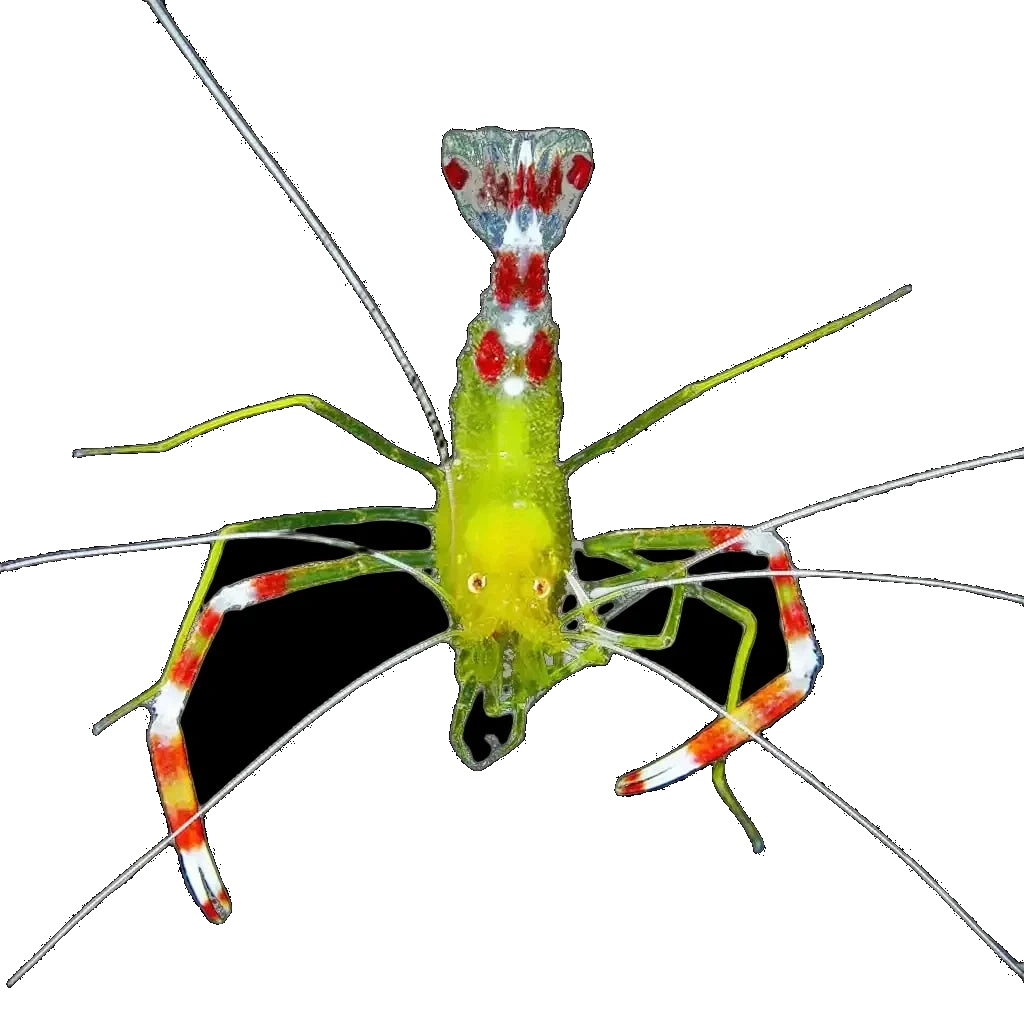
The Gold Banded Coral Shrimp has a yellow body, white chelae, and a red and white banded abdomen, holding its large pinchers erect like a boxer. It must be kept singly or as a true mated pair, may harass smaller shrimp of other species, is an effective bristleworm hunter in reef aquariums, and should be fed flaked and frozen foods, plankton, and meaty items; acclimate slowly with the drip method and maintain correct iodine levels for proper molting, intolerant of high nitrates and copper.
Quick facts
Handling caution: Large chelae can pinch if handled carelessly
Identity
- Also known as
- Golden Coral Banded Shrimp; Yellow Boxing Shrimp
- Synonyms
- Stenopus zanzibaricus
- Environment
- Saltwater
- Native to
- Indo-Pacific
- Habitat
- Deeper coral reef environments, typically found in caves and under overhangs
- Sourcing
- Wild-caught
- Conservation
- Not Evaluated
Care
- Care level
- Easy
- Temperament
- Peaceful
- Adult size
- 1 – 2 in (2.5 – 5.1 cm)
- Lifespan
- 2 – 4 yrs
- Min tank
- 10 gal (38 L)
- Growth rate
- Moderate
- Placement
- Rock & glass
Water
- Temperature
- 72 – 82 °F (22 – 28 °C)
- pH
- 8.0 – 8.4
- dKH
- 8 – 12 dKH
- Salinity
- 1.023 – 1.025 SG
- Flow
- Moderate
Behavior & compatibility
- Social
- Pair · groups of 2+
- Aggression to own kind
- High
- Active
- Night
- Reef safe
- Yes
- Invert safe
- With caution
- Shrimp safe
- With caution
- Clean-up role
- Pest control, Detritus
- Population boom risk
- Low
Feeding & breeding
- Diet
- Carnivore
- Foods
- Flakes, Frozen, Zooplankton, Pellets
- Breeding type
- Broadcast spawner
- Breeding difficulty
- Difficult
- Sexing
- Females typically larger and broader in the abdomen than males; true pairs bond and remain together
- Target feeding
- Beneficial
Something wrong or missing? Submit a correction
Care guide
Overview
Hunts bristleworms and picks dead tissue from fish while holding its oversized white pincers raised like a boxer's fists. The yellow body carries a red-and-white banded abdomen, and it stays reclusive by day, emerging around dusk. Keep singly or as a bonded pair, since it will not tolerate rival shrimp nearby.
Care
A shy, cave-dwelling shrimp that spends most of daylight hours tucked into rockwork crevices, becoming more visible at dusk and after dark. Provide plenty of overhangs and tight hiding spots, especially in larger tanks with many tankmates, since it is more retiring than many of its Stenopus relatives. It tolerates a fairly standard reef range of parameters but reacts poorly to sudden swings in salinity, pH, or temperature, so stability matters more than chasing exact numbers. Because it molts on a regular schedule, trace iodine from routine water changes is usually sufficient without extra dosing.
Feeding
Meaty foods make up the bulk of the diet: small pieces of thawed clam, fish, or shrimp flesh along with frozen mysis or brine shrimp offered once or twice daily. It will also pick at flake and pellet foods and scavenge leftovers and detritus from the substrate and rockwork. In a reef tank it supplements its diet by hunting bristleworms and picking parasites or dead tissue from fish.
Tank mates
Best kept singly or as an established mated pair, since it is intolerant of others of its own kind and can be aggressive toward other crustaceans, including cleaner shrimp and hermit crabs. It is generally peaceful toward fish and may even offer a cleaning service, though very small or sleeping fish resting near its cave can occasionally be pinched. Give it enough clearance from corals and anemones so its long antennae are not constantly brushing against neighboring sessile invertebrates.
Breeding
Pairs can be bred in captivity but rearing the planktonic larvae to maturity is rarely successful in home systems, since they are easily pulled into filtration or skimmers. A true mated pair will often be seen carrying eggs under the abdomen after successful mating. Specialized larval rearing setups with fine mesh and gentle flow are needed for any real chance of success.
Health
Most losses trace back to acclimation shock, unstable water parameters, or exposure to copper-based medications, all of which this shrimp is highly sensitive to. Drip acclimation over 30-60 minutes is recommended to avoid salinity or pH shock when introducing a new specimen. After molting it is vulnerable and will hide for a period, so tank mates and equipment should be kept away from its shelter during this time.
Sources
Varieties in the catalog
More Boxer shrimp
Something wrong or missing? Submit a correction
In the community
Popular tanks using Gold Banded Coral Shrimp
No public tanks are showcasing Gold Banded Coral Shrimp yet.