
Aquatic Plant
Echinodorus Horizontalis Variegated
Echinodorus horizontalis 'Variegated'AlismataceaeSword plants
Price: $7.99 USD
Add from My tanks →1 photos
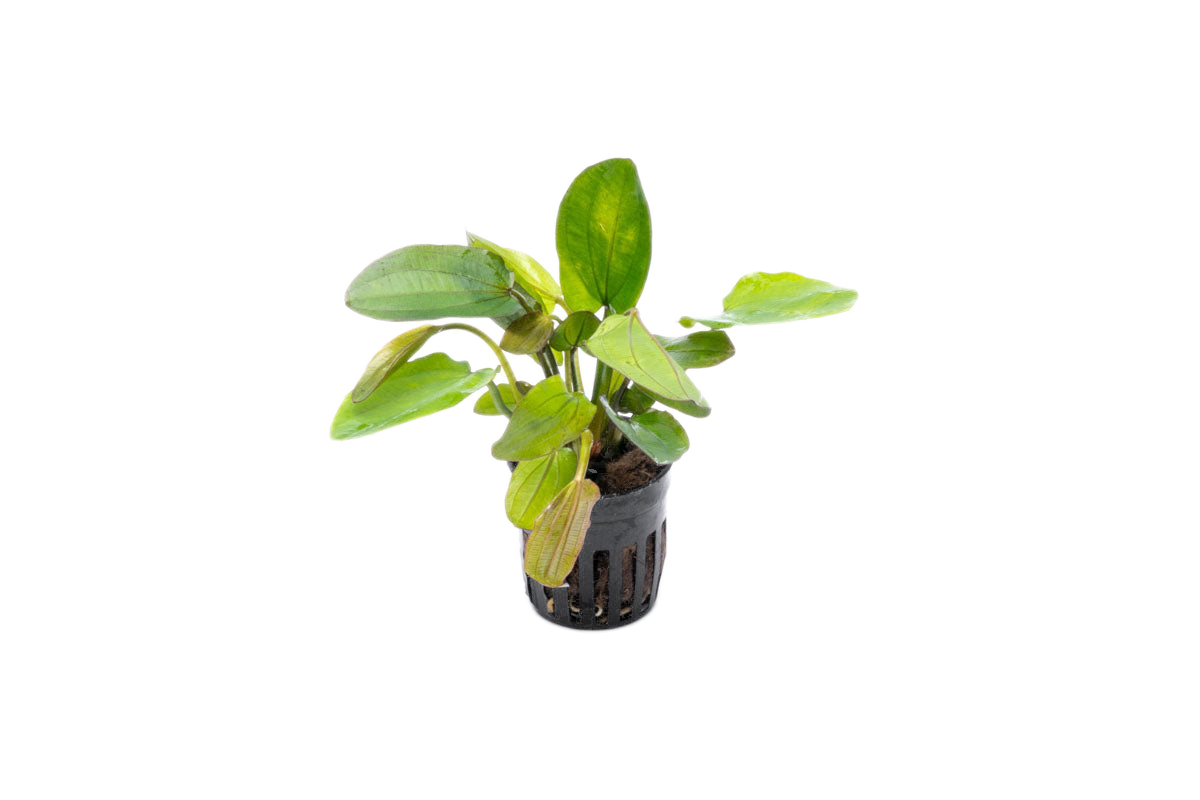
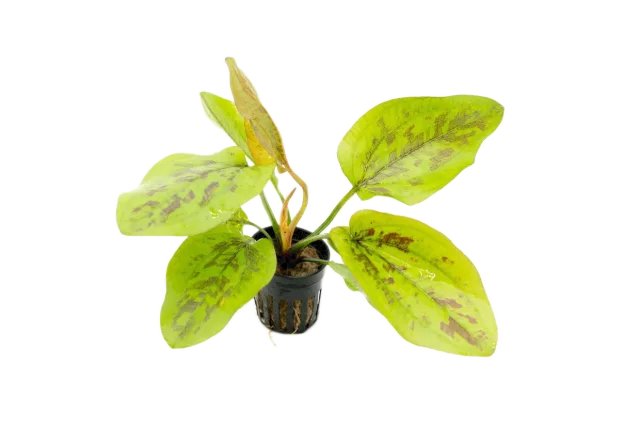
Echinodorus Horizontalis Variegated is a rare but easy-to-care-for plant with firm, long, variegated cordate leaves in light to medium green; emerging leaves are brownish-pink to light brown before turning green. Broader than tall with horizontally arranged blades, excellent background coverage; slow-growing, medium lighting, no CO2 required.
Quick facts
Identity
- Also known as
- Amazon Sword Variegated; Variegated Horizontal Sword; Horizontal Sword Plant
- Synonyms
- Echinodorus x barthii 'Variegated'
- Environment
- Freshwater
- Native to
- Brazil, South America
- Habitat
- Slow-moving rivers, streams, and marshes of the Amazon basin, often growing in flooded or seasonally inundated soil
- Sourcing
- Captive-bred
- Conservation
- Not Evaluated
Care
- Care level
- Moderate
- Growth form
- Rosette
- Max height
- 6 – 16 in (15 – 41 cm)
- Spread
- 14 in (36 cm)
- Growth rate
- Moderate
- Placement
- Midground, Background
Water
- Temperature
- 72 – 82 °F (22 – 28 °C)
- pH
- 6.5 – 7.5
- GH
- 3 – 10 dGH
- Flow
- Low-Moderate
- Light
- Medium
- CO₂
- Beneficial
Planting
- Substrate
- Nutrient-rich required
- Feeds from
- Roots
- Fertilizer needs
- High
- Colors
- Green, Cream, Variegated
Feeding & breeding
- Propagation
- Adventitious plantlets, Runners
Something wrong or missing? Submit a correction
Care guide
Overview
Cultivated from Amazon basin stock, this variegated form of the horizontal sword shows cream-and-green mottled leaves emerging brownish-pink before maturing. Its broader-than-tall rosette suits background planting in nutrient-rich substrate. Medium-high lighting and iron dosing keep the variegation from fading, and it dislikes being moved once settled.
Care
A hardy sword plant suited to intermediate hobbyists once its substrate needs are met. Leaves emerge with a brownish-pink tint before maturing to green with creamy variegation, and the horizontally arranged blades give it a distinctive broader-than-tall silhouette. Medium to high lighting brings out the best variegation, while low light causes the pattern to fade. It tolerates a fairly wide range of water parameters but reacts poorly to sudden changes, often melting back after a move or replant.
Planting & trimming
Remove all packing gel or cotton from the roots before planting and bury only the root mass, keeping the crown at or just above the substrate surface. It needs a nutrient-rich substrate layer of at least two to three inches to support its extensive root system, with root tabs added periodically as it matures. Prune older, outer leaves at the base as they yellow or become shaded to redirect energy to new growth, and avoid uprooting or moving the plant once established since it is sensitive to disturbance.
Fertilizing
This is a heavy root feeder and depends on a nutrient-rich substrate or regular root tabs pushed near the root zone rather than relying on water column dosing alone. Iron supplementation helps maintain the cream and green variegation and prevents new leaves from emerging pale or washed out. Yellowing older leaves usually signal a root nutrient or iron deficiency and can be addressed with a liquid fertilizer alongside substrate tabs. CO2 injection is not required but speeds growth and improves leaf coloration.
Propagation
Propagates mainly through adventitious plantlets that form on runners sent out from the mother plant, and occasionally via small offshoots at the leaf base. Plantlets should be left attached until they develop several leaves and their own root system, then can be cut free and replanted in a separate nutrient-rich substrate. Division of mature crowns is possible but less common than runner propagation for this species.
Problems
New transplants commonly experience melt as the plant adjusts from emersed nursery growth to submersed tank conditions, so old leaves should be trimmed away rather than left to rot. Fading of the variegated pattern points to insufficient light or a nutrient shortfall rather than disease. Algae can accumulate on the broad leaves if growth is slow relative to light intensity, so pairing strong lighting with adequate fertilization or CO2 helps keep the foliage clean.
Sources
More Sword plants
Something wrong or missing? Submit a correction
In the community
Popular tanks using Echinodorus Horizontalis Variegated
No public tanks are showcasing Echinodorus Horizontalis Variegated yet.