
Live Algae
ECC Red Pom Pom Gracilaria Macro Algae
Gracilaria sp.GracilariaceaeMacroalgae
Add from My tanks →1 photos
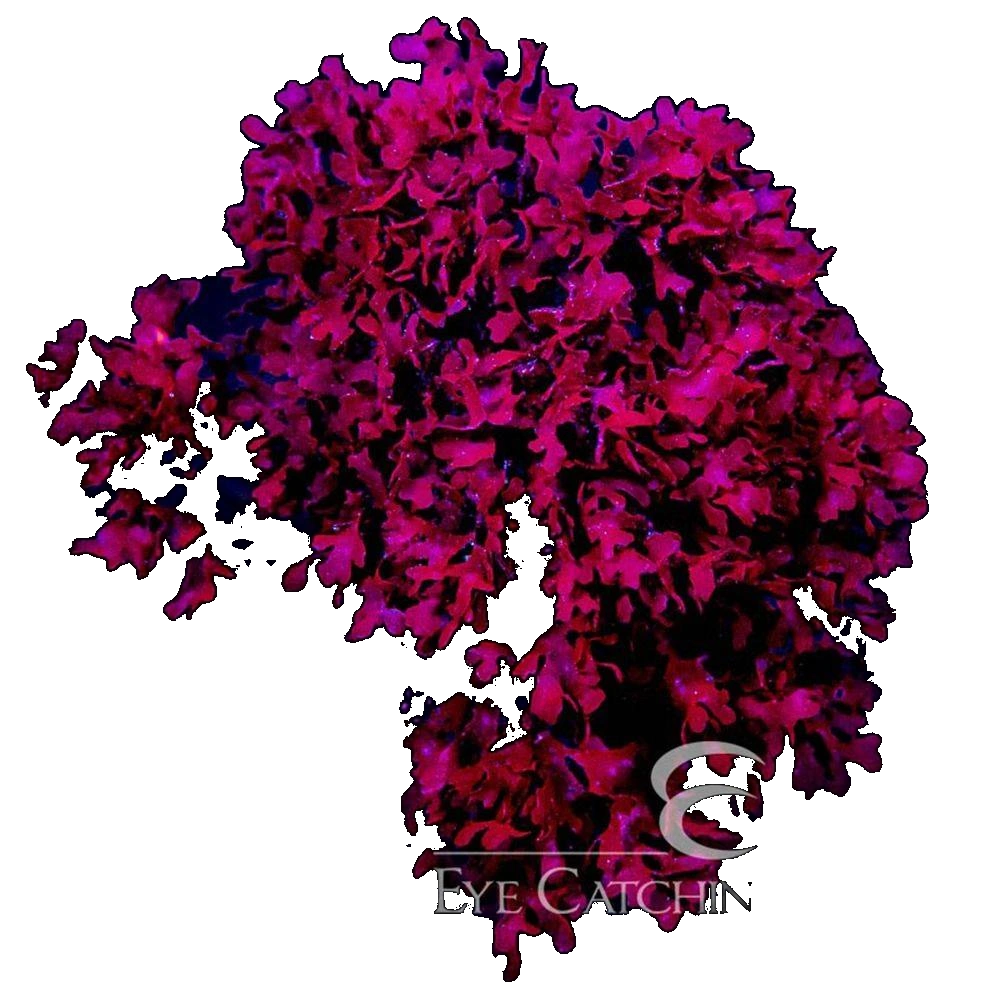
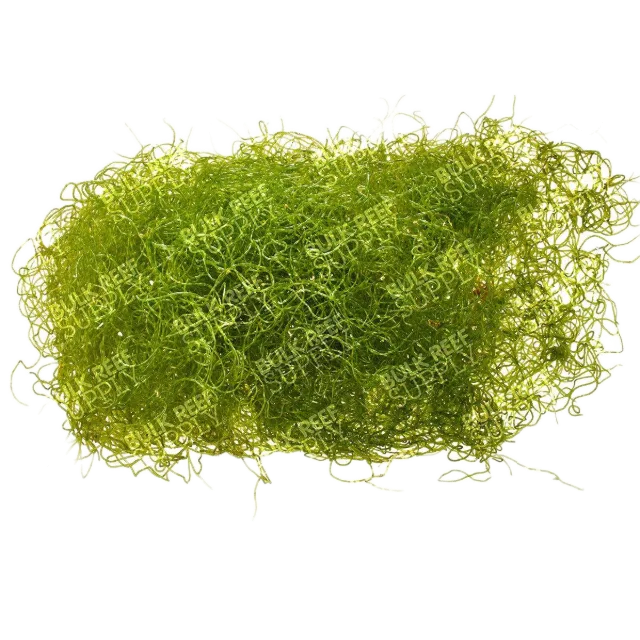
A deep red macro algae (Gracilaria sp.) with a bushy growth pattern, sold as a tennis-ball-sized portion; a fast grower ideal for display refugiums, nutrient export in a sump, or as a natural food source for herbivorous fish.
Quick facts
Identity
- Also known as
- Ogo; Red Ogo; Gracilaria Ball
- Synonyms
- Gracilaria hayi
- Environment
- Saltwater
- Native to
- Caribbean, Tropical Western Atlantic
- Habitat
- Shallow reef flats and rubble zones, growing attached to rock or rolling loosely along the seafloor
- Sourcing
- Aquacultured
- Conservation
- Not Evaluated
Care
- Care level
- Easy
- Growth form
- Macroalgae
- Max height
- 2 – 6 in (5.1 – 15 cm)
- Spread
- 6 in (15 cm)
- Growth rate
- Fast
- Placement
- Midground, Background
Water
- Temperature
- 72 – 78 °F (22 – 26 °C)
- pH
- 8.1 – 8.4
- dKH
- 8 – 12 dKH
- Salinity
- 1.023 – 1.025 SG
- PAR
- 50 – 150 PAR
- Flow
- Moderate-High
- Light
- Medium
- CO₂
- Not needed
Planting
- Substrate
- Not needed
- Feeds from
- Water column
- Fertilizer needs
- Medium
- Colors
- Red
Feeding & breeding
- Propagation
- Cuttings
Something wrong or missing? Submit a correction
Care guide
Overview
Clumps into a dense, springy ball rather than trailing loose strands, holding its rounded bushy shape as it packs on new growth. Sold as a tennis-ball-sized portion, this deep red form of Gracilaria tumbles well in a refugium or sump for nutrient export and doubles as cut forage for tangs and other grazers. It tolerates a range of flow and lighting once established.
Care
Pom pom gracilaria is a hardy, fast growing red macroalgae well suited to refugiums, sumps, or display tanks with herbivore-tolerant tankmates. It holds up under moderate to strong lighting and moderate to high flow, and does best when tumbled gently so light reaches all sides of the clump and detritus does not settle inside the fronds. Unlike softer ogo types it stays in one dense mass rather than breaking apart, which makes it easy to manage and harvest.
Planting & trimming
It can be left loose to roll along the substrate or wedged among rock so its holdfast can grip naturally; many aquarists prefer to keep it unattached and tumbled in a refugium so all sides receive even light. No true planting or burying is required since it is a free-living macroalga rather than a rooted plant.
Fertilizing
This algae draws most of its nutrition directly from the water column, consuming dissolved nitrate and phosphate as it grows, so no substrate fertilizing is needed. In nutrient-poor systems growth can slow or fronds can thin out, so dosing trace elements, magnesium, and occasionally iron can help maintain color and growth rate. It generally needs no supplemental feeding beyond good light and adequate dissolved nutrients.
Propagation
Propagation is simply done by cutting or pinching off healthy branch tips and placing them in flow with adequate light; the fragments will attach or continue growing loose and bulk up into new clumps over a few weeks. Regular harvesting of the outer growth encourages continued branching and prevents the mass from shading its own interior.
Problems
Healthy specimens hold a deep red to burgundy color and a firm, springy texture; fading toward pale pink or yellow usually signals insufficient light or nutrient deficiency. Poor flow or being left untumbled can let detritus accumulate within the dense fronds, leading to localized dieback or fouling. Rinsing new arrivals in clean saltwater before introduction helps avoid introducing hitchhikers or pests.
Sources
More Macroalgae
Something wrong or missing? Submit a correction
In the community
Popular tanks using ECC Red Pom Pom Gracilaria Macro Algae
No public tanks are showcasing ECC Red Pom Pom Gracilaria Macro Algae yet.