
Live Algae
ECC Chaetomorpha Macro Algae
Chaetomorpha linumCladophoraceaeMacroalgae
Add from My tanks →1 photos
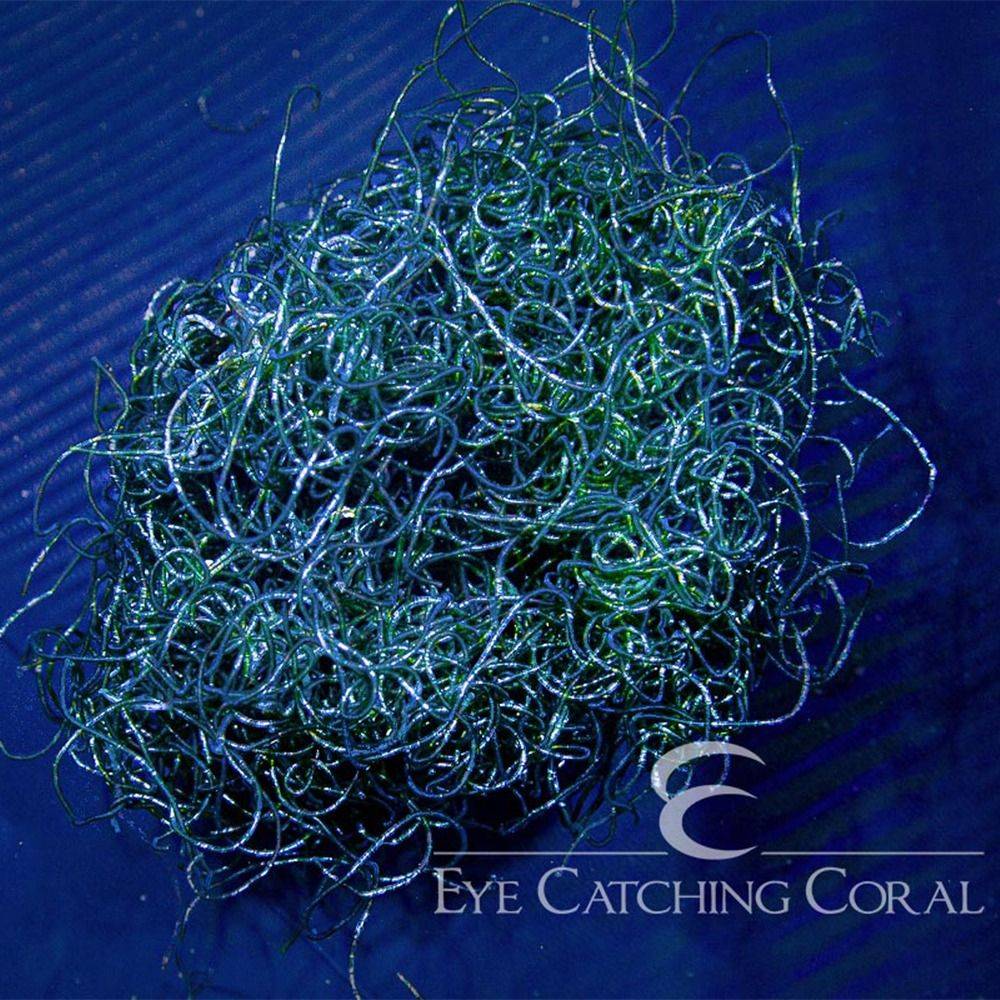
Chaetomorpha linum, commonly called Chaeto, is a dense, fibrous green macroalgae popular for refugiums; its rapid growth absorbs excess nitrates and phosphates, giving a natural way to manage nutrients.
Quick facts
Identity
- Also known as
- Chaeto; Spaghetti algae
- Synonyms
- Conferva linum
- Environment
- Saltwater
- Native to
- Worldwide temperate and tropical coastal waters, including North America, Europe, Mediterranean Sea
- Habitat
- Shallow coastal marine waters, estuaries and tide pools, often forming loose unattached mats over sand or attached to hard substrate
- Sourcing
- Aquacultured
- Conservation
- Not Evaluated
Care
- Care level
- Easy
- Growth form
- Macroalgae
- Max height
- 2 – 12 in (5.1 – 30 cm)
- Growth rate
- Fast
- Placement
- Background
Water
- Temperature
- 72 – 82 °F (22 – 28 °C)
- pH
- 8.1 – 8.4
- dKH
- 8 – 12 dKH
- Salinity
- 1.023 – 1.026 SG
- PAR
- 150 – 300 PAR
- Flow
- Moderate-High
- Light
- High
- CO₂
- Not needed
Planting
- Substrate
- Not needed
- Feeds from
- Water column
- Fertilizer needs
- High
- Colors
- Green
Feeding & breeding
- Propagation
- Cuttings
Something wrong or missing? Submit a correction
Care guide
Overview
Refugium keepers running a nutrient-heavy reef or fish-only system rely on this tangled mass of unbranched green filaments for passive nitrate and phosphate export. It grows loose rather than rooted, tumbling under strong light and moderate to high flow, and needs regular harvesting to actually remove the nutrients it locks up. A rich, dense green color signals healthy growth; pale or brittle strands point to a lighting or nutrient shortfall.
Care
Chaeto is a tangled, wiry mass of unbranched filaments that is usually kept loose in a refugium rather than planted or attached to anything. It tolerates a wide range of salinity, temperature and flow, making it forgiving for beginners running a nutrient export system. Strong to moderate water movement keeps the mass tumbling so all strands get even light exposure and detritus does not settle inside it.
Planting & trimming
Chaeto is not rooted or attached to hardscape; it is simply placed loose in a refugium chamber or algae reactor where flow keeps it tumbling. Harvest by pulling out and discarding a portion of the mass regularly, since removing biomass is what actually exports the nutrients it has absorbed. Running refugium lighting on a reverse photoperiod from the display helps stabilize pH swings overnight.
Fertilizing
Growth depends on dissolved nitrate and phosphate in the water rather than any added fertilizer, so it performs poorly in ultra-low-nutrient systems unless these are dosed back in. A ratio of roughly 20:1 to 100:1 nitrate to phosphate supports steady growth, and levels below about 5 ppm nitrate or 0.03 ppm phosphate can stall it. No substrate feeding or root uptake is involved since it has no roots or rhizoids in cultivated form.
Propagation
Propagation is simply fragmentation: a healthy clump can be divided by hand into smaller portions, each of which continues growing independently as long as a single intact cell survives. This makes it easy to share trimmings with other hobbyists or seed a new refugium from an established culture.
Problems
A healthy mass stays a rich green and keeps expanding steadily; algae that pales, yellows, becomes brittle or starts disintegrating usually signals a lighting or nutrient imbalance. Detritus trapped inside a dense clump can lead to dead, decaying patches at the core, so periodic fluffing or thinning helps. Because new plants can regenerate from fragments as small as half a millimeter, any accidental release of trimmings into the display or drain can seed unwanted growth elsewhere.
Sources
Varieties in the catalog
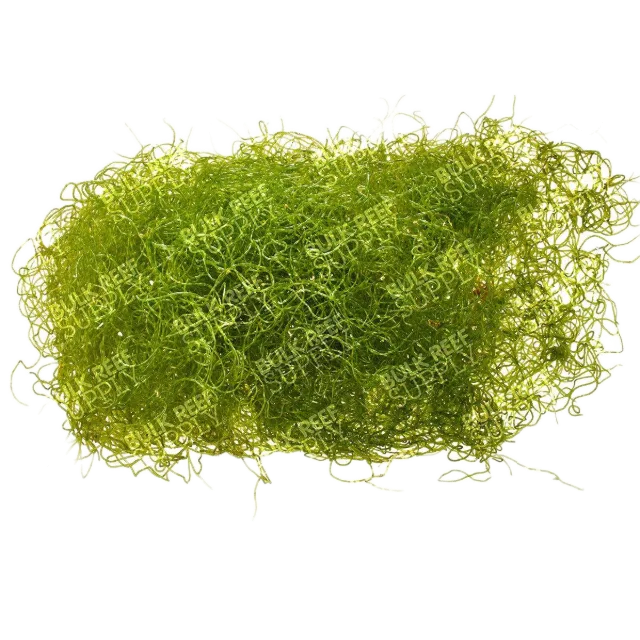
More Macroalgae
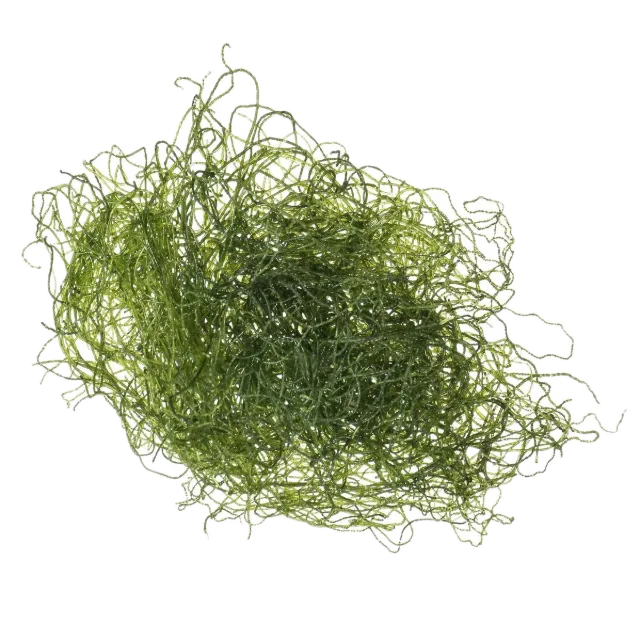
Something wrong or missing? Submit a correction
In the community
Popular tanks using ECC Chaetomorpha Macro Algae
No public tanks are showcasing ECC Chaetomorpha Macro Algae yet.