
Coral
ECC Hypershock Acan Echinata
Acanthastrea echinataLobophylliidaeAcans
Add from My tanks →1 photos
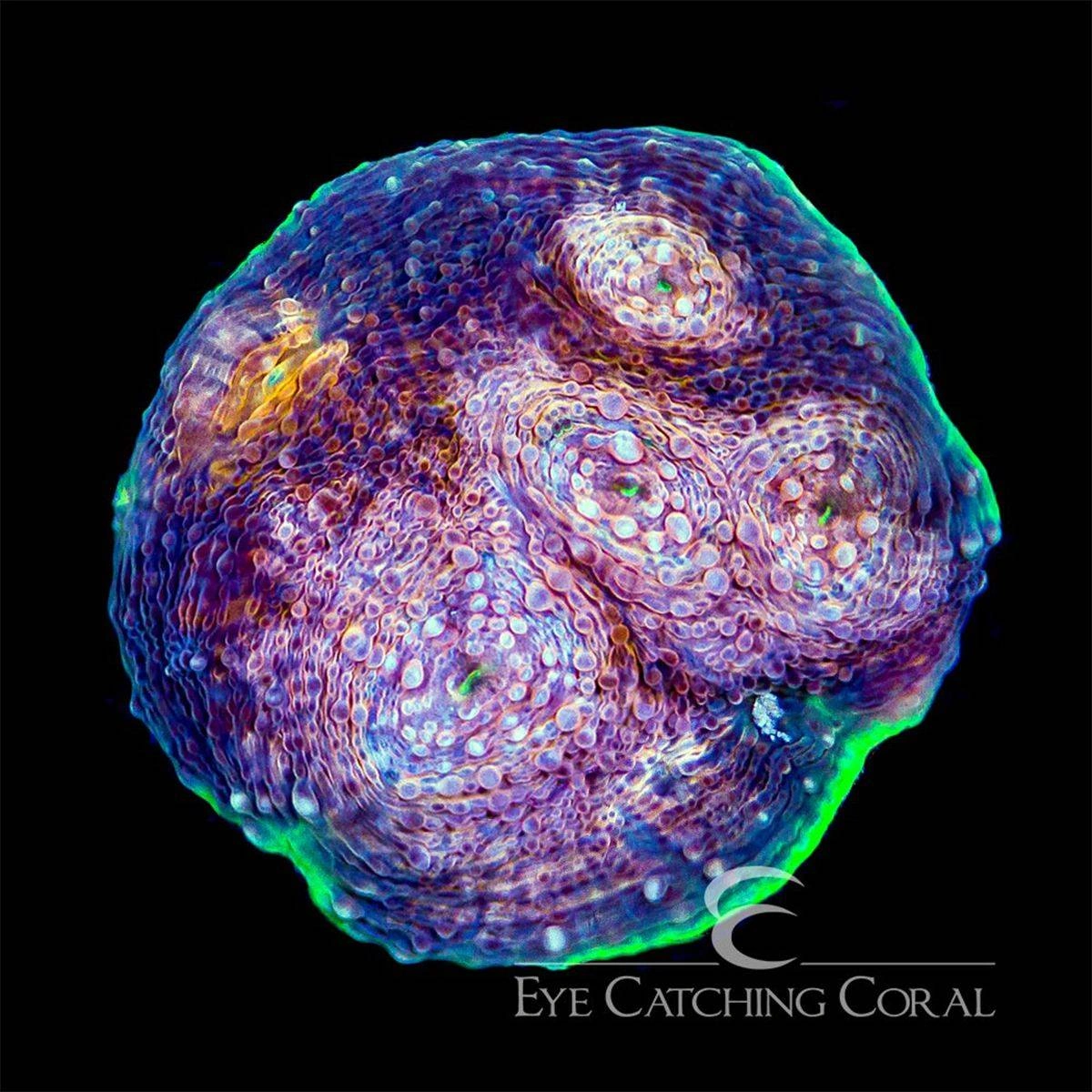
The ECC Hypershock Acan Echinata is a high-contrast LPS coral with a swirling mix of purples, pinks, and flashes of green under actinic lighting. Its thick, fleshy polyps and encrusting growth make it a bold addition; it prefers moderate light (150-250 PAR) with low to moderate flow, and is aggressive, with strong sweeper tentacles requiring ample space from other corals.
Quick facts
Handling caution: Sweeper tentacles can sting skin and neighboring corals; handle with gloves
Identity
- Also known as
- Acan; Spiny Acan; Acan Colony; Red Acan; Colored Acan; Star Coral
- Synonyms
- Micromussa echinata
- Environment
- Saltwater
- Native to
- Indonesia, Australia, Tonga, Indo-Pacific
- Habitat
- Shallow, protected lagoons and reef flats across the Indo-Pacific, typically to about 20 meters depth
- Sourcing
- Both
- Conservation
- Not Evaluated
Care
- Care level
- Moderate
- Coral type
- LPS
- Temperament
- Aggressive
- Growth form
- Encrusting
- Adult size
- 1 – 6 in (2.5 – 15 cm)
- Spread
- 12 in (30 cm)
- Growth rate
- Slow
- Placement
- Low, Sand bed
Water
- Temperature
- 75 – 80 °F (24 – 27 °C)
- pH
- 8.1 – 8.4
- dKH
- 8 – 10 dKH
- Salinity
- 1.025 – 1.026 SG
- PAR
- 50 – 150 PAR
- Flow
- Low-Moderate
- Light
- Low
Reef care
- Nutrient preference
- Medium
- Alk/Ca uptake
- Medium
- Target feeding
- Beneficial
- Give it room
- 6 in (15 cm)
- Colors
- Purple, Pink, Green, Red, Orange, Multicolor
Feeding & breeding
- Diet
- Carnivore
- Foods
- Frozen, Coral food, Zooplankton, Target-fed
- Propagation
- Fragging
Something wrong or missing? Submit a correction
Care guide
Overview
Extends fleshy polyps over its shared skeleton by night, sweeping tentacles outward to sting anything within reach. Colonies show a swirl of purple and pink tissue with green flecks under actinic light. Needs firm spacing from tankmates, low to moderate light and flow, and periodic target feeding to color up and grow.
Care
This LPS forms a mat of thick, fleshy polyps over a shared skeleton and tolerates a wide range of light and flow as long as conditions are stable. Keep it low to moderate light (roughly 50-150 PAR) and low to moderate flow, since bright light or strong current can bleach or tear the tissue. Because it is one of the more aggressive acans in the trade, give it several inches of open space from any neighboring coral to avoid tissue damage from its sweeper tentacles.
Placement & acclimation
Mount frags or colonies on stable rockwork low to mid tank, in a shaded spot away from direct flow and intense light, then acclimate gradually by starting at lower PAR and increasing over one to two weeks. Ensure ample clearance on all sides before placement, since this species will sting anything it can reach once settled.
Feeding
Acanthastrea echinata gets some energy from its zooxanthellae but grows and colors up better with direct feeding. Offer minced meaty foods, mysis, or other zooplankton-sized items once or twice a week, ideally after lights out when the polyps extend feeding filaments. Target feeding with a pipette or turkey baster reduces the chance of food drifting onto adjacent corals and triggering aggressive stinging.
Neighbors
Leave at least four to six inches of clearance between this coral and any other sessile invertebrate, since it extends long sweeper tentacles at night to sting and digest tissue on anything within reach. It pairs reasonably well with other LPS or soft corals if adequately spaced, but should not be placed near delicate or slow-growing species. Reef-safe fish generally leave it alone, though butterflyfish and some LPS-eating fish can nip at extended polyps.
Fragging
Frags easily by cutting the shared skeletal mat between polyps with a bandsaw or diamond blade, keeping at least one healthy polyp per frag. Allow cut edges to heal in low flow and subdued light before returning frags to normal tank conditions.
Pests & problems
Acans are more susceptible than many other LPS to brown jelly infection, especially after rough handling, poor acclimation, or a sudden increase in light intensity. New frags should be introduced to a shaded, lower-light spot and moved up gradually over a couple of weeks. Watch for receding or bleached tissue as a sign of light stress, and isolate any polyps showing tissue loss to prevent the infection from spreading across the colony.
Sources
More Acans
Something wrong or missing? Submit a correction
In the community
Popular tanks using ECC Hypershock Acan Echinata
No public tanks are showcasing ECC Hypershock Acan Echinata yet.