
Coral
ECC Holy Grail Micromussa
Micromussa lordhowensisLobophylliidaeAcans
Add from My tanks →1 photos
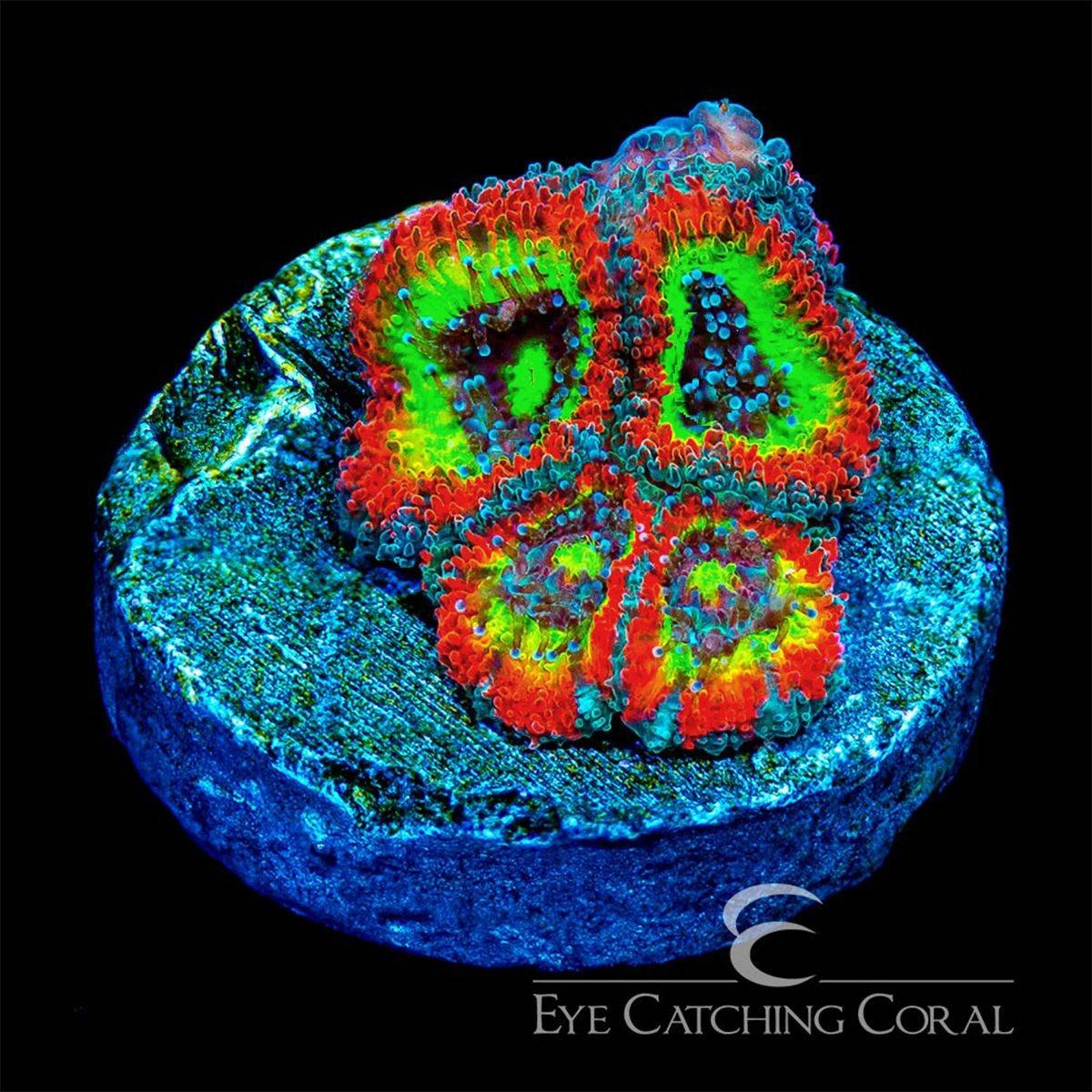
The ECC Holy Grail Micromussa is an eye-catching LPS coral with intensely fluorescent rings of red, yellow, green, and blue and thick, fleshy polyps in a compact colony. While hardy, it benefits from stable conditions, low to moderate light with low to moderate flow on rockwork, and placement away from fast-growing neighbors that may outcompete it for space.
Quick facts
Handling caution: Sweeper tentacles can sting skin and neighboring corals; wear gloves when handling or fragging
Identity
- Also known as
- Acan Lord; Acan; Lords; Acanthastrea
- Synonyms
- Acanthastrea lordhowensis
- Environment
- Saltwater
- Native to
- Indo-Pacific, Australia, Lord Howe Island
- Habitat
- Reef slopes and lagoons with moderate water movement and lower light, typically on shaded rockwork or reef ledges
- Sourcing
- Aquacultured
- Conservation
- Not Evaluated
Care
- Care level
- Easy
- Coral type
- LPS
- Temperament
- Semi-Aggressive
- Growth form
- Colonial polyps
- Adult size
- 0.8 – 6 in (1.9 – 15 cm)
- Spread
- 8 in (20 cm)
- Growth rate
- Moderate
- Placement
- Low, Middle, Sand bed
Water
- Temperature
- 75 – 78 °F (24 – 26 °C)
- pH
- 8.1 – 8.4
- dKH
- 8 – 9.5 dKH
- Salinity
- 1.025 – 1.026 SG
- PAR
- 75 – 150 PAR
- Flow
- Low-Moderate
- Light
- Low
Reef care
- Nutrient preference
- Medium
- Alk/Ca uptake
- Medium
- Target feeding
- Beneficial
- Give it room
- 4 in (10 cm)
- Colors
- Red, Yellow, Green, Blue, Multicolor
Feeding & breeding
- Diet
- Omnivore
- Foods
- Frozen, Micro-pellets, Coral food, Zooplankton
- Propagation
- Fragging
Something wrong or missing? Submit a correction
Care guide
Overview
Concentric rings of red, yellow, green, and blue circle each fleshy polyp in this compact Micromussa colony. As with other Acan Lord types, it wants low to moderate light, gentle flow, and stable water chemistry, along with clearance from neighboring corals that could sting or overgrow it. Direct feeding a few times weekly encourages fuller polyp extension and color retention.
Care
This LPS coral forms a compact colony of thick, fleshy polyps that display rings of red, yellow, green, and blue coloration. It does best under low to moderate lighting, since too much intensity can cause bleaching or reduced polyp extension while too little dulls color. Gentle to moderate flow keeps debris from settling between the polyps without preventing full extension, and stable alkalinity, calcium, and magnesium levels support steady growth.
Placement & acclimation
Acclimate gradually to light when introducing a new specimen, starting lower in the tank and moving it upward over days to weeks to avoid stress or bleaching. Mount on stable rockwork or place directly on the sandbed in a low-traffic area, leaving generous space from other corals. Avoid direct flow strong enough to prevent the fleshy polyps from fully extending.
Feeding
Although photosynthetic, colonies benefit noticeably from direct feeding of small meaty items such as mysis, brine shrimp, or fine pellet foods like Reef Roids, offered two to three times a week. Feeding is best done at night or under subdued light when the internal feeding tentacles extend fully. Broadcast feeding a plankton-based food into the water column can supplement target feeding for colonies with many polyps.
Neighbors
Colonies carry sweeper tentacles capable of stinging neighboring corals, so leave several inches of clearance from other stony corals and avoid contact with faster-growing species that could overtake the space. Reef-safe fish and most invertebrates coexist without issue, but angelfish, filefish, and puffers are known to pick at the fleshy polyps. Keep away from corals with long, aggressive sweepers to prevent tissue damage on either side.
Fragging
Frag by cutting along the skeletal ridges between individual polyps using a coral saw, band saw, or Dremel, taking care to avoid the centers of polyps. Wear gloves and eye protection, as cutting produces significant coral slime and can send debris into the air. Dip fresh frags and allow several weeks of recovery time before handling again.
Pests & problems
Excess light or unstable parameters can cause the polyps to stay deflated or bleach as zooxanthellae are expelled. Predation from angelfish, filefish, and puffers can strip tissue quickly in a closed aquarium system, so fish selection matters. Watch for tissue recession at the base if flow is too weak to clear detritus from between polyps.
Sources
More Acans
Something wrong or missing? Submit a correction
In the community
Popular tanks using ECC Holy Grail Micromussa
No public tanks are showcasing ECC Holy Grail Micromussa yet.