
Marine Invertebrates
Yellow Banded Coral Shrimp
Stenopus scutellatusStenopodidaeCoral banded shrimp
Price: $28.20 USD
Add from My tanks →1 photos
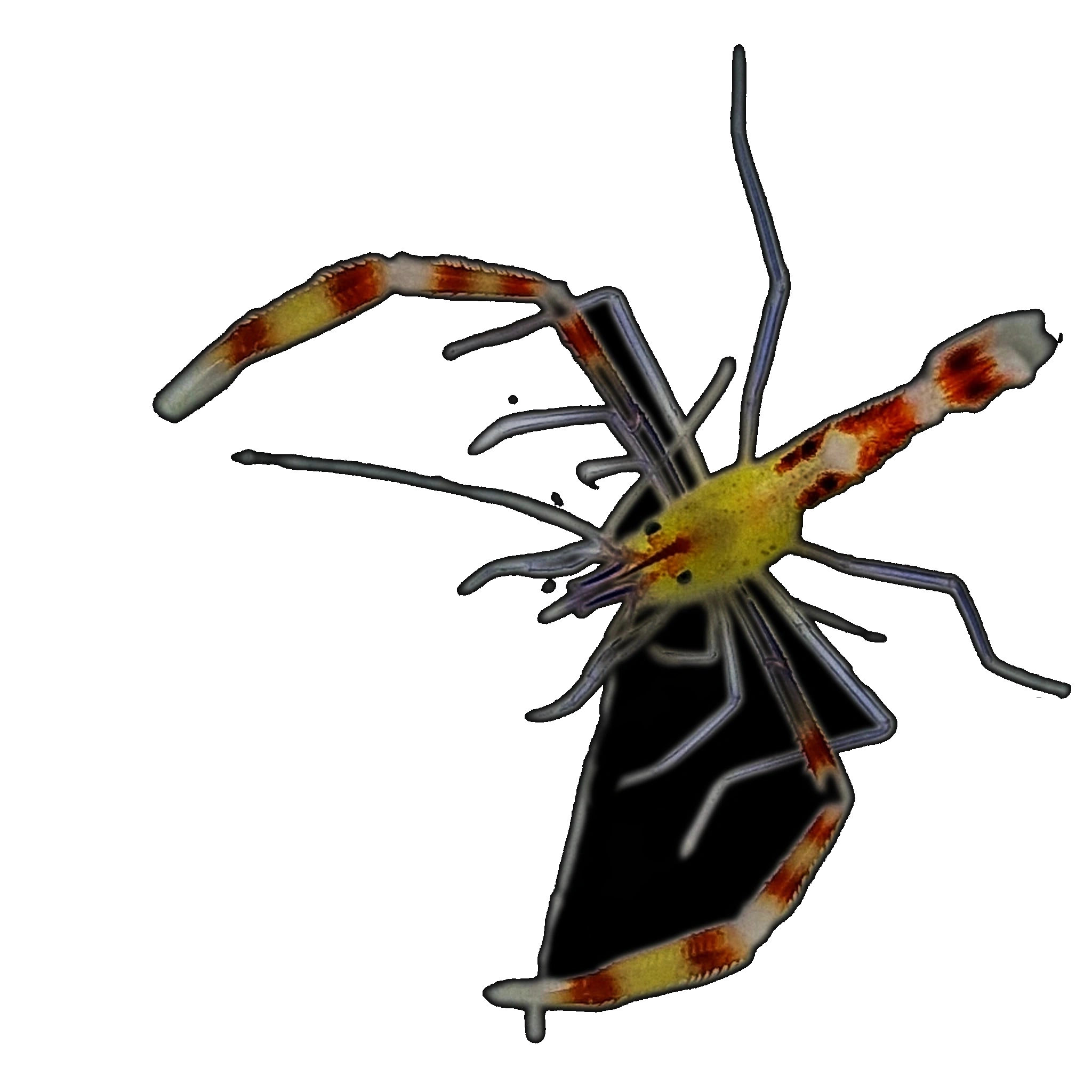
The Yellow Banded Coral Shrimp, also known as the Caribbean Boxing Shrimp, has a yellow body and legs with red and sometimes white bands on the chelae and abdomen, holding its large pinchers erect like a boxer. It must be kept singly or as a true mated pair, may harass smaller shrimp of other species, is an effective bristleworm hunter in reef aquariums, and should be fed flaked and frozen foods, plankton, and meaty items; acclimate slowly and maintain correct iodine levels for proper molting, intolerant of high nitrates and copper.
Quick facts
Handling caution: Large chelae can pinch if handled carelessly
Identity
- Also known as
- Golden Coral Shrimp; Caribbean Boxing Shrimp; Boxer Shrimp
- Environment
- Saltwater
- Native to
- Western Atlantic, Caribbean Sea, Gulf of Mexico, Bermuda, southern Florida, Brazil
- Habitat
- Coral reefs, rocky ledges, caves and crevices, and detritus-covered seabed near turtle grass meadows, at depths of roughly 10-113 meters
- Sourcing
- Wild-caught
- Conservation
- Not Evaluated
Care
- Care level
- Easy
- Temperament
- Semi-Aggressive
- Adult size
- 0.8 – 1.5 in (1.9 – 3.8 cm)
- Lifespan
- 2 – 4 yrs
- Min tank
- 20 gal (76 L)
- Placement
- Bottom
Water
- Temperature
- 72 – 79 °F (22 – 26 °C)
- pH
- 8.1 – 8.4
- dKH
- 8 – 12 dKH
- Salinity
- 1.023 – 1.025 SG
- Flow
- Moderate
Behavior & compatibility
- Social
- Pair · groups of 2+
- Aggression to own kind
- High
- Active
- Night
- Reef safe
- Yes
- Invert safe
- With caution
- Shrimp safe
- With caution
- Clean-up role
- Detritus, Pest control, Leftover food
- Population boom risk
- Low
Feeding & breeding
- Diet
- Carnivore
- Foods
- Pellets, Frozen, Live, Freeze-dried, Zooplankton
- Breeding type
- Broadcast spawner
- Breeding difficulty
- Not bred in captivity
- Sexing
- Females are generally larger than males and carry green eggs under the abdomen when gravid
- Target feeding
- Beneficial
Something wrong or missing? Submit a correction
Care guide
Overview
Reaching under two inches, this small boxer shrimp shows a yellow body and legs banded in red, sometimes edged with cream, with oversized chelae held erect while it walks. It hides by day in rockwork crevices, emerging at dusk, and should be kept singly or as a bonded pair rather than alongside other Stenopus.
Care
This small boxer shrimp does best in a mature reef system with abundant rockwork offering caves and tight crevices, since it spends daylight hours hidden and becomes more active at dusk and night. It should be kept alone or as a confirmed mated pair, as it is intolerant of conspecifics and may harass smaller shrimp species. Stable water parameters matter more than chasing exact numbers, and a tight-fitting lid helps prevent it from wandering out of the tank after molting.
Feeding
In the wild this shrimp picks parasites and dead tissue from fish at cleaning stations, but in aquariums it readily takes flaked and frozen foods, small meaty items, and plankton. Target feeding with chopped seafood, mysis, or brine shrimp supplements its natural scavenging and cleaning behavior. It also hunts bristleworms in reef tanks, which helps control that pest population.
Tank mates
Best paired with peaceful to moderate fish that will not pick at it, such as clownfish, gobies, blennies, and cardinals. It can be aggressive toward other Stenopus and smaller ornamental shrimp like cleaner or peppermint shrimp, so extra hiding spots reduce conflict in mixed-shrimp setups. It generally ignores corals and clams, making it reef safe, but very small or sleeping fish are occasionally pinched.
Breeding
Pairs form long-term bonds and display elaborate courtship behavior, with the female carrying green eggs beneath her abdomen when gravid. Successful captive rearing is uncommon, since the free-swimming larvae are typically lost to filtration and protein skimmers before completing their pelagic stage. Most specimens in the trade are wild-caught rather than tank-raised.
Health
Most problems trace back to poor acclimation, copper exposure, or unstable salinity and pH, so slow drip acclimation over 45-90 minutes is recommended. Adequate iodine supports successful molting, while inconsistent trace element levels can lead to failed or fatal molts. After molting the shrimp is soft and vulnerable and will hide, so it should not be disturbed during this period.
Sources
Something wrong or missing? Submit a correction
In the community
Popular tanks using Yellow Banded Coral Shrimp
No public tanks are showcasing Yellow Banded Coral Shrimp yet.