
Aquatic Plant
Umbrella Hair Grass (Eleocharis Vivipara)
Eleocharis viviparaCyperaceaeHairgrasses
Price: $23.99 USD
Add from My tanks →1 photos
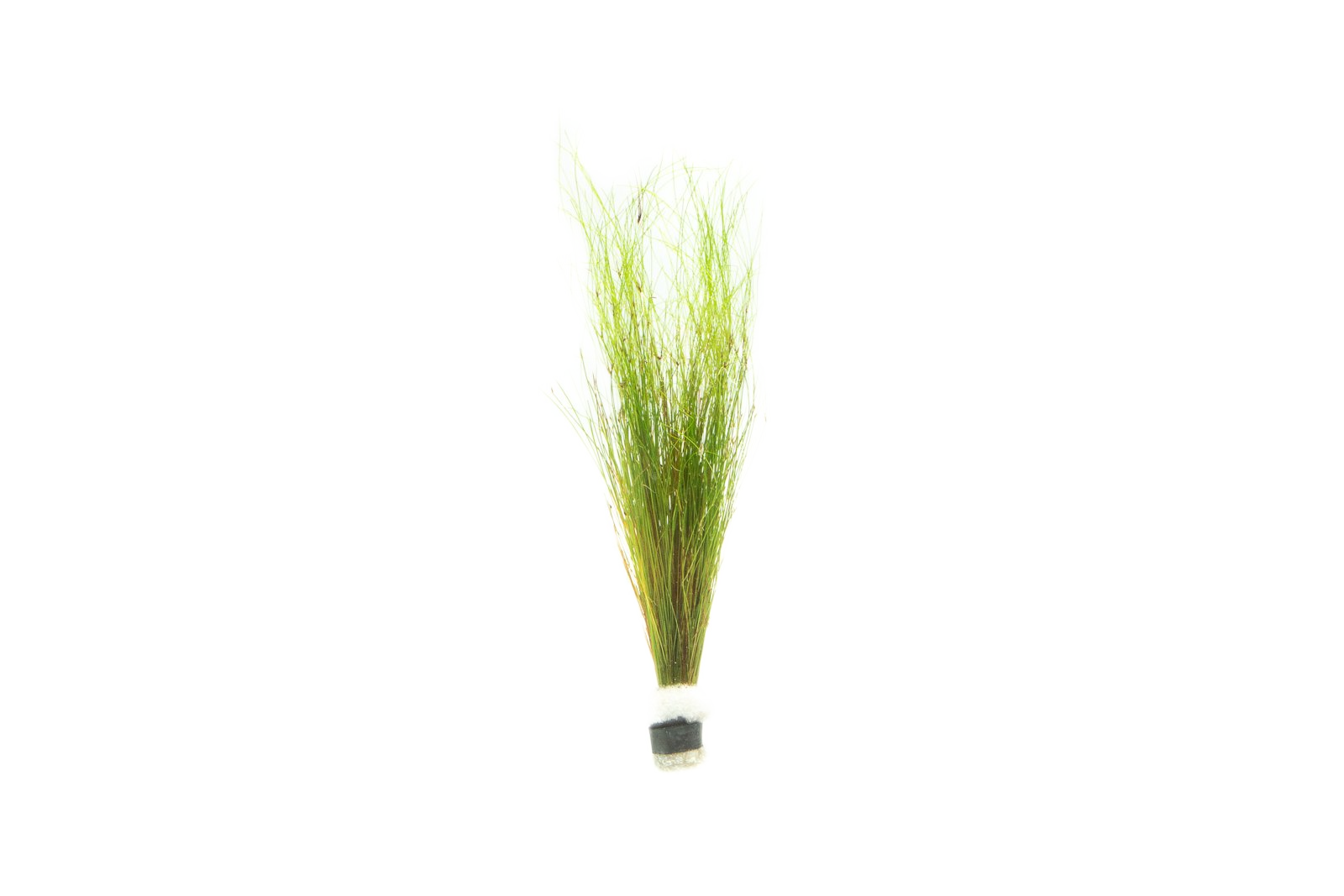
Eleocharis vivipara, commonly called Umbrella Hair Grass, is a tall, slender background grass from the southeastern USA that arches over near the surface to form a graceful, flowing canopy. It spreads by lateral runners and by unique daughter plantlets that form at the blade tips; give it medium to high light with CO2 recommended for dense, vibrant growth.
Quick facts
Identity
- Also known as
- Viviparous spikerush; Tall hairgrass
- Synonyms
- Eleocharis baldwinii var. vivipara
- Environment
- Freshwater
- Native to
- United States (Virginia to Texas and Florida)
- Habitat
- Pond margins, marshes, swamps and wet ditches in the southeastern United States, rooting in shallow water and mud
- Sourcing
- Aquacultured
- Conservation
- Not Evaluated
Care
- Care level
- Easy
- Growth form
- Rosette
- Max height
- 4 – 16 in (10 – 41 cm)
- Growth rate
- Moderate
- Placement
- Midground, Background
Water
- Temperature
- 68 – 82 °F (20 – 28 °C)
- pH
- 5.5 – 7.5
- GH
- 2 – 12 dGH
- PAR
- 30 – 60 PAR
- Flow
- Low-Moderate
- Light
- Medium
- CO₂
- Beneficial
Planting
- Substrate
- Nutrient-rich preferred
- Feeds from
- Roots
- Fertilizer needs
- Medium
- Colors
- Green
Feeding & breeding
- Propagation
- Runners, Plantlets
Something wrong or missing? Submit a correction
Care guide
Overview
Fine, needle-like blades rise straight before arching over near the water surface, forming a canopy effect once they outgrow the tank's depth. Rooted from runners in a nutrient-rich substrate, it spreads gradually across the background and also produces small plantlets at the leaf tips that root where they touch down. Moderate light and steady root feeding keep growth compact rather than leggy; regular trimming and thinning maintain an open midground below.
Care
Umbrella hairgrass grows as a taller, arching relative of dwarf hairgrass, sending up fine leafless culms that eventually bend over near the water surface once they outgrow the tank depth. It tolerates a wide range of conditions and does not strictly require CO2, but medium to high light and supplemental carbon noticeably increase density and keep growth compact rather than leggy. Regular trimming is needed to prevent it from shading out lower plants and to keep the arching canopy tidy, and thinning out runners keeps the stand from becoming overcrowded.
Planting & trimming
Separate clumps into small portions and plant them roughly an inch apart, burying the roots about halfway into the substrate while keeping the base of the stems above the surface. Once established the plant spreads on its own via lateral runners, filling in gaps over several weeks, and older stands can simply be thinned by pulling out excess shoots rather than replanting. Daughter plantlets that form at the leaf tips can be snipped off and pressed into the substrate elsewhere to start new clumps.
Fertilizing
This plant draws most of its nutrition through its root system, so a nutrient-rich substrate or the regular use of root tabs supports the strongest growth, particularly in inert gravel setups. Liquid fertilizers supplying iron and nitrogen help maintain deep green coloration and prevent thin, pale leaves. In low-tech tanks without CO2, keeping a steady dosing routine matters more since growth is naturally slower and deficiencies show up more readily.
Propagation
The species propagates readily by underground runners that send up new shoots across the substrate, and can be divided simply by separating connected clumps. It also produces small viviparous plantlets directly on the tips of mature leaf blades, a distinctive trait for the species; these bend down, root where they touch the substrate, and grow into independent plants. Both runner divisions and detached plantlets can be replanted to start new colonies elsewhere in the tank.
Problems
New imports commonly melt back after the switch from emersed nursery growth to fully submersed conditions, with old leaves dying off before fresh growth appears from the base. This is a normal transition and not a sign of a dying plant, though patience over a few weeks is required. Because the leaves are fine and hair-like, algae can accumulate on them if light, CO2 and nutrients fall out of balance, so consistent dosing and adequate flow around the stand help keep it clean.
Sources
Something wrong or missing? Submit a correction
In the community
Popular tanks using Umbrella Hair Grass (Eleocharis Vivipara)
No public tanks are showcasing Umbrella Hair Grass (Eleocharis Vivipara) yet.