
Live Algae
Texas Tea Live Phytoplankton
Multiple (Dunaliellaceae, Phaeodactylaceae, Chaetocerotaceae)Live phytoplankton
Add from My tanks →1 photos
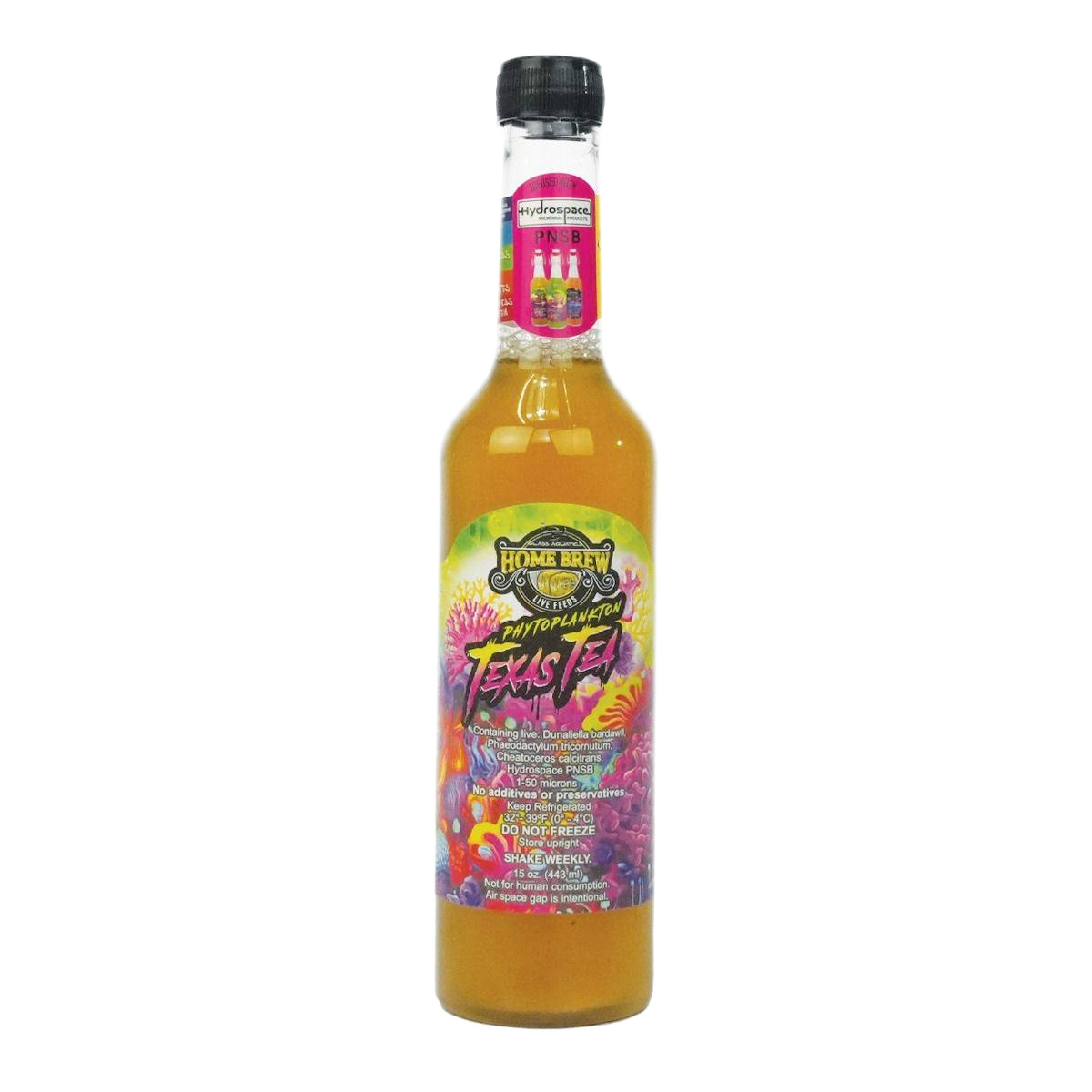
Texas Tea is a live phytoplankton blend (HomeBrew Live Feeds) with Dunaliella bardawil, Phaeodactylum tricornutum, Chaetoceros calcitrans, and Hydrospace PNSB bacteria. Rich in carotenoids, EPA, and essential fatty acids, it is dosed 5 mL per 15 gallons three times weekly to support coral coloration, growth, immunity, and microbiome balance.
Quick facts
Identity
- Also known as
- Live phyto blend; coral food phytoplankton
- Synonyms
- Live phyto; phytoplankton blend
- Environment
- Saltwater
- Native to
- Cosmopolitan (marine microalgae, worldwide oceans)
- Habitat
- Open ocean and coastal marine waters as free-floating single-celled algae; cultured commercially in photobioreactors for the aquarium trade
- Sourcing
- Aquacultured
- Conservation
- Not Evaluated
Care
- Care level
- Easy
- Growth form
- Macroalgae
- Growth rate
- Fast
- Placement
- Floating
Water
- Temperature
- 72 – 80 °F (22 – 27 °C)
- pH
- 8.1 – 8.4
- dKH
- 8 – 12 dKH
- Salinity
- 1.023 – 1.026 SG
- Flow
- Low-Moderate
- Light
- Low
- CO₂
- Not needed
Planting
- Substrate
- Not needed
- Feeds from
- Water column
- Fertilizer needs
- Low
- Colors
- Green, Brown
Something wrong or missing? Submit a correction
Care guide
Overview
Texas Tea is a multi-species live phytoplankton blend combining Dunaliella bardawil, Phaeodactylum tricornutum, and Chaetoceros calcitrans with added PNSB bacteria for a broader nutritional and microbial profile. Refrigeration and gentle, gradual dosing keep the culture viable and avoid clouding the water. Best suited to reef keepers targeting filter feeders, NPS corals, and overall microbiome support rather than as a standalone feed.
Care
This is a liquid suspension of live single-celled marine microalgae rather than a rooted plant, dosed directly into the water column to feed filter-feeding invertebrates and corals. Shake the bottle before use and keep it refrigerated to preserve cell viability, since ultra-micro phytoplankton cells die off quickly at room temperature. Because it is a living product with a limited shelf life, buy in quantities that will be used within a few weeks and rotate between different phytoplankton species for a broader nutritional profile.
Fertilizing
Dose around 5 mL per 15 gallons of tank water, three times per week, adjusting based on nutrient export capacity and visible response from filter feeders. Overdosing can cloud the water and spike nitrate and phosphate, so it is best introduced gradually while monitoring water parameters. Many reef keepers target-feed it near NPS corals, clams, and feather dusters, or dose broadly to support the tank's microbiome and pod populations.
Propagation
Commercially cultured in controlled photobioreactor systems rather than propagated by the hobbyist; not typically grown at home due to contamination risk and the need for sterile technique.
Problems
Because it is alive, the product can crash or lose potency if stored warm, exposed to light for extended periods, or left unrefrigerated after opening. Overdosing risks a bacterial bloom or nutrient spike, particularly in smaller or lightly stocked systems. Always smell and inspect the bottle before use, as a foul odor or discoloration indicates the culture has died and should be discarded.
Sources
Something wrong or missing? Submit a correction
In the community
Popular tanks using Texas Tea Live Phytoplankton
No public tanks are showcasing Texas Tea Live Phytoplankton yet.