
Terrarium Plant
Selaginella Wallichi
Selaginella wallichiiSelaginellaceaeSpike mosses
Price: $7.99 USD
Add from My tanks →1 photos
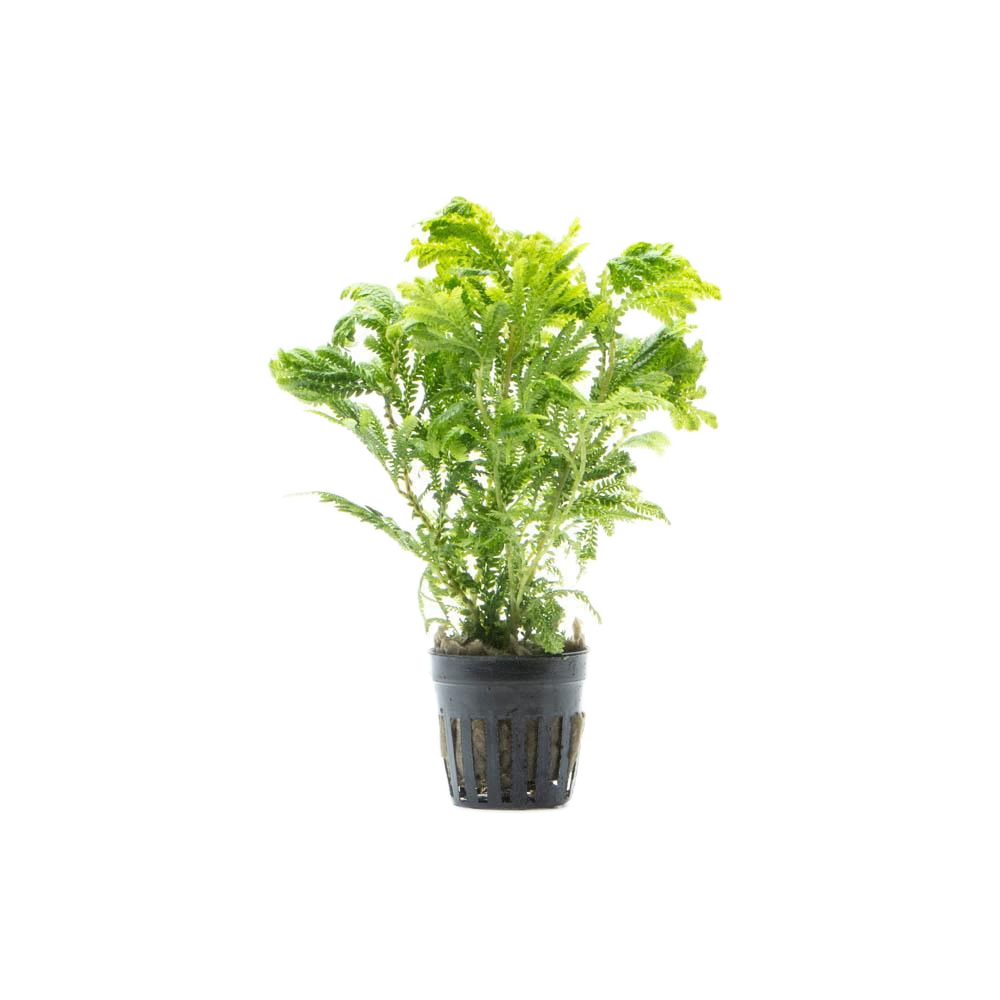
Selaginella Wallichi (Spike Moss) is a larger-growing relative of African Club Moss that spreads sporadically through the enclosure. Not an aquarium plant — it loves humidity but must not be fully submerged; easy to care for in terrariums, durable for rowdy livestock.
Quick facts
Identity
- Also known as
- Wallich's Spikemoss; Spike Moss; Peacock Fern-style plant
- Synonyms
- Selaginella wallichi
- Environment
- Terrestrial
- Native to
- Tropical Asia, Africa, Brazil
- Habitat
- Humid forest floors and shaded, moist ground in tropical and subtropical regions
- Sourcing
- Aquacultured
- Conservation
- Not Evaluated
Care
- Care level
- Easy
- Growth form
- Upright
- Max height
- 3 – 10 in (7.6 – 25 cm)
- Spread
- 24 in (61 cm)
- Growth rate
- Moderate
- Placement
- Midground, Background
Water
- Temperature
- 65 – 80 °F (18 – 27 °C)
- Humidity
- 50 – 80%
Planting
- Substrate
- Nutrient-rich preferred
- Feeds from
- Roots
- Fertilizer needs
- Low
- Colors
- Green
Feeding & breeding
- Propagation
- Cuttings, Rhizome division
Something wrong or missing? Submit a correction
Care guide
Overview
Grown across humid tropical regions of Asia, Africa, and Brazil, this spikemoss spreads sporadically through terrarium and paludarium backgrounds above the waterline rather than submerged. It forms an upright, fuller habit than African Club Moss when pruned regularly, and tolerates handling and boisterous tankmates well. Bright indirect light, moist soil, and steady humidity keep the fronds healthy.
Care
Wallich's spikemoss is a terrestrial fern ally suited to humid terrariums, vivariums, and paludarium backgrounds above the waterline rather than true aquariums. It grows in an upright, spreading habit and will fill an enclosure over time if not pruned back periodically. Bright but indirect light suits it best, since direct sun scorches the delicate fronds, and it needs a consistently moist substrate with strong ambient humidity to stay healthy. It tolerates handling well and holds up to boisterous terrarium livestock such as larger invertebrates or amphibians.
Planting & trimming
Remove any cotton or packing material from the roots before planting into a quality, well-draining soil mix a few inches deep, since the roots grow fairly deep once established. Position the plant out of direct light in a humid area above the waterline in paludariums, or throughout a standard terrarium substrate. Prune regularly to control its spreading habit and encourage a fuller, bushier form.
Fertilizing
This spikemoss is not a heavy feeder and rarely needs supplemental fertilizer in a terrarium setting, since it draws nutrients from a rich organic soil mix through its roots. Yellowing fronds usually point to overwatering rather than a nutrient shortage, so check drainage and moisture levels before assuming a deficiency. Occasional weak liquid fertilizer during active growth can help fill out sparse areas, but it is not essential.
Propagation
New plants are most easily produced by taking stem cuttings from healthy growth and rooting them in moist substrate under high humidity. Division of an established, spreading clump is also effective, separating rooted sections and replanting them in fresh soil.
Problems
Yellowing or mushy fronds are the most common problem and typically indicate waterlogged substrate or standing water at the roots rather than underwatering. Poor air circulation combined with high humidity can encourage mold or mildew on the foliage, so enclosures should allow some airflow even while staying humid. Direct sunlight quickly scorches the thin leaves, showing up as browning or crisping at the tips.
Sources
Something wrong or missing? Submit a correction
In the community
Popular tanks using Selaginella Wallichi
No public tanks are showcasing Selaginella Wallichi yet.