
Terrarium Plant
Selaginella Uncinata
Selaginella uncinataSelaginellaceaeTerrarium Mosses
Price: $9.99 USD
Add from My tanks →1 photos
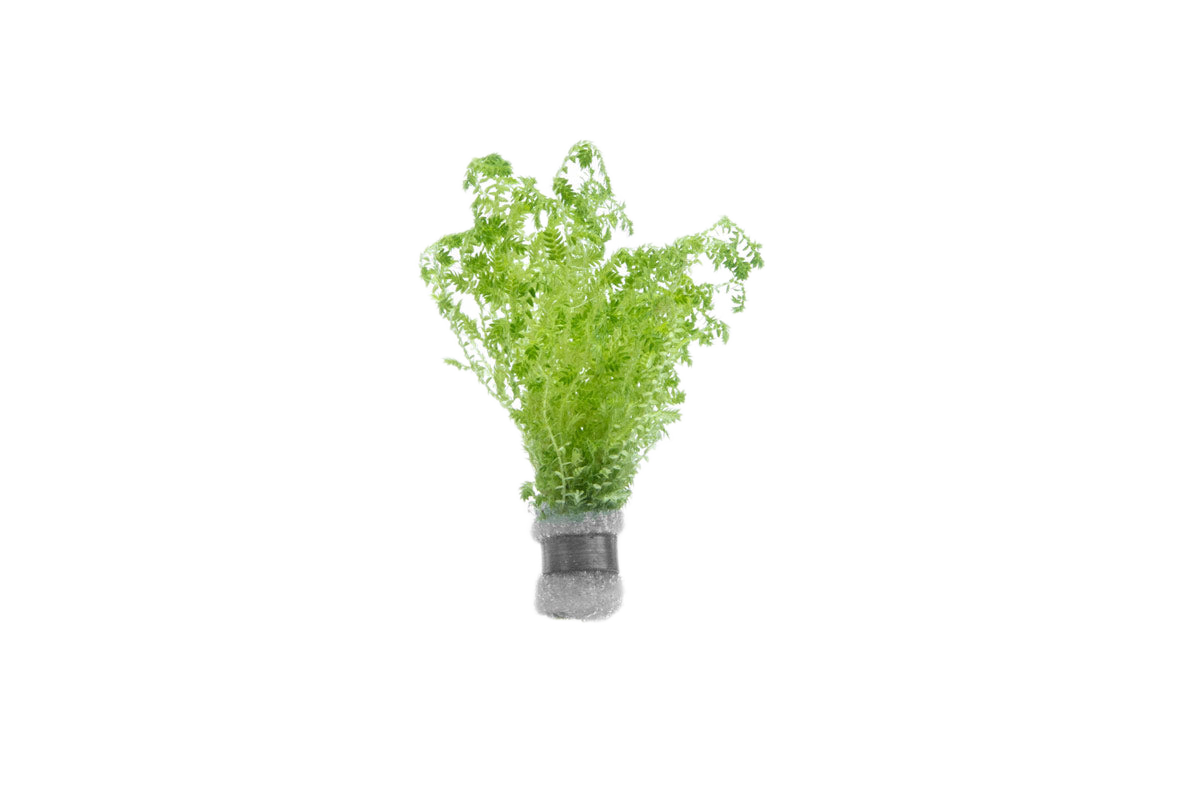
Selaginella Uncinata (Peacock Moss) is a beautiful terrestrial plant native to southern China with fern-like foliage that spreads low and wide, ideal for paludariums and terrariums. Its blue-green foliage can appear iridescent under low lighting; it is easy to care for with partial shade and good humidity, but must never be fully submerged.
Quick facts
Identity
- Also known as
- Blue Spikemoss; Rainbow Fern; Peacock Fern; Rainbow Moss; Blue Spike Moss
- Synonyms
- Lycopodium uncinatum
- Environment
- Terrestrial
- Native to
- Southern China, Vietnam
- Habitat
- Shaded, humid forest floors and damp rocky areas in subtropical woodland, often near streams
- Sourcing
- Captive-bred
- Conservation
- Not Evaluated
Care
- Care level
- Easy
- Growth form
- Carpeting
- Max height
- 2 – 4 in (5.1 – 10 cm)
- Spread
- 18 in (46 cm)
- Growth rate
- Moderate
- Placement
- Foreground, Carpet
Water
- Temperature
- 65 – 80 °F (18 – 27 °C)
- Humidity
- 70 – 90%
Planting
- Substrate
- Nutrient-rich preferred
- Feeds from
- Roots
- Fertilizer needs
- Low
- Colors
- Blue, Green, Teal
Feeding & breeding
- Propagation
- Rhizome division, Cuttings
Something wrong or missing? Submit a correction
Care guide
Overview
Finely divided fronds carry a metallic blue-green sheen that shifts to iridescent under low, indirect light, forming a low creeping mat across substrate and cork bark. It demands constant moisture and high humidity, thriving in closed terrariums and paludariums above the waterline rather than open tanks. Easy to propagate from stem cuttings laid across damp ground.
Care
Peacock moss is not a true moss but a spikemoss, or fern ally, that forms a low creeping mat of finely divided fronds with a metallic blue-green sheen. It needs constant moisture and very high humidity to grow well, making it best suited to closed or mostly closed terrariums and paludariums rather than open tanks or dry room air. Light should be kept low to moderate and indirect, since direct sun quickly scorches the foliage and washes out the iridescent color. Temperatures in the mid 60s to upper 70s Fahrenheit suit it well, with growth slowing noticeably below 55°F.
Planting & trimming
Lay short stem cuttings directly across constantly moist substrate rather than burying them, since the plant roots naturally at nodes where stems touch damp ground. It spreads readily over soil, leaf litter, or the base of cork bark and rock work in a humid enclosure, gradually knitting into a dense mat. Bottom watering or misting is preferable to overhead soaking, which can encourage rot within the dense foliage.
Fertilizing
In terrarium or paludarium settings this plant draws most of what it needs from a rich, organic substrate such as coco fiber, leaf litter, or bioactive soil mixes rather than dosed liquid fertilizer. A light dusting of diluted general houseplant fertilizer during active growth can help if fronds look pale or thin, but heavy feeding is rarely necessary. Outdoor or greenhouse specimens grown in pots benefit from monthly feeding through the warmer months.
Propagation
Propagation is done by division of established clumps or by taking stem cuttings and laying them across moist substrate, where they root readily at the nodes within a few weeks. Spores are produced in terminal spike-like structures but division and cuttings are far more practical and reliable for hobbyist propagation.
Problems
The clearest sign of stress is loss of the blue iridescence, which fades quickly when humidity drops or light becomes too strong. Crisp, browning stems indicate the plant has dried out, a condition it rarely recovers from once advanced, while yellow or mushy stems point to waterlogging or poor air circulation. Because it has no tolerance for full submersion, care must be taken to keep it above the waterline in paludarium builds.
Sources
More Terrarium Mosses
Something wrong or missing? Submit a correction
In the community
Popular tanks using Selaginella Uncinata
No public tanks are showcasing Selaginella Uncinata yet.