
Terrarium Plant
Saxifraga Stolonifera (Strawberry Begonia)
Saxifraga stoloniferaSaxifragaceaeTerrarium plants
Price: $12.99 USD
Add from My tanks →1 photos
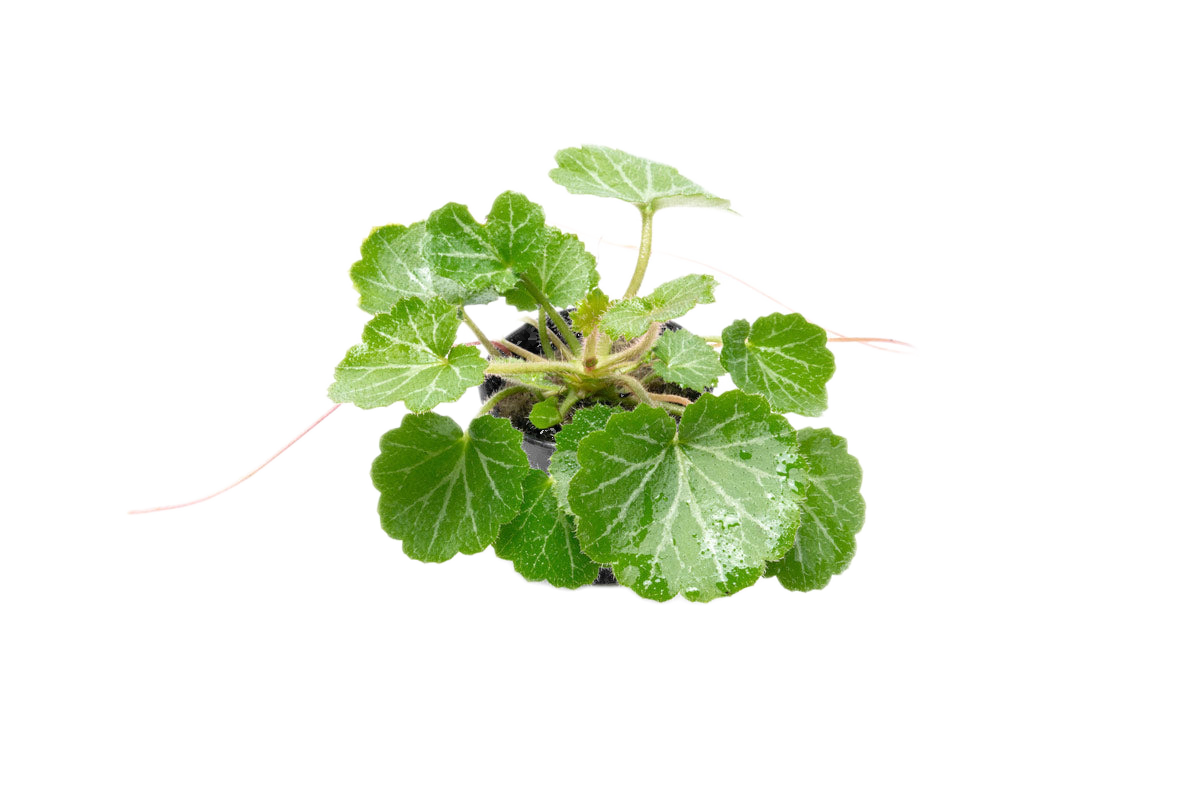
Saxifraga stolonifera (Strawberry Begonia) is an easy Asian terrestrial plant with rounded fuzzy leaves, silver veining and red undersides, spreading by runners into a cascading habit. It suits terrariums, paludarium emersed sections or as a houseplant in shaded to bright indirect light, and dies if submerged.
Quick facts
Identity
- Also known as
- Mother of Thousands; Strawberry Geranium; Creeping Saxifrage; Roving Sailor
- Synonyms
- Saxifraga cuscutiformis; Saxifraga sarmentosa
- Environment
- Terrestrial
- Native to
- China, Japan, South Korea
- Habitat
- Shaded, humid woodland floors and moist rock crevices in temperate East Asia
- Sourcing
- Captive-bred
- Conservation
- Not Evaluated
Care
- Care level
- Easy
- Growth form
- Rosette
- Max height
- 2 – 9 in (5.1 – 23 cm)
- Spread
- 24 in (61 cm)
- Growth rate
- Moderate
- Placement
- Foreground, Midground
Water
- Temperature
- 65 – 77 °F (18 – 25 °C)
- Humidity
- 60 – 90%
Planting
- Substrate
- Nutrient-rich preferred
- Feeds from
- Roots
- Fertilizer needs
- Low
- Colors
- Green, Red, Multicolor
Feeding & breeding
- Propagation
- Plantlets, Rhizome division, Seeds
Something wrong or missing? Submit a correction
Care guide
Overview
Suited to open terrariums, paludarium land sections, or a shaded windowsill rather than any aquatic setup, since submersion causes rot. Rounded, fuzzy leaves show silvery veining above and red undersides, and thin red stolons trail outward tipped with new plantlets for a cascading look. Give it moist, airy substrate and moderate indirect light rather than deep shade.
Care
Strawberry begonia is a rosette-forming groundcover that spreads by sending out thin red stolons tipped with plantlets, similar to a strawberry plant. It does best in shaded to bright indirect light with consistently moist, well-drained substrate and does not tolerate being submerged or waterlogged for long periods. In open terrariums or paludarium land areas it appreciates good airflow around the crown to prevent fungal issues, while closed humid setups suit it well provided temperatures stay moderate.
Planting & trimming
Plant the rosette shallowly with the crown sitting at or just above the substrate surface, since burying it can encourage rot. Use a light, moisture-retentive but airy mix such as fine coco or peat blended with orchid bark and perlite. Trim excess stolons periodically to control spread and remove spent flower stems or leggy runners to keep the plant compact.
Fertilizing
Feed sparingly during active growth with a diluted balanced liquid fertilizer, roughly quarter strength, applied every few weeks. In a mature terrarium with an organic, humus-rich substrate additional feeding is rarely needed. Pale or small new leaves usually indicate the substrate has dried out or fertilizing has been skipped for too long rather than a specific nutrient deficiency.
Propagation
Propagation is done by detaching the small plantlets that form along the stolons once they have several mature leaves, then rooting them either directly in moist substrate or in water until roots appear before potting on. Established clumps can also be divided by separating individual rosettes. Seed propagation is possible but far slower and less commonly used by hobbyists.
Problems
Rot at the crown is the most common issue and usually results from constantly wet foliage or stagnant, poorly drained substrate. Outdoors or in open setups it can attract slugs, aphids, and glasshouse red spider mite, though these pests are uncommon in closed terrariums. Overall it is a hardy plant with few serious health problems when humidity and drainage are balanced.
Sources
More Terrarium plants
Something wrong or missing? Submit a correction
In the community
Popular tanks using Saxifraga Stolonifera (Strawberry Begonia)
No public tanks are showcasing Saxifraga Stolonifera (Strawberry Begonia) yet.