
Aquatic Plant
Potamogeton Crispus
Potamogeton crispusPotamogetonaceaePondweeds
Price: $8.99 USD
Add from My tanks →1 photos
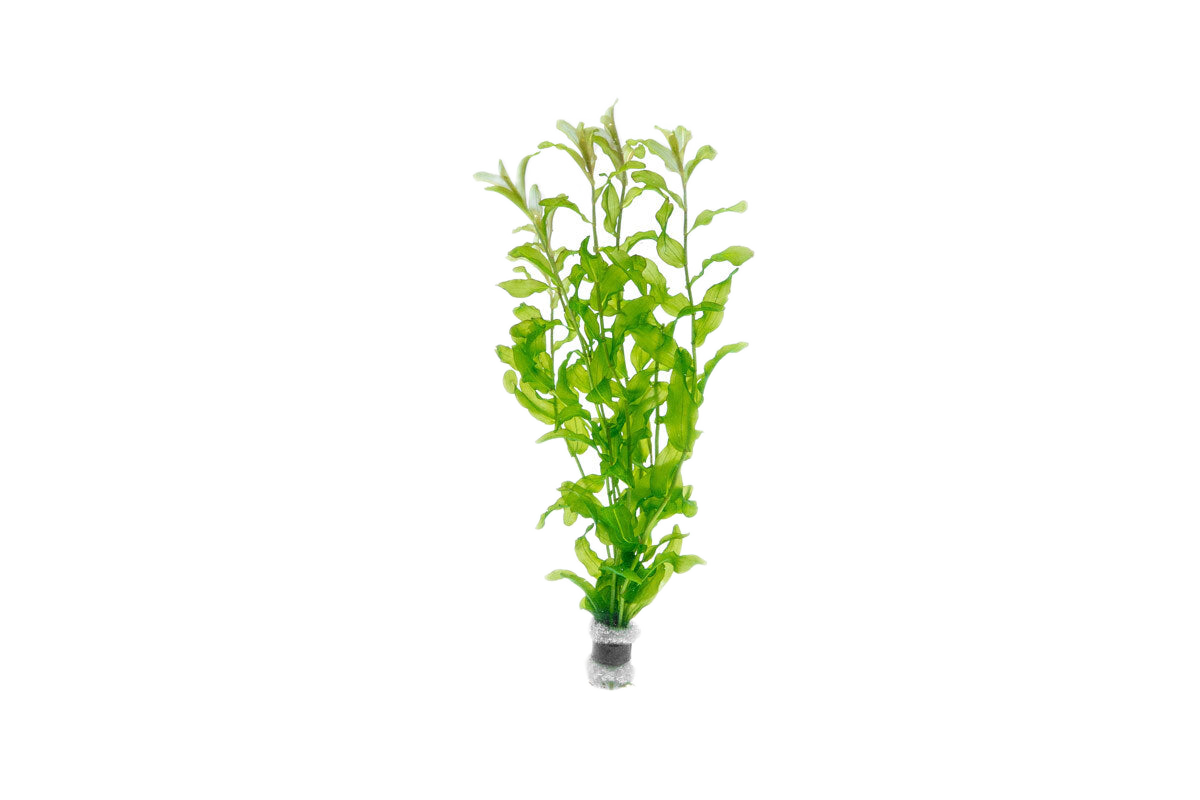
Potamogeton Crispus (Pondweed) is a unique aquatic plant that grows in both freshwater and brackish water, characterized by bright coloration and slight translucency at certain angles. Easy-going and not particularly difficult to keep, it becomes a prolific grower in optimal conditions, suiting beginners or low-tech planted setups.
Quick facts
Identity
- Also known as
- Curly pondweed; Curled pondweed; Curly-leaf pondweed
- Synonyms
- Potamogeton crispus var. serrulatus
- Environment
- Freshwater
- Native to
- Europe, Asia, Africa, Australia
- Habitat
- Rooted in lakes, ponds, canals and slow rivers in fresh and slightly brackish water, often in nutrient-rich or turbid conditions
- Sourcing
- Both
- Conservation
- Not Evaluated
Care
- Care level
- Easy
- Growth form
- Stem
- Max height
- 4 – 31.5 in (10 – 80 cm)
- Spread
- 6 in (15 cm)
- Growth rate
- Fast
- Placement
- Midground, Background
Water
- Temperature
- 39 – 75 °F (4 – 24 °C)
- pH
- 6.5 – 8.5
- GH
- 4 – 18 dGH
- Flow
- Low-Moderate
- Light
- Low
- CO₂
- Not needed
Planting
- Substrate
- Nutrient-rich preferred
- Feeds from
- Both
- Fertilizer needs
- Medium
- Colors
- Green, Brown, Red
Feeding & breeding
- Propagation
- Runners, Rhizome division, Cuttings
Something wrong or missing? Submit a correction
Care guide
Overview
Wavy, translucent leaves spread quickly along rooted stems that root again at each node, forming dense stands in the midground to background. It grows fastest in cool water below the mid-70s F and needs regular trimming to stop it reaching the surface. Suited to unheated tanks, coldwater setups and ponds rather than tropical communities.
Care
Curly pondweed suits unheated aquariums, coldwater setups and outdoor ponds rather than typical tropical community tanks. It tolerates low light and needs no supplemental CO2, but rooted stems grow quickly and require regular trimming to keep them from reaching the surface and shading out other plants. Because it follows a cool-season growth cycle, warm tropical temperatures can trigger premature dieback, so it does best kept below the mid-70s F. In many parts of the United States it is a regulated invasive species, so trimmings and fragments should be discarded in the trash rather than released into local waterways.
Planting & trimming
Plant the thin rhizomes lightly in substrate, leaving the crown exposed, and allow the stems to root at the nodes as they spread. Trim back regularly once stems approach the surface to prevent a dense floating mat and to encourage bushier growth from lower nodes. Fragments and cuttings can be replanted directly into substrate to establish new stands quickly.
Fertilizing
This plant draws nutrients through both its roots and the water column, so it benefits from a nutrient-rich substrate supplemented with occasional root tabs. Liquid fertilizers containing iron and micronutrients support faster growth and richer leaf color, especially in higher light. Pale or thin new growth usually signals a lack of nitrogen or iron in the water column.
Propagation
Propagation happens readily from stem cuttings and rhizome division, as well as naturally through fragmentation. The plant also produces hardened winter buds called turions that lie dormant and later sprout into new plants, offering another easy means of propagating it in cooler setups.
Problems
Healthy specimens show translucent, wavy dark green leaves with finely toothed edges; leaves that turn brown and mushy at the base often indicate the plant entering its natural dormant phase rather than disease. In warm water it can decline through the summer months as part of its normal cool-season cycle, sometimes dropping leaves before resuming growth once temperatures fall again. Algae can accumulate on the slow-growing winter form, so trimming back tired growth helps keep the plant clean.
Sources
Something wrong or missing? Submit a correction
In the community
Popular tanks using Potamogeton Crispus
No public tanks are showcasing Potamogeton Crispus yet.