
Aquatic Plant
Piptospatha Ridleyi
Piptospatha ridleyiAraceaeBucephalandra-like Aroids
Price: $49.99 USD
Add from My tanks →1 photos
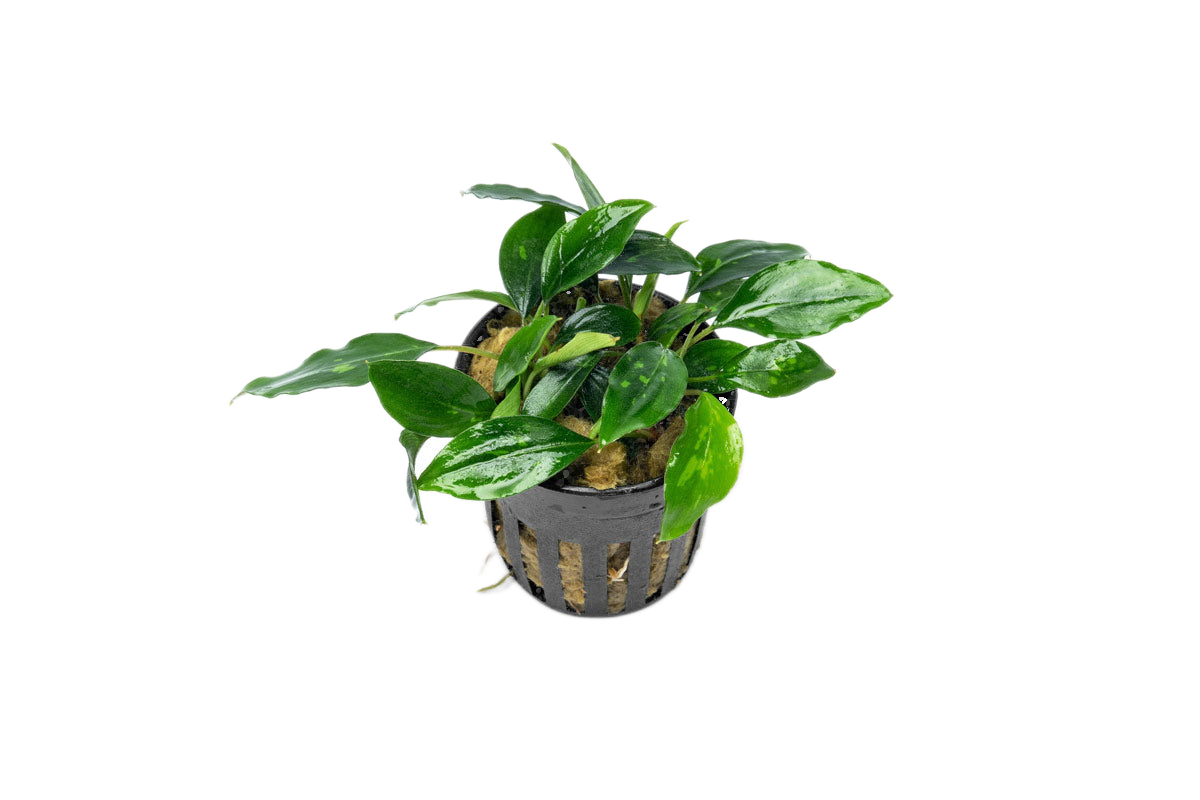
Piptospatha Ridleyi is a rare, low-tech aquarium plant from the riverbanks of Borneo, belonging to the same family as Bucephalandra. It features elongated leaves with striking light green markings on a dark green base; attached to driftwood or rocks rather than buried, it works well as an accent for foreground and midgrounds of planted tanks.
Quick facts
Identity
- Also known as
- Pipto Ridleyi
- Environment
- Freshwater
- Native to
- Borneo, Peninsular Malaysia
- Habitat
- Rheophytic herb along streams in lowland forests, growing on mudbanks and rocks in fast-flowing water or near waterfalls
- Sourcing
- Aquacultured
- Conservation
- Not Evaluated
Care
- Care level
- Moderate
- Growth form
- Rhizome
- Max height
- 2 – 5 in (5.1 – 13 cm)
- Spread
- 4 in (10 cm)
- Growth rate
- Slow
- Placement
- Foreground, Midground
Water
- Temperature
- 72 – 82 °F (22 – 28 °C)
- pH
- 6.0 – 7.5
- GH
- 2 – 10 dGH
- Flow
- Low-Moderate
- Light
- Low
- CO₂
- Beneficial
Planting
- Substrate
- Not needed
- Feeds from
- Water column
- Fertilizer needs
- Low
- Colors
- Green, Multicolor
Feeding & breeding
- Propagation
- Rhizome division
Something wrong or missing? Submit a correction
Care guide
Overview
Elongated leaves show light green mottling over a darker green base, giving each rhizome a mottled, hand-sized accent for hardscape. Slow-growing and rheophytic by nature, it is tied or glued to driftwood or rock rather than planted, tolerating low light and gentle to moderate flow. Suits foreground or midground placement in soft to moderately hard water alongside shrimp.
Care
Piptospatha ridleyi does best attached to driftwood or rock in an area of gentle to moderate flow rather than planted in substrate. It tolerates a wide range of soft to moderately hard water and adapts to both low-tech and CO2-supplemented setups, though it grows slowly regardless. Keep lighting on the lower side, since strong light tends to encourage algae growth on its leaves in the same way it does with Anubias and Bucephalandra.
Planting & trimming
Attach the rhizome to a piece of driftwood or rock using thread, cotton string, or cyanoacrylate glue, positioning it so the rhizome sits on the surface rather than buried in substrate. Given time the roots will grip the hardscape on their own, after which any ties can be removed. Trim off old or blackened leaves at the base as needed to keep the plant tidy.
Fertilizing
Nutrient needs are modest and mostly met through the water column, so light dosing of a liquid fertilizer containing iron and micronutrients is usually sufficient. Root tabs are not necessary since the rhizome should never be buried. Pale or thin new leaves can indicate a lack of trace elements or insufficient nutrient dosing over time.
Propagation
New plants are produced by dividing the rhizome once it has developed multiple growth points or side shoots, similar to propagating Anubias or Bucephalandra. Each division should retain a section of rhizome with at least one healthy leaf and some roots before being reattached to new hardscape. Growth is slow, so propagation opportunities arise infrequently.
Problems
Melt is uncommon but can occur briefly after transition between emersed and submerged growth, with older leaves dying back before new growth resumes. Algae can build up on the slow-growing leaves if lighting is too strong or flow too stagnant, so gentle water movement across the leaves helps keep them clean. Otherwise this species is fairly resilient once established on hardscape.
Sources
Something wrong or missing? Submit a correction
In the community
Popular tanks using Piptospatha Ridleyi
No public tanks are showcasing Piptospatha Ridleyi yet.