Freshwater Fish
Panther Crab
Parathelphusa pantherinaGecarcinucidaeFreshwater crabs
Add from My tanks →1 photos
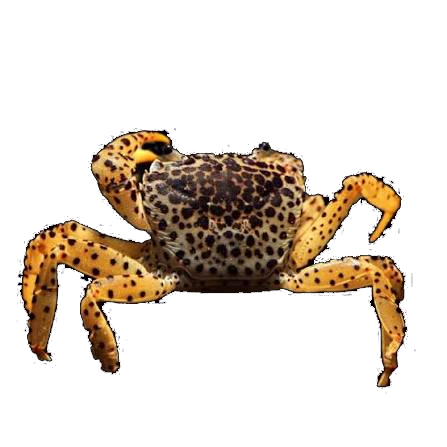
A Panther crab (Parathelphusa pantherina), an ornamental freshwater crab with leopard-like spotted patterning; a bottom-dwelling invertebrate needing hiding spots and a secure lid.
Quick facts
Handling caution: Can deliver a painful pinch with its claws; handle with care
Identity
- Also known as
- Sulawesi Panther Crab; Matano Crab
- Synonyms
- None known
- Environment
- Freshwater
- Native to
- Indonesia (Lake Matano, Sulawesi)
- Habitat
- Endemic to Lake Matano and areas south of the lake on Sulawesi, found under roots, logs, and rocks on sandy substrate in warm, hard, alkaline water.
- Sourcing
- Wild-caught
- Conservation
- Endangered
Care
- Care level
- Moderate
- Temperament
- Aggressive
- Adult size
- 1.5 – 4 in (3.8 – 10 cm)
- Lifespan
- 3 – 8 yrs
- Min tank
- 20 gal (76 L)
- Growth rate
- Moderate
- Placement
- Bottom
Water
- Temperature
- 78 – 84 °F (26 – 29 °C)
- pH
- 7.5 – 8.5
- GH
- 6 – 12 dGH
- TDS
- 200 – 350 ppm
- dKH
- 4 – 8 dKH
- Flow
- Moderate
Behavior & compatibility
- Social
- Solitary
- Aggression to own kind
- High
- Active
- Night
- Invert safe
- No
- Plant safe
- No
- Shrimp safe
- No
- Clean-up role
- Detritus, Carrion, Algae
- Population boom risk
- Low
Feeding & breeding
- Diet
- Omnivore
- Foods
- Pellets, Frozen, Live, Vegetables, Algae, Biofilm, Freeze-dried
- Breeding type
- Direct development
- Breeding difficulty
- Difficult
- Sexing
- Males have a narrow, pointed abdominal flap on the underside; females have a wider, rounded flap used for carrying eggs.
- Target feeding
- Beneficial
Something wrong or missing? Submit a correction
Care guide
Overview
Patrols crevices and burrows among rocks after dark, emerging to scavenge detritus or ambush snails and slow tank mates. Its yellow-brown carapace carries dark leopard-like blotches, and it demands hard, alkaline water rather than the soft setups typical of most trade crabs. Solitary by nature, it needs abundant caves, a tight lid, and calcium-rich food to molt safely.
Care
This fully aquatic crab does not require a land area but does need abundant rock caves and hiding spots to reduce territorial conflict. A tight-fitting lid is essential since panther crabs are persistent escape artists, especially when unhappy with water conditions or tank mates. Unlike most crabs sold in the trade, this species requires hard, alkaline water rather than the typical neutral freshwater setup, so remineralizing soft tap water is often necessary. Keeping only one male per tank is strongly advised, as males fight to the death over territory.
Feeding
An opportunistic omnivore leaning carnivorous, it hunts snails, shrimp, and sleeping or slow fish in addition to scavenging detritus and leftover food. Offer a varied diet of sinking pellets, frozen or live foods, and blanched vegetables, supplementing with calcium and iodine sources to support healthy molting. Feeding at night suits its nocturnal habits and reduces competition with diurnal tank mates.
Tank mates
Best kept alone or with robust fish too large to be preyed upon, since this crab will eat small fish, shrimp, and snails given the chance. Multiple males in one tank often results in fatal fighting, though females can sometimes cohabit in larger, heavily rock-scaped setups. Avoid delicate plants and slow-moving invertebrates, as both are likely to be destroyed or consumed.
Breeding
Females carry fertilized eggs under their broad abdominal flap until they hatch as fully formed juvenile crabs, since this species has no larval stage requiring brackish water. Successful captive breeding is uncommon and generally requires stable, mineral-rich water and low stress from cohabitants. Females are vulnerable during molting and can be killed by tank mates or even injured mates if not given adequate cover.
Health
Failed molts are a leading cause of death in this species, often linked to inadequate calcium or unstable water hardness. Sudden temperature drops, such as from a failed heater, can be fatal since the species evolved in a consistently warm lake environment. Watch for missing limbs or lethargy after molting, which can signal mineral deficiencies or poor water quality.
Sources
Something wrong or missing? Submit a correction
In the community