
Marine Invertebrates
ORA Variegated Urchin
Lytechinus variegatusToxopneustidaeSea urchins
Add from My tanks →1 photos
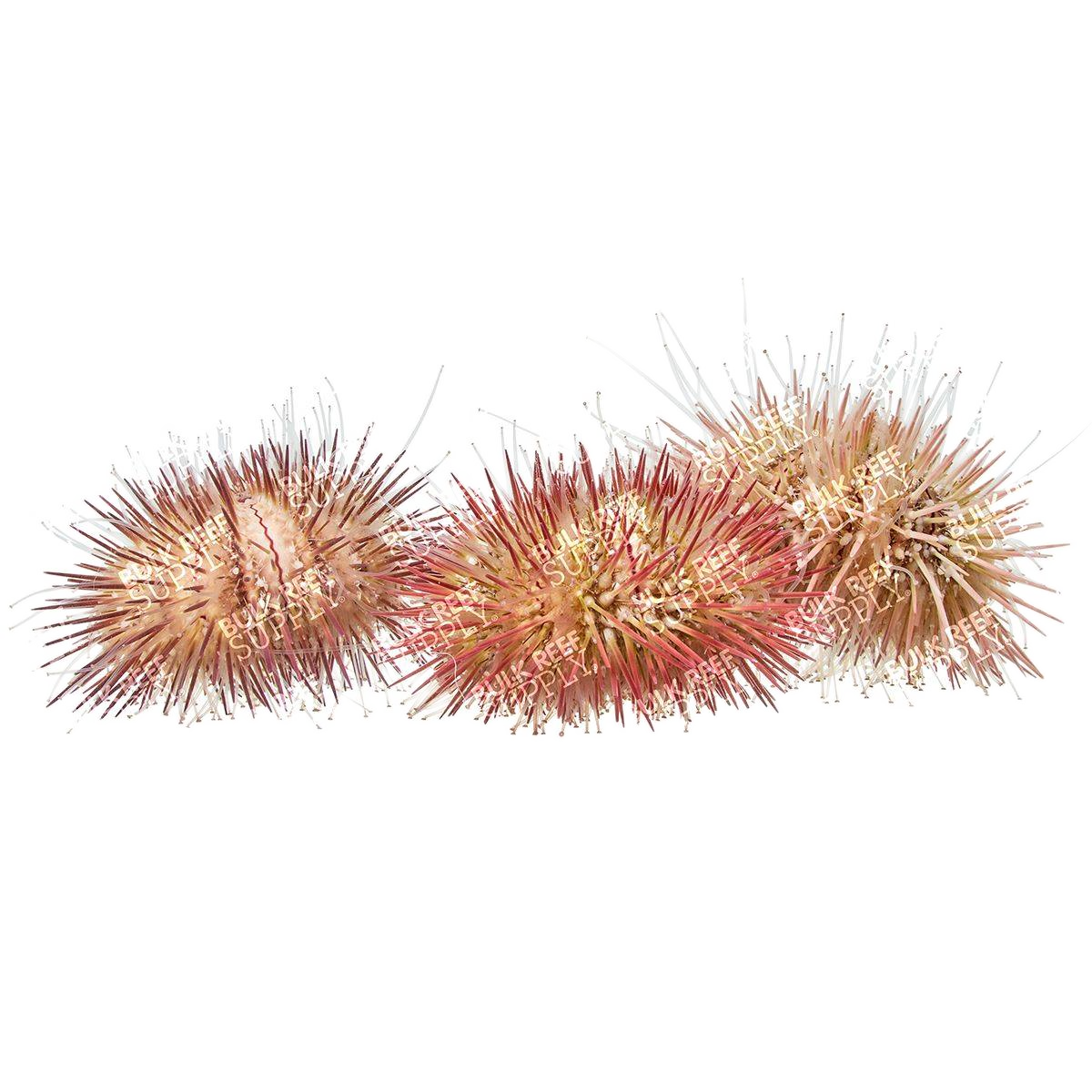
An aquacultured variegated sea urchin (Lytechinus variegatus), a type of pincushion urchin from the tropical Western Atlantic; an extremely effective herbivore that rapidly consumes nuisance algae and displays a characteristic covering behavior.
Quick facts
Handling caution: Spines are generally short and blunt but can still puncture skin; handle with care to avoid irritation
Identity
- Also known as
- Variegated Sea Urchin; Green Urchin; Pincushion Urchin
- Synonyms
- Toxopneustes variegatus
- Environment
- Saltwater
- Native to
- United States (North Carolina, Florida), Bermuda, Gulf of Mexico, Caribbean Sea, Brazil
- Habitat
- Seagrass meadows, sandy lagoons, and shallow coral reef margins from the surface down to about 50 meters
- Sourcing
- Both
- Conservation
- Not Evaluated
Care
- Care level
- Easy
- Temperament
- Peaceful
- Adult size
- 2 – 4 in (5.1 – 10 cm)
- Lifespan
- 3 – 5 yrs
- Min tank
- 30 gal (114 L)
- Growth rate
- Moderate
- Placement
- Bottom, Rock & glass
Water
- Temperature
- 72 – 79 °F (22 – 26 °C)
- pH
- 8.1 – 8.4
- dKH
- 8 – 12 dKH
- Salinity
- 1.023 – 1.026 SG
- Flow
- Moderate
Behavior & compatibility
- Social
- Solitary
- Aggression to own kind
- Low
- Active
- Night
- Reef safe
- With caution
- Invert safe
- With caution
- Shrimp safe
- Yes
- Clean-up role
- Algae, Detritus
- Population boom risk
- Low
Feeding & breeding
- Diet
- Herbivore
- Foods
- Algae, Vegetables, Freeze-dried, Pellets
- Breeding type
- Broadcast spawner
- Breeding difficulty
- Not bred in captivity
- Sexing
- Sexes cannot be distinguished externally
- Target feeding
- Beneficial
Something wrong or missing? Submit a correction
Care guide
Overview
Grazes continuously across rock, sand, and glass, often piling shell bits or rubble atop its test as camouflage while it works through algae film. This aquacultured line offers a captive-raised alternative to wild-collected stock, with the same short, blunt spines and green-to-purple coloring typical of the species. Best suited to established reef or FOWLR systems with secure rockwork and no copper exposure.
Care
This urchin is a tireless grazer that patrols rock, glass, and sand looking for algae film and diatoms, making it one of the more efficient cleanup animals for systems with persistent hair or film algae. It needs a mature tank with established algae growth or supplemental feeding once that supply runs low, and rockwork should be stacked securely since it will bulldoze loose pieces while foraging. Stable salinity and calcium/magnesium levels matter for test and spine health, and copper-based medications must never be used in a tank housing this species.
Feeding
Offer dried seaweed sheets clipped to rock or glass, along with herbivore pellets, once natural algae growth becomes scarce. It will also pick at detritus and diatoms on its own, but growth and spine condition suffer if the diet is too limited for extended periods. Avoid overfeeding with foods high in phosphate since nutrient spikes can quickly affect a reef system.
Tank mates
Generally peaceful with fish and corals, though it may bump or move unsecured frags and light rubble as it travels through the tank. It is best avoided with large wrasses, triggerfish, and puffers, all of which are known to flip and eat urchins. If algae supply drops low, it may begin picking at coralline algae or, occasionally, sessile invertebrates, so monitor food availability closely in a reef setup.
Breeding
Reproduction in a home aquarium is essentially never achieved, as this species is a broadcast spawner that releases eggs and sperm into open water for external fertilization. The resulting larvae are planktonic and require specialized phytoplankton feeding and controlled conditions to survive, which home systems cannot reliably provide. Nearly all specimens in the trade are the product of commercial aquaculture rather than aquarium breeding.
Health
Loss of spines or a dull, deflated appearance is usually a sign of poor water quality or insufficient food, and can precede tissue decline if not corrected. This species is highly sensitive to copper exposure and to sudden shifts in salinity, both of which can be fatal or badly stress the animal. A slow drip acclimation on introduction reduces the risk of shock from specific gravity mismatches.
Sources
Something wrong or missing? Submit a correction
In the community
Popular tanks using ORA Variegated Urchin
No public tanks are showcasing ORA Variegated Urchin yet.