
Coral
ORA Vargas Cespitularia Coral
Cespitularia sp.XeniidaeCespitularia corals
Add from My tanks →1 photos
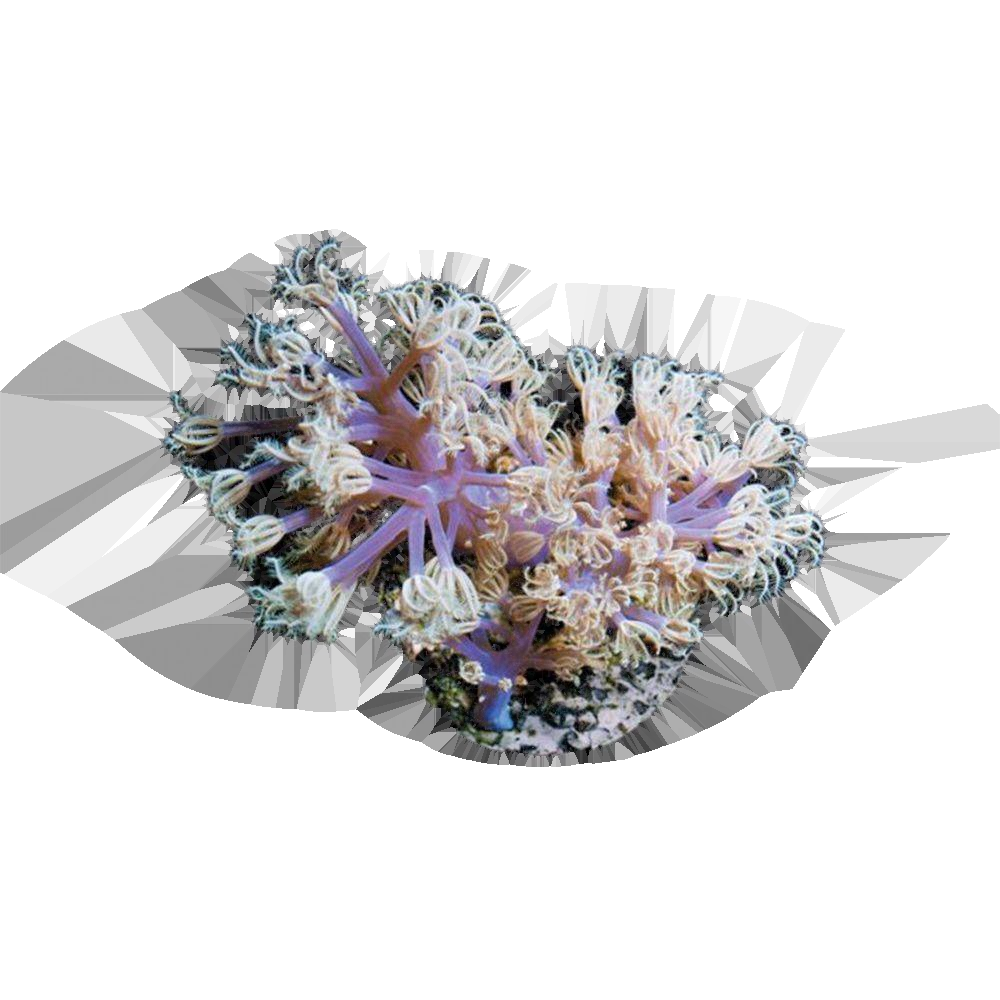
The ORA Vargas Cespitularia is a hardy, fast-growing soft coral with shimmering indigo stalks and light gold polyps. It spreads by sending out runners that connect each stalk, creating a unique clustered growth pattern, and adapts well to a wide range of aquarium conditions as one of the toughest Cespitularia varieties.
Quick facts
Identity
- Also known as
- Vargas Cespitularia; Indigo Cespitularia; Xenia-like Soft Coral
- Synonyms
- Efflatounaria sp. (initially misidentified)
- Environment
- Saltwater
- Native to
- Indo-Pacific
- Habitat
- Shallow, turbulent reef flats and lagoons with strong water movement and high light
- Sourcing
- Aquacultured
- Conservation
- Not Evaluated
Care
- Care level
- Easy
- Coral type
- Soft
- Temperament
- Peaceful
- Growth form
- Colonial polyps
- Adult size
- 1 – 6 in (2.5 – 15 cm)
- Spread
- 12 in (30 cm)
- Growth rate
- Fast
- Placement
- Middle, High
Water
- Temperature
- 76 – 80 °F (24 – 27 °C)
- pH
- 8.1 – 8.4
- dKH
- 8 – 10 dKH
- Salinity
- 1.025 – 1.026 SG
- PAR
- 80 – 150 PAR
- Flow
- Moderate-High
- Light
- Medium
Reef care
- Nutrient preference
- Medium
- Alk/Ca uptake
- Low
- Target feeding
- Beneficial
- Give it room
- 4 in (10 cm)
- Colors
- Blue, Yellow
Feeding & breeding
- Diet
- Photosynthetic
- Foods
- Phytoplankton, Zooplankton, Coral food
- Propagation
- Fragging, Splitting
Something wrong or missing? Submit a correction
Care guide
Overview
Suits reef keepers wanting a resilient soft coral that tolerates a range of light and flow. Indigo stalks topped with light gold, star-shaped polyps sway in the current and link by runners, forming spreading clusters that colonize open rock quickly. Give it its own space away from stony corals and expect fast, easy growth.
Care
This soft coral forms slender upright stalks topped with feathery, star-shaped polyps that sway continuously in the current. Individual stalks stay linked by thin runners of tissue, giving colonies a spreading, clustered appearance as they creep across the rockwork. It adapts to a fairly wide range of light and flow but colors and polyp extension are noticeably better under moderate to strong turbulent flow and moderate to high lighting. Once settled, growth is fast and colonies can quickly overtake neighboring space.
Placement & acclimation
Acclimate slowly to lighting by starting in a mid-to-low position and raising it over one to two weeks to avoid bleaching. Float the bag to match temperature, then drip acclimate for 30-45 minutes before dipping for pests and placing on an isolated rock with moderate, turbulent flow. Secure the base firmly, since loose placement in flow can cause detachment before it has attached itself.
Feeding
The bulk of nutrition comes from photosynthesis via zooxanthellae, so no regular target feeding is required. Occasional dosing of phytoplankton, amino acids, or fine particulate coral foods can support faster growth and richer color, especially in low-nutrient systems. Keep some detectable nitrate and non-zero phosphate present, since ultra-clean water tends to cause the stalks to pale or brown out.
Neighbors
Give this coral its own rock island with several inches of open space, since it spreads by stolons and can overgrow slower neighbors. Like other soft corals it releases chemical compounds that can irritate or stunt nearby stony corals, so keep distance from LPS and SPS and run activated carbon in mixed reef systems. Strong crossflow between colonies helps disperse these compounds and reduces the risk of tissue retraction or stalled growth on either side.
Fragging
Frag by cutting cleanly above a branch node with a sharp scalpel, avoiding crushing the stalk tissue. Place cuttings in a rubble cup or mesh basket, securing loosely with bridal veil or toothpicks since glue often fails on the slimy surface. Keep frags under moderate flow and slightly reduced light for the first one to two weeks until they attach, which typically takes five to ten days.
Pests & problems
Newly imported or shipped specimens are prone to bacterial base rot, which shows up as tissue receding from the stalk's foot. Sudden swings in temperature, salinity, or alkalinity can cause the whole colony to deflate or close up for extended periods. If necrosis starts at the base, cutting a healthy tip above the affected area and remounting it usually saves the frag; a brief iodine-based dip on arrival can help prevent infection.
Sources
Something wrong or missing? Submit a correction
In the community
Popular tanks using ORA Vargas Cespitularia Coral
No public tanks are showcasing ORA Vargas Cespitularia Coral yet.