
Coral
ORA Setosa Montipora Coral
Montipora setosaAcroporidaeMontipora corals
Add from My tanks →1 photos
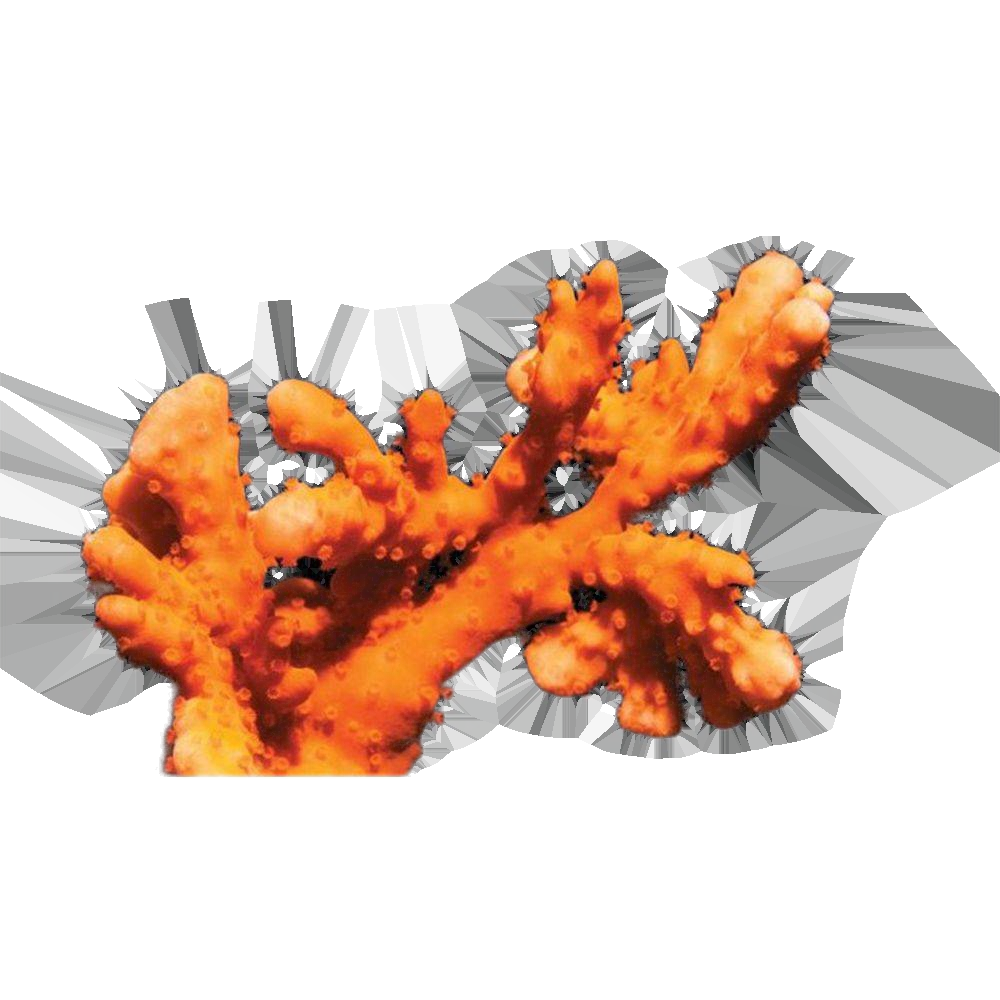
The ORA Setosa Montipora is a bright orange SPS coral with a smooth surface and thick, irregular branches. It grows slowly but is hardy and easy to care for as SPS go; this aquacultured coral adapts to a range of lighting and flow, and its orange color may shift slightly pink under stronger lighting.
Quick facts
Identity
- Also known as
- Orange Setosa; Setosa Montipora
- Environment
- Saltwater
- Native to
- Indo-Pacific
- Habitat
- Shallow reef flats and lagoons with strong water movement and bright light
- Sourcing
- Aquacultured
- Conservation
- Not Evaluated
Care
- Care level
- Moderate
- Coral type
- SPS
- Temperament
- Peaceful
- Growth form
- Branching
- Adult size
- 1.5 – 12 in (3.8 – 30 cm)
- Spread
- 12 in (30 cm)
- Growth rate
- Moderate
- Placement
- Middle, High
Water
- Temperature
- 76 – 80 °F (24 – 27 °C)
- pH
- 8.1 – 8.4
- dKH
- 8 – 12 dKH
- Salinity
- 1.025 – 1.026 SG
- PAR
- 150 – 300 PAR
- Flow
- Moderate-High
- Light
- Medium
Reef care
- Nutrient preference
- Low
- Alk/Ca uptake
- High
- Target feeding
- Beneficial
- Give it room
- 4 in (10 cm)
- Colors
- Orange, Pink
Feeding & breeding
- Diet
- Photosynthetic
- Foods
- Zooplankton, Coral food, Phytoplankton
- Propagation
- Fragging
Something wrong or missing? Submit a correction
Care guide
Overview
Propagated in aquaculture from Indo-Pacific reef-flat stock, this Montipora encrusts its base and builds thick, irregular fused branches dotted with widely spaced polyps in orange, shifting toward pink under stronger light. It ranks among the more forgiving SPS choices, tolerating moderate to fairly intense lighting and moderate-high flow once acclimated. Stable calcium, alkalinity and magnesium support its ongoing skeletal growth.
Care
This branching Montipora forms an encrusting base with thick, irregular fused branches and a smooth surface studded with widely spaced polyps. It is considered one of the more forgiving SPS species and tolerates a range of lighting from moderate to fairly intense, though colors shift from bright orange toward pink under stronger light. Moderate to strong, ideally turbulent and irregular flow keeps the branches clean and supports even growth, while stable water chemistry with consistent calcium, alkalinity and magnesium is needed for skeletal growth. Sudden temperature swings should be avoided, and keeping temperatures on the cooler side of the reef range (around 76-78F) is a common precaution against bleaching.
Placement & acclimation
New frags should be acclimated to lighting gradually, starting at low to moderate PAR (roughly 100-150) and increasing over several weeks to avoid bleaching or tissue paling. Mount frags on rock or plugs with adequate open space around the colony to allow for branching growth, positioning in the middle to upper reef structure where flow is moderate to strong.
Feeding
Most of its nutrition comes from the photosynthetic zooxanthellae in its tissue, so adequate lighting is the primary energy source. Occasional dosing of fine zooplankton, phytoplankton, or commercial coral foods can supplement growth and coloration, though it is not required for survival. Feeding is more beneficial in nutrient-poor systems where natural planktonic food is scarce.
Neighbors
Adequate spacing from neighboring corals is important, since this species lacks strong sweeper tentacles or defensive filaments and can be stung or overgrown by more aggressive corals. Soft corals that release chemical defenses, such as leathers, mushrooms, and Lemnalia, are best kept at a distance. Beneficial symbiotic crabs like Tetralia and Trapezia species may take up residence in the branches and help protect the colony from some pests.
Fragging
Branches can be fragged by cutting with bone shears or a saw once the colony has grown enough spare branch length, then mounted on plugs or rubble until they encrust and heal. The brittle branches also break naturally from flow or handling, making incidental frags common.
Pests & problems
Montipora-eating nudibranchs are a persistent pest for this species and can be difficult to eradicate once established, so new colonies should be dipped and quarantined before introduction to a display tank. Flatworms, gorilla crabs, and vermetid snails can also cause damage or irritation over time. Elevated nitrate and phosphate tend to cause browning and reduced growth, while excessive light intensity introduced too quickly can bleach the tissue starting at the branch tips.
Sources
More Montipora corals
Something wrong or missing? Submit a correction
In the community
Popular tanks using ORA Setosa Montipora Coral
No public tanks are showcasing ORA Setosa Montipora Coral yet.