
Coral
ORA Purple Montipora digitata Coral
Montipora digitataAcroporidaeMontipora corals
Add from My tanks →1 photos
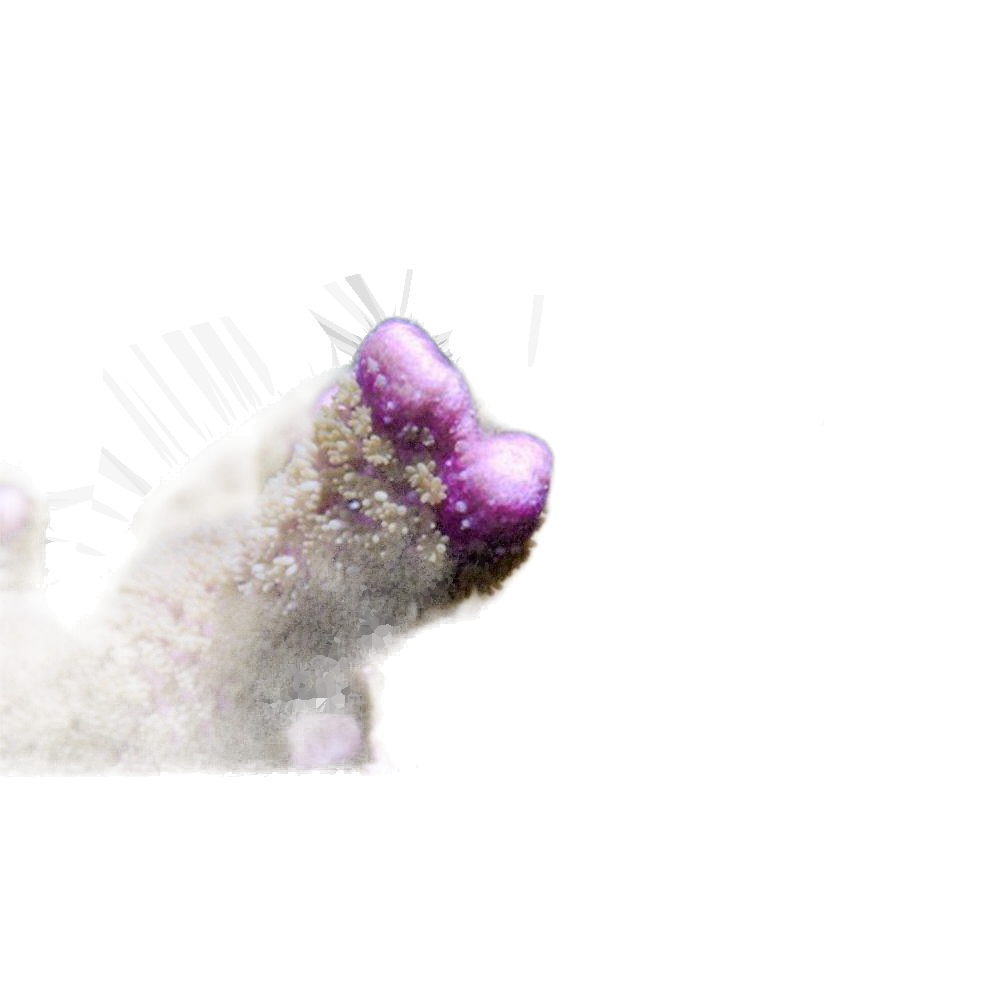
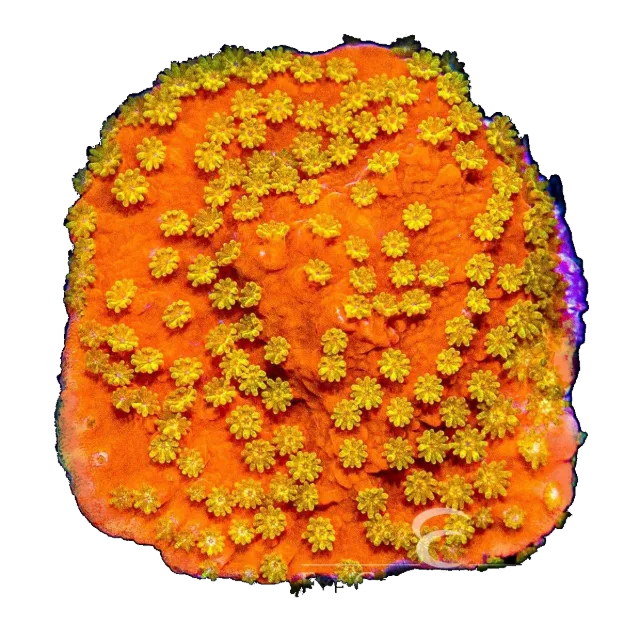
The ORA Purple Montipora Digitata Coral is an SPS coral that grows in both encrusting and branching forms, creating a network of purple finger-like structures with tan polyps. It grows relatively quickly and develops its best color under bright lighting and moderate to strong flow.
Quick facts
Identity
- Also known as
- Purple finger coral; Purple digitata
- Synonyms
- Madrepora digitata
- Environment
- Saltwater
- Native to
- Indo-Pacific, Red Sea, Great Barrier Reef
- Habitat
- Shallow reef flats and lagoons with strong water movement and bright light, typically less than 10 m depth
- Sourcing
- Aquacultured
- Conservation
- Not Evaluated
Care
- Care level
- Moderate
- Coral type
- SPS
- Temperament
- Peaceful
- Growth form
- Branching
- Adult size
- 2 – 12 in (5.1 – 30 cm)
- Spread
- 24 in (61 cm)
- Growth rate
- Fast
- Placement
- Middle, High
Water
- Temperature
- 75 – 81 °F (24 – 27 °C)
- pH
- 8.1 – 8.4
- dKH
- 8 – 12 dKH
- Salinity
- 1.025 – 1.026 SG
- PAR
- 200 – 300 PAR
- Flow
- Moderate-High
- Light
- High
Reef care
- Nutrient preference
- Low
- Alk/Ca uptake
- High
- Target feeding
- Beneficial
- Give it room
- 4 in (10 cm)
- Colors
- Purple, Orange, Green, Yellow, Cream
Feeding & breeding
- Diet
- Photosynthetic
- Foods
- Coral food, Zooplankton, Phytoplankton
- Propagation
- Fragging
Something wrong or missing? Submit a correction
Care guide
Overview
Finger-like branches reach up to a foot across as this colony matures, thickening under stronger current and thinning where flow is weaker. Purple branch tips contrast with tan polyps once settled under bright reef lighting. A fast-growing, hardy SPS well suited to keepers moving beyond softies and LPS.
Care
A hardy, fast-growing branching SPS that tolerates a wider margin of error in nutrients and parameters than Acropora, making it a common entry point into small-polyp stony coral keeping. Stable alkalinity and calcium levels support consistent branch growth, while bright lighting brings out the best coloration in the tips. Current shapes the growth pattern directly, with stronger flow producing thicker, sturdier branches and weaker flow leading to thinner, more elongated ones.
Placement & acclimation
New frags should be acclimated to lighting gradually, starting lower in the tank and moving upward over several weeks to avoid bleaching from a sudden jump in intensity. Frags on plugs can be wedged into rockwork, dropped into a drilled hole in the aquascape, or epoxied directly after removing the plug. Placement in the middle to upper water column with unobstructed flow around all sides gives the colony room to branch outward.
Feeding
Most nutrition comes from zooxanthellae under adequate light, but supplemental feeding of fine zooplankton or coral foods can support faster growth and tissue coloration. Target feeding is not required for survival and dosing amino acids or phytoplankton in the water column is generally sufficient. Overfeeding directly onto the colony is unnecessary given its tiny polyp size.
Neighbors
Lacking sweeper tentacles, this coral poses little offensive threat to neighbors, but its branches can be damaged or overgrown by more aggressive stinging corals placed too close. Adequate spacing should be left around a colony to allow the branches to spread outward without contact from adjacent corals. It pairs well with other SPS species that share similar light and flow demands.
Fragging
Branches can be snapped or cut with shears at any point and will reattach readily to a new surface, making this one of the easiest SPS corals to frag. Cut fragments heal over quickly and begin encrusting onto plugs or rock within days to weeks. Because of its fast growth, a single healthy colony can supply multiple frags within a year.
Pests & problems
Rapid tissue recession or bleaching usually points to a lighting change that was introduced too quickly or a drop in alkalinity stability. Montipora-eating nudibranchs and Acropora-eating flatworms can target this genus and should be watched for on new frags. Brown jelly infections can follow physical damage, so any injured tissue should be monitored and, if needed, removed promptly.
Sources
Varieties in the catalog
More Montipora corals
Something wrong or missing? Submit a correction
In the community
Popular tanks using ORA Purple Montipora digitata Coral
No public tanks are showcasing ORA Purple Montipora digitata Coral yet.