
Coral
ORA Mint Pavona Coral
Pavona sp.AgariciidaePavona corals
Add from My tanks →1 photos
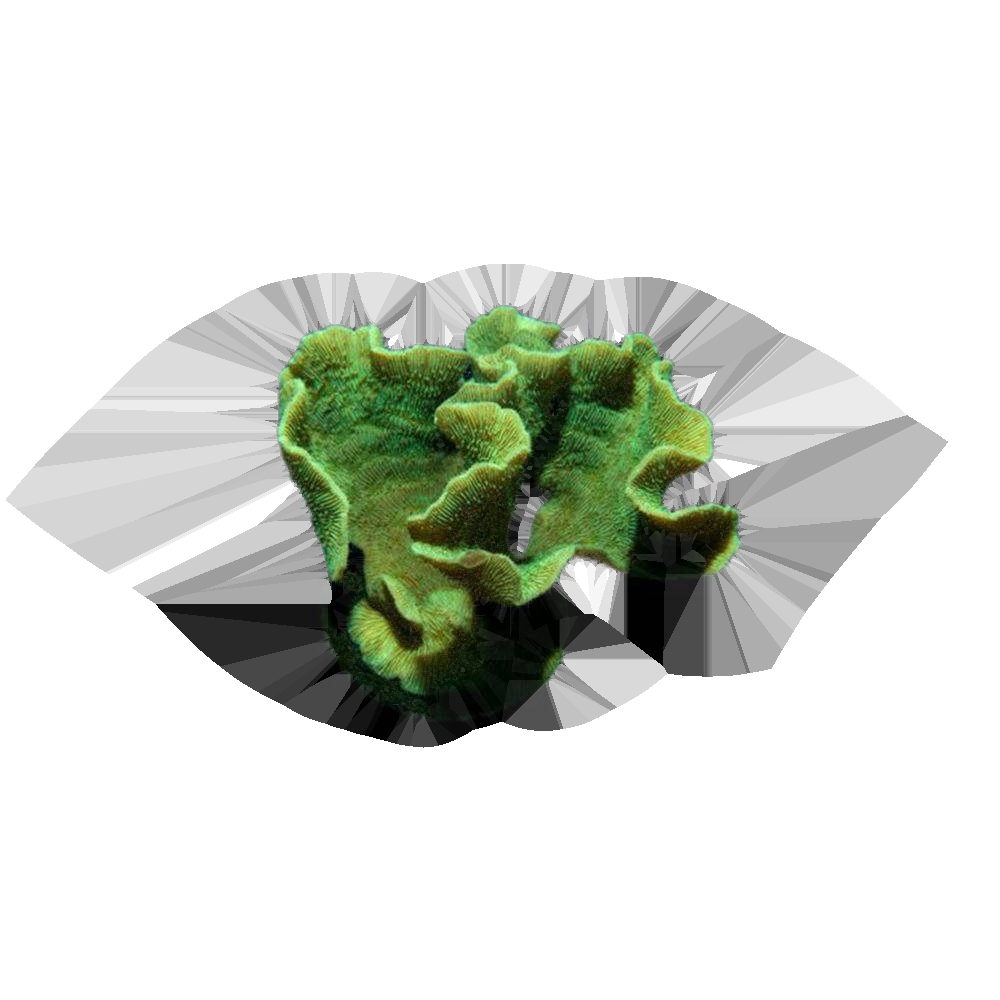
An aquacultured SPS coral with thin, leafy plates forming a compact colony; hardy and relatively fast-growing, showing its best mint-green coloration under blue lighting.
Quick facts
Identity
- Also known as
- Lettuce Coral; Potato Chip Coral; Cactus Coral
- Synonyms
- Pavona sp.
- Environment
- Saltwater
- Native to
- Fiji, Tonga, Solomon Islands, Australia (Great Barrier Reef), East Africa, Red Sea, northwestern Indian Ocean
- Habitat
- Shallow tropical Indo-Pacific reef flats and slopes with moderate water movement
- Sourcing
- Aquacultured
- Conservation
- Not Evaluated
Care
- Care level
- Moderate
- Coral type
- SPS
- Temperament
- Peaceful
- Growth form
- Plating
- Adult size
- 1 – 12 in (2.5 – 30 cm)
- Spread
- 12 in (30 cm)
- Growth rate
- Fast
- Placement
- Low, Middle
Water
- Temperature
- 75 – 80 °F (24 – 27 °C)
- pH
- 8.1 – 8.4
- dKH
- 8 – 9.5 dKH
- Salinity
- 1.025 – 1.026 SG
- PAR
- 100 – 200 PAR
- Flow
- Moderate
- Light
- Low
Reef care
- Nutrient preference
- Medium
- Alk/Ca uptake
- Medium
- Target feeding
- Beneficial
- Give it room
- 2 in (5.1 cm)
- Colors
- Green
Feeding & breeding
- Diet
- Photosynthetic
- Foods
- Zooplankton, Phytoplankton, Coral food
- Propagation
- Fragging
Something wrong or missing? Submit a correction
Care guide
Overview
Suited to reef keepers moving beyond softies into small-polyp stony corals, this frag forms tight, leafy plates in cool mint-green that intensify under blue-heavy lighting. It grows as a compact colony rather than the open, branching form of Pavona cactus. At a glance: moderate flow and light, low aggression, and steadier tolerance of parameter swings than acroporas.
Care
This is a thin, leafy plating Pavona that grows in a tight, compact colony rather than the more open form seen in Pavona cactus. It tolerates minor swings in calcium, alkalinity, and magnesium better than acroporas or montiporas, making it a reasonable entry point into small-polyp stony coral keeping. Moderate flow is enough to keep detritus from settling between the thin plates without tearing tissue or dislodging the colony from its mount.
Placement & acclimation
Mount frags on rock or a ledge using cyanoacrylate gel or reef putty, positioning the colony where it receives moderate, indirect light rather than direct high-intensity exposure. Because intense lighting can bleach this species, extend the acclimation period gradually when introducing a frag to a brightly lit display. Provide moderate flow directed across the plates to prevent detritus accumulation without causing recession.
Feeding
Most of its nutrition comes from photosynthesis via zooxanthellae, so feeding is beneficial rather than essential. Polyps extend mainly at night and can capture fine zooplankton, phytoplankton, and dissolved organics when offered directly to the colony. Broadcast feeding of small-particle foods such as phytoplankton or coral-specific powders a few times a week can improve growth and coloration.
Neighbors
Keep at least 2 to 3 inches of clearance from neighboring corals since contact can cause tissue damage from either side. It is not aggressive toward tankmates and pairs well with other soft-flow LPS-style corals kept under similar lighting. Avoid placing it directly beneath intense SPS-grade lighting shared with Acropora, as the light levels that suit those corals can bleach this species.
Fragging
Fragging is done by cutting through the calcium carbonate skeleton between plates with a bandsaw or shears, then mounting the cut pieces on plugs or rock rubble. Colonies recover and re-encrust cut edges readily, and a single healthy frag can develop into a large colony in a relatively short time given adequate light and flow.
Pests & problems
Excess light intensity is the most common cause of decline, leading to bleaching or tissue paling rather than the browning seen from too little light. Watch for tissue recession if flow is too strong, or algae and detritus buildup on the plates if flow is too weak. It is otherwise resilient and less prone to the sudden tissue loss issues that plague some other SPS genera.
Sources
Something wrong or missing? Submit a correction
In the community
Popular tanks using ORA Mint Pavona Coral
No public tanks are showcasing ORA Mint Pavona Coral yet.