
Coral
ORA Micronesian Yellow Porites Coral
Porites sp.PoritidaePorites corals
Add from My tanks →1 photos
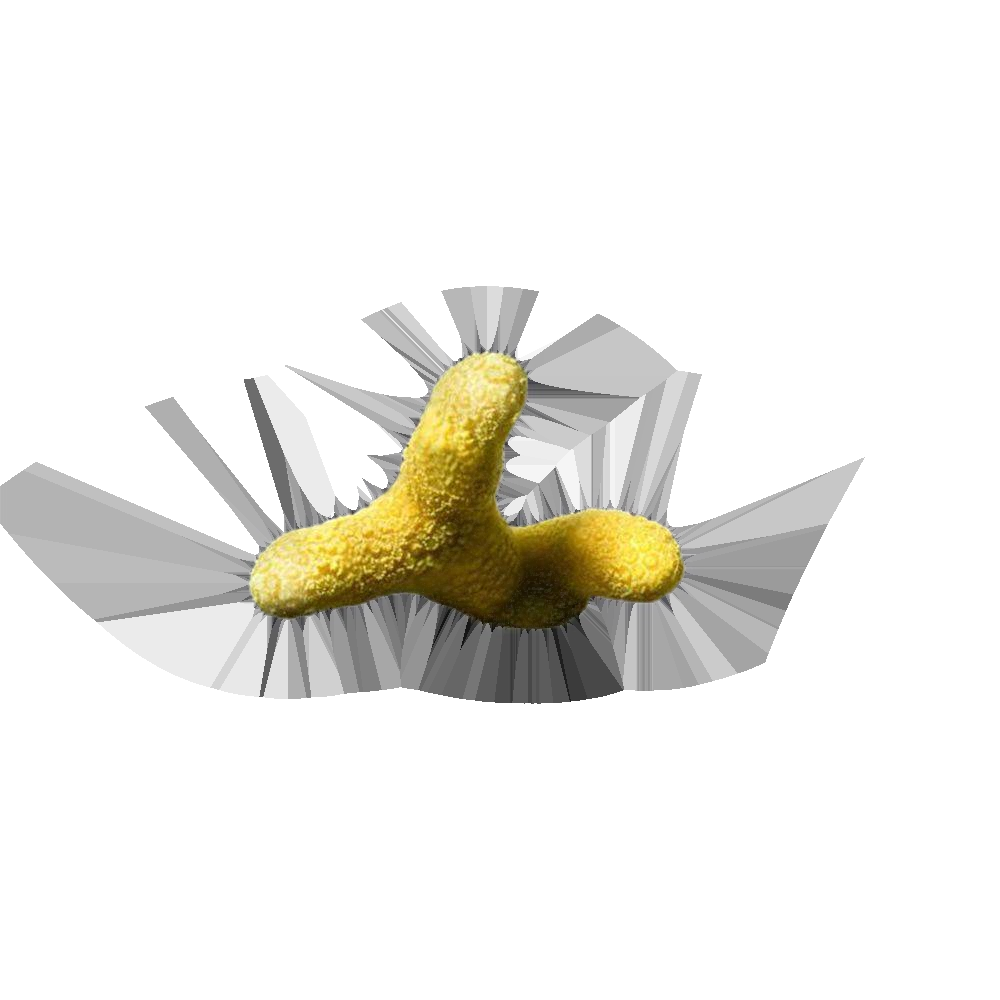
The ORA Micronesian Yellow Porites is one of the hardiest stony corals, a maricultured SPS with bright yellow coloration that stands out under high light and strong flow. It adapts to a wide range of conditions and typically spreads as an encrusting base before growing thick, upward branches.
Quick facts
Identity
- Also known as
- Yellow Finger Coral; Yellow Porites
- Environment
- Saltwater
- Native to
- Indo-Pacific, Caribbean
- Habitat
- Shallow reef flats and lagoons with strong water movement and high light exposure
- Sourcing
- Both
- Conservation
- Not Evaluated
Care
- Care level
- Easy
- Coral type
- SPS
- Temperament
- Peaceful
- Growth form
- Encrusting
- Adult size
- 1.5 – 12 in (3.8 – 30 cm)
- Spread
- 12 in (30 cm)
- Growth rate
- Moderate
- Placement
- Middle, High
Water
- Temperature
- 75 – 80 °F (24 – 27 °C)
- pH
- 8.1 – 8.4
- dKH
- 8 – 12 dKH
- Salinity
- 1.024 – 1.026 SG
- PAR
- 150 – 350 PAR
- Flow
- Moderate-High
- Light
- High
Reef care
- Nutrient preference
- Low
- Alk/Ca uptake
- Medium
- Target feeding
- Beneficial
- Give it room
- 3 in (7.6 cm)
- Colors
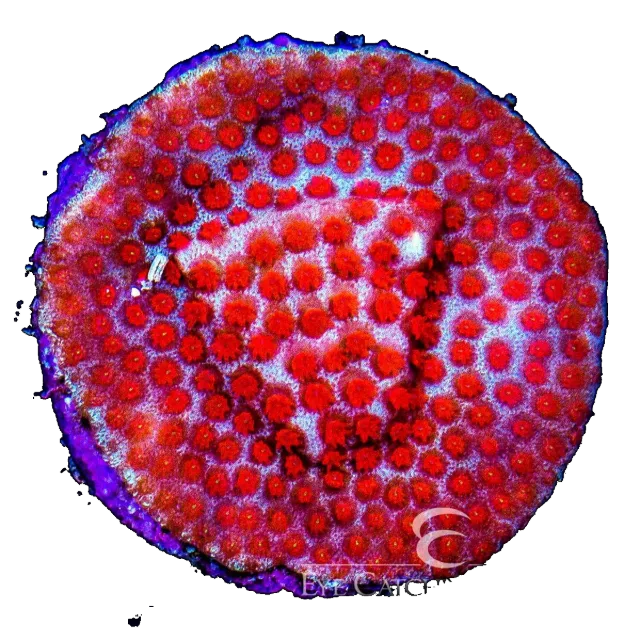
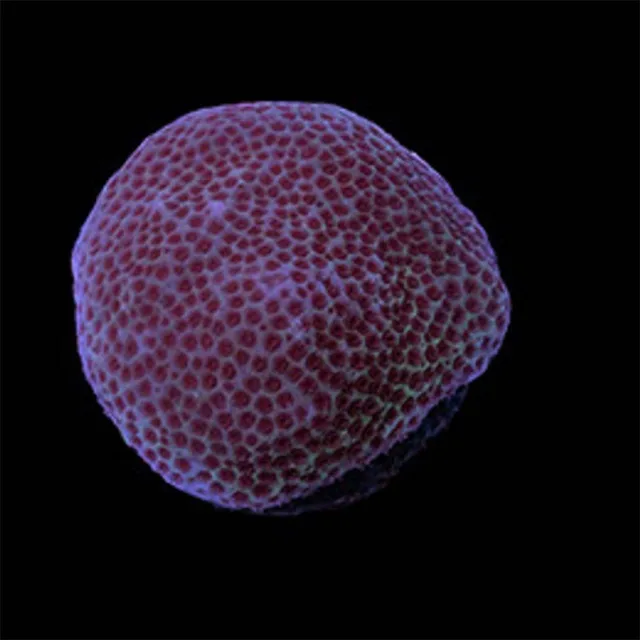
- Yellow, Purple, Red, Green
Feeding & breeding
- Diet
- Photosynthetic
- Foods
- Zooplankton, Coral food, Phytoplankton
- Propagation
- Fragging
Something wrong or missing? Submit a correction
Care guide
Overview
A maricultured Porites strain from ORA, this yellow selection begins life as an encrusting mat before pushing up thick, upright branches under strong light. It ranks among the more forgiving SPS options, tolerating broader parameter swings than Acropora, and rewards high PAR and turbulent flow with deeper coloration.
Care
Porites is regarded as one of the more forgiving small polyp stony corals, tolerating a wider swing in water parameters than genera like Acropora or Montipora. It grows best under medium to high light and strong, turbulent flow, which help bring out its coloration and keep detritus from settling on its surface. Colonies start as an encrusting mat over rock before pushing up thick branches or short finger-like projections as they mature. Stable alkalinity, calcium, and magnesium matter more than hitting an exact number, since sudden swings can stress the tissue.
Placement & acclimation
New frags should be light-acclimated gradually, starting in lower light and moving up over several weeks to a month before reaching a high-light display position. Mount securely to rockwork with reef-safe epoxy or cement in an area with strong, ideally random or turbulent, flow to prevent detritus accumulation on the encrusting base. A brief coral dip before introduction is recommended to remove hitchhiking pests.
Feeding
Most of its energy comes from photosynthetic zooxanthellae living in its tissue, so heavy target feeding is not required. Occasional dosing of phytoplankton, zooplankton, or fine coral foods can support polyp extension and coloration, especially in low-nutrient systems. Keeping nitrate and phosphate at low but detectable levels helps avoid starving the zooxanthellae while still limiting nuisance algae.
Neighbors
Polyps carry only short tentacles and mild sweeper activity, so it can be placed fairly close to other peaceful corals without much risk of stinging conflict. Even so, leave a few inches of clearance from neighboring stony corals to allow for its encrusting growth pattern, since it can overgrow slower species if left unchecked. It pairs well in high-flow SPS-dominated sections of the reef rather than alongside soft corals that prefer calmer water.
Fragging
Colonies are fragged by cutting or snapping off branch tips or encrusting sections with a bandsaw, wire cutters, or bone shears, then mounting the pieces onto plugs or rubble until they attach. Encrusting sections can also be allowed to grow over and cover new frag plugs before being cut free.
Pests & problems
Being a hardy genus, Porites is less prone to the sudden tissue loss seen in more sensitive SPS, but it can still bleach if light or flow is changed abruptly or if alkalinity swings occur. Watch for algae film or cyanobacteria settling on newly placed frags in low flow areas, since this can smother encrusting tissue. Coral-eating flatworms and certain nudibranchs occasionally target Porites, so inspect new frags and dip before adding them to the display.
Sources
Varieties in the catalog
Something wrong or missing? Submit a correction
In the community
Popular tanks using ORA Micronesian Yellow Porites Coral
No public tanks are showcasing ORA Micronesian Yellow Porites Coral yet.