
Coral
ORA Micronesian Bubble Coral
Plerogyra sp.EuphylliidaeBubble corals
Add from My tanks →1 photos
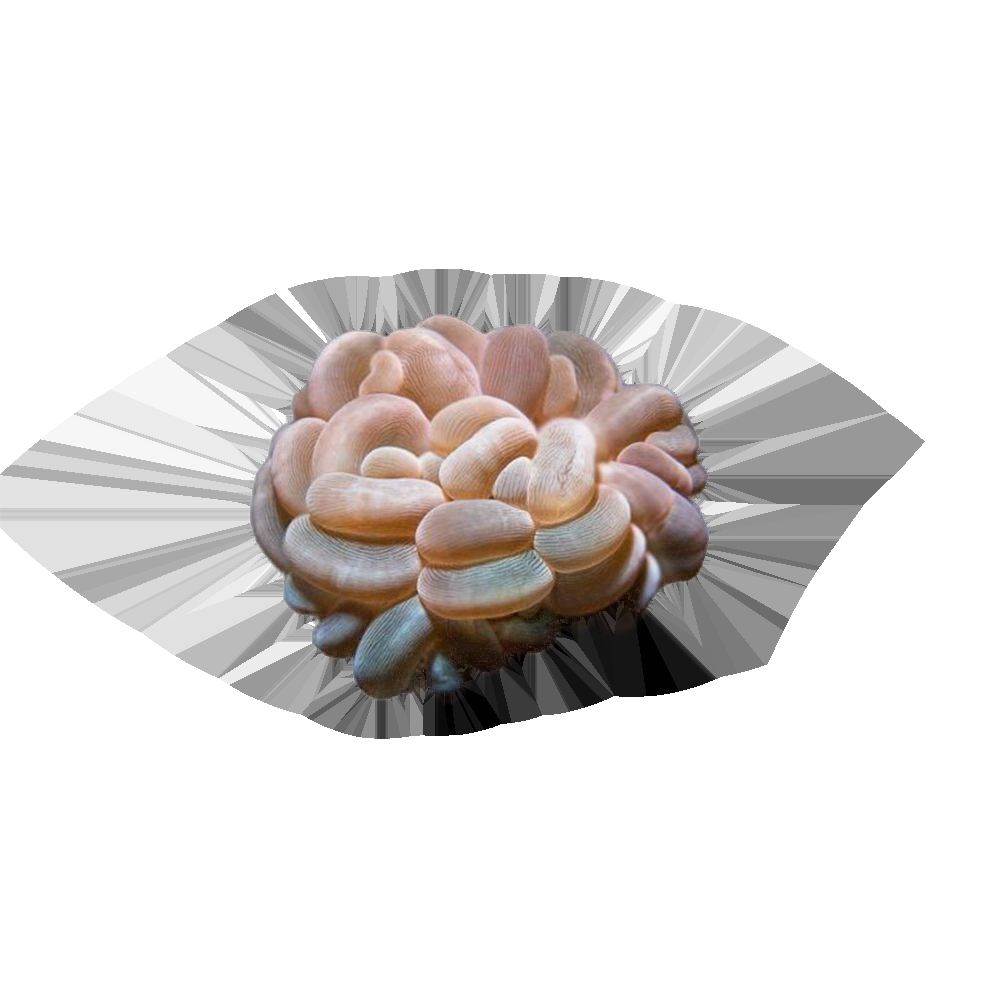
The ORA Micronesian Bubble Coral is a hardy maricultured LPS coral with soft, inflated bubbles that form over a ridged skeleton, ranging in color from light green to beige. It does well in moderate light with gentle water flow, but should be given space from other corals as its long sweeper tentacles can sting neighbors.
Quick facts
Handling caution: Sharp skeletal septa can lacerate skin; sweeper tentacles can cause mild skin irritation
Identity
- Also known as
- Bubble coral; Pearl coral; Grape coral
- Synonyms
- Physogyra sp.
- Environment
- Saltwater
- Native to
- Indo-Pacific, Indonesia, Micronesia
- Habitat
- Reef slopes and lagoons with moderate light and gentle current, typically on sheltered substrate
- Sourcing
- Both
- Conservation
- Not Evaluated
Care
- Care level
- Easy
- Coral type
- LPS
- Temperament
- Aggressive
- Growth form
- Solitary
- Adult size
- 2 – 8 in (5.1 – 20 cm)
- Spread
- 10 in (25 cm)
- Growth rate
- Moderate
- Placement
- Low, Middle
Water
- Temperature
- 76 – 80 °F (24 – 27 °C)
- pH
- 8.1 – 8.4
- dKH
- 8 – 12 dKH
- Salinity
- 1.025 – 1.026 SG
- PAR
- 75 – 150 PAR
- Flow
- Low
- Light
- Medium
Reef care
- Nutrient preference
- Medium
- Alk/Ca uptake
- Medium
- Target feeding
- Beneficial
- Give it room
- 6 in (15 cm)
- Colors
- Green, Cream, Brown, Blue
Feeding & breeding
- Diet
- Photosynthetic
- Foods
- Frozen, Zooplankton, Coral food
- Propagation
- Fragging
Something wrong or missing? Submit a correction
Care guide
Overview
Light green to beige bubbles swell over a ridged skeleton by day, deflating at night to reveal sweeper tentacles. This maricultured Micronesian strain suits reef tanks with gentle indirect flow and moderate light, placed low on stable rock with generous clearance from neighboring corals.
Care
Bubble coral is among the more forgiving LPS choices for someone moving beyond softies into stony corals. It tolerates a wide range of lighting but does best under low to medium PAR with gentle, indirect flow, since direct current will deflate the vesicles and stress the tissue. Give it a stable spot on the substrate or lower rockwork where it won't tumble, as its irregular skeleton makes secure mounting tricky.
Placement & acclimation
Acclimate to lighting gradually since PAR tolerance is broad but sudden changes can bleach or stress the tissue. Because the skeleton is heavy, irregular, and top-heavy when the bubbles inflate, glue alone often fails to secure it; use reef epoxy and mount as level as possible to avoid uneven physical stress on the polyp.
Feeding
Most nutrition comes from zooxanthellae, but occasional feeding of finely chopped meaty foods or small zooplankton improves growth and coloration. Target feed after the bubbles have retracted at night when the sweeper tentacles and mouths are more accessible, or feed just as the polyps begin to deflate at dusk. Avoid overfeeding directly onto the vesicles, since excess food can encourage tissue irritation.
Neighbors
Long sweeper tentacles emerge at night and can extend several inches beyond the inflated bubbles, stinging any coral within reach. Leave at least 5 to 6 inches of clearance on all sides, especially from other LPS and soft corals that lack strong chemical defenses. During the day the bubbles look harmless, which leads many keepers to underestimate how far the nighttime sweepers can travel.
Fragging
Fragging requires cutting through the skeleton to separate polyp-bearing sections, which is considered an expert-level task due to the risk of tissue damage and infection. Fragged pieces need time to heal and reattach tissue before handling or moving again.
Pests & problems
Rough handling during collection, shipping, or placement can tear the delicate tissue on the sharp septa, opening the door to bacterial or protozoan infection and brown jelly disease. Sustained direct flow that keeps the bubbles from inflating properly is a common but often misdiagnosed cause of decline, frequently mistaken for a water chemistry issue. Inspect new specimens closely for tissue damage before introducing them to the display.
Sources
Varieties in the catalog
Something wrong or missing? Submit a correction
In the community
Popular tanks using ORA Micronesian Bubble Coral
No public tanks are showcasing ORA Micronesian Bubble Coral yet.