
Marine Invertebrates
ORA Hippopus Clam
Hippopus hippopusCardiidaeGiant clams
Add from My tanks →1 photos
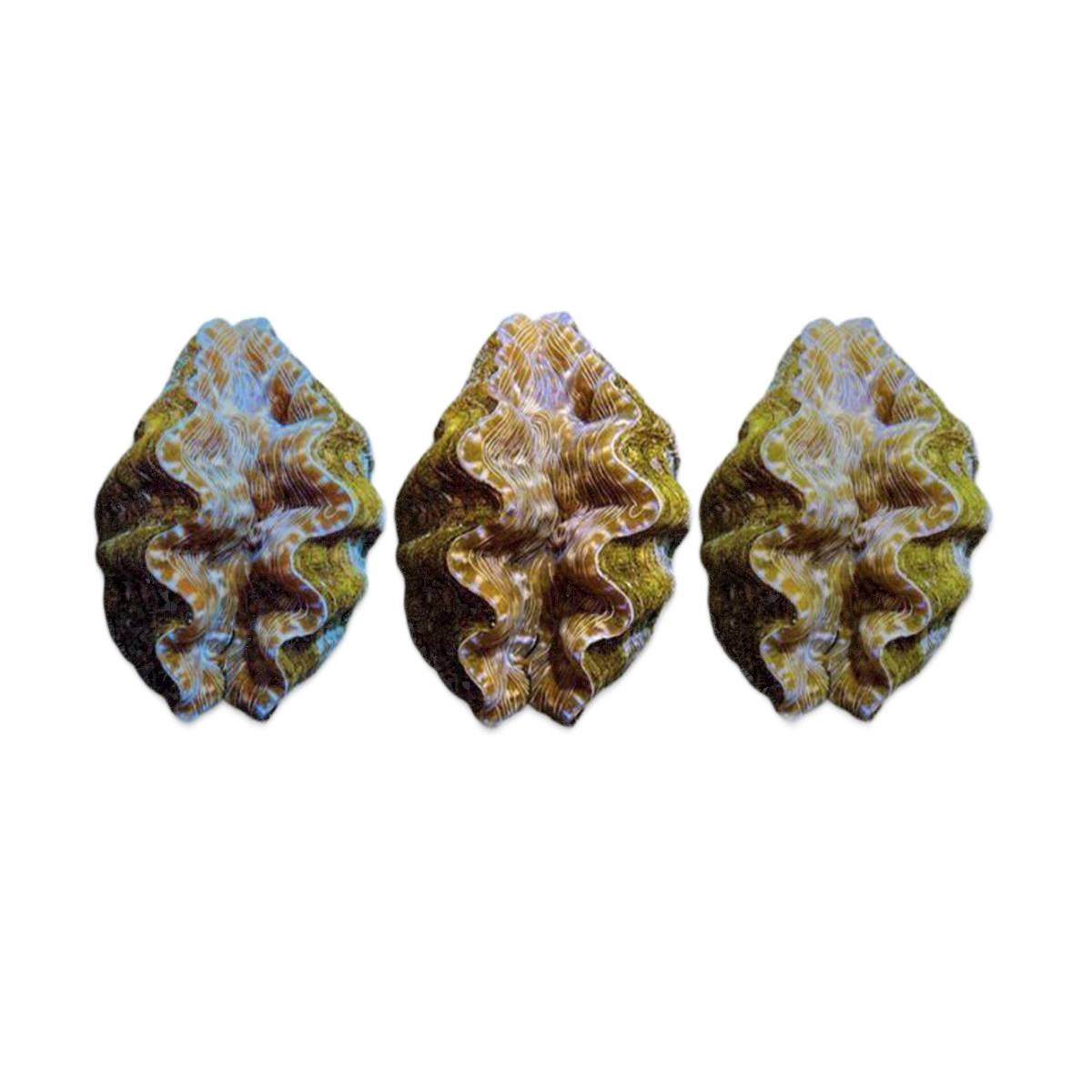
The ORA Hippopus Clam, known as the Horse Hoof, Bear Paw, or Strawberry clam (Hippopus hippopus), is one of the most unique ornamental clam species; its mantle does not extend over the edges of its distinctly thick shell, and it is golden in color with vibrant pinstripes and purple or green dots. One of the hardier clam species, it prefers placement on the substrate and can reach up to 30 inches, so give it room to grow; it tolerates a range of lighting intensities, likes moderate steady flow, is photosynthetic but benefits from phytoplankton feeding, and consumes calcium and alkalinity as it grows.
Quick facts
Identity
- Also known as
- Horse Hoof Clam; Bear Paw Clam; Strawberry Clam; Horse's Hoof Clam; Giant Clam
- Synonyms
- Chama hippopus
- Environment
- Saltwater
- Native to
- Indo-Pacific, Indonesia, Palau, Philippines, Australia, India to Kiribati
- Habitat
- Shallow reef flats, seagrass meadows, and sandy or gravelly lagoon floors across the Indo-Pacific.
- Sourcing
- Aquacultured
- Conservation
- Vulnerable
Care
- Care level
- Moderate
- Temperament
- Peaceful
- Adult size
- 2 – 14 in (5.1 – 36 cm)
- Lifespan
- 10 – 30 yrs
- Min tank
- 40 gal (151 L)
- Growth rate
- Fast
- Placement
- Bottom
Water
- Temperature
- 72 – 78 °F (22 – 26 °C)
- pH
- 8.1 – 8.4
- dKH
- 8 – 12 dKH
- Salinity
- 1.023 – 1.025 SG
- Flow
- Low-Moderate
Behavior & compatibility
- Social
- Solitary
- Aggression to own kind
- Low
- Active
- Daytime
- Reef safe
- Yes
- Invert safe
- Yes
- Shrimp safe
- Yes
- Clean-up role
- Filter feeding
- Population boom risk
- Low
Feeding & breeding
- Diet
- Photosynthetic
- Foods
- Phytoplankton, Zooplankton
- Breeding type
- Broadcast spawner
- Breeding difficulty
- Not bred in captivity
- Sexing
- Protandric hermaphrodite; functions as male when young and develops female reproductive capacity with age, no external sexing possible.
- Target feeding
- Beneficial
Something wrong or missing? Submit a correction
Care guide
Overview
Sits directly on the sandbed rather than draping its mantle over the shell edge, exposing golden tissue marked with fine pinstripes and purple or green dots. The thick, ridged shell tolerates a wide range of lighting and moderate flow, drawing most nutrition from zooxanthellae with occasional phytoplankton dosing. Stable calcium and alkalinity support its fast, heavy shell growth.
Care
This clam is one of the hardier giant clam species offered in the trade, tolerant of a wider range of lighting than Tridacna species. It should be seated directly on an open sandbed rather than perched on rock, since adults lose much of their byssal attachment and rely on body weight to stay in place. Stable, elevated calcium, alkalinity, and magnesium are needed to support its thick, heavily ridged shell, and water changes should avoid sudden salinity swings.
Feeding
Most nutrition comes from the zooxanthellae housed in its mantle tissue under adequate lighting, so direct feeding is supplemental rather than essential. Juveniles benefit from occasional phytoplankton dosing a few times a week, while adults are less dependent on it. It also filters fine particulates and processes ammonia and nitrate from the water column, contributing to overall nutrient export in a reef system.
Tank mates
Because the mantle sits flush with the shell rather than draping over the edge, it presents less exposed tissue to mantle-nipping wrasses, crabs, shrimp, and pyramid snails than a Tridacna clam, though it is not immune to such predation. It coexists well with typical reef fish and invertebrates and does not sting or compete aggressively for space. Avoid placing it where it could be knocked over or buried by burrowing tankmates or shifting sand.
Breeding
Spawning has been achieved in aquaculture facilities using hormonal induction or temperature and light cues, but it is not practical or reliable in home aquariums. Fertilized eggs develop into free-swimming veliger larvae that require intensive larval culture with algae feeds before metamorphosing and acquiring zooxanthellae. Most specimens in the trade are aquacultured from commercial clam farms rather than bred by hobbyists.
Health
Watch for pyramidellid snails, which can parasitize the mantle and cause a clam to appear weak or gape excessively. A healthy specimen extends its mantle fully during the day and reacts to shadows or sudden movement by contracting; sluggish or incomplete mantle extension can signal stress, poor lighting, or water quality problems. Sudden gaping without response to stimuli often indicates the animal is dying or already dead.
Sources
Something wrong or missing? Submit a correction
In the community
Popular tanks using ORA Hippopus Clam
No public tanks are showcasing ORA Hippopus Clam yet.