
Coral
ORA Green Pocillopora damicornis Coral
Pocillopora damicornisPocilloporidaePocillopora corals
Add from My tanks →1 photos
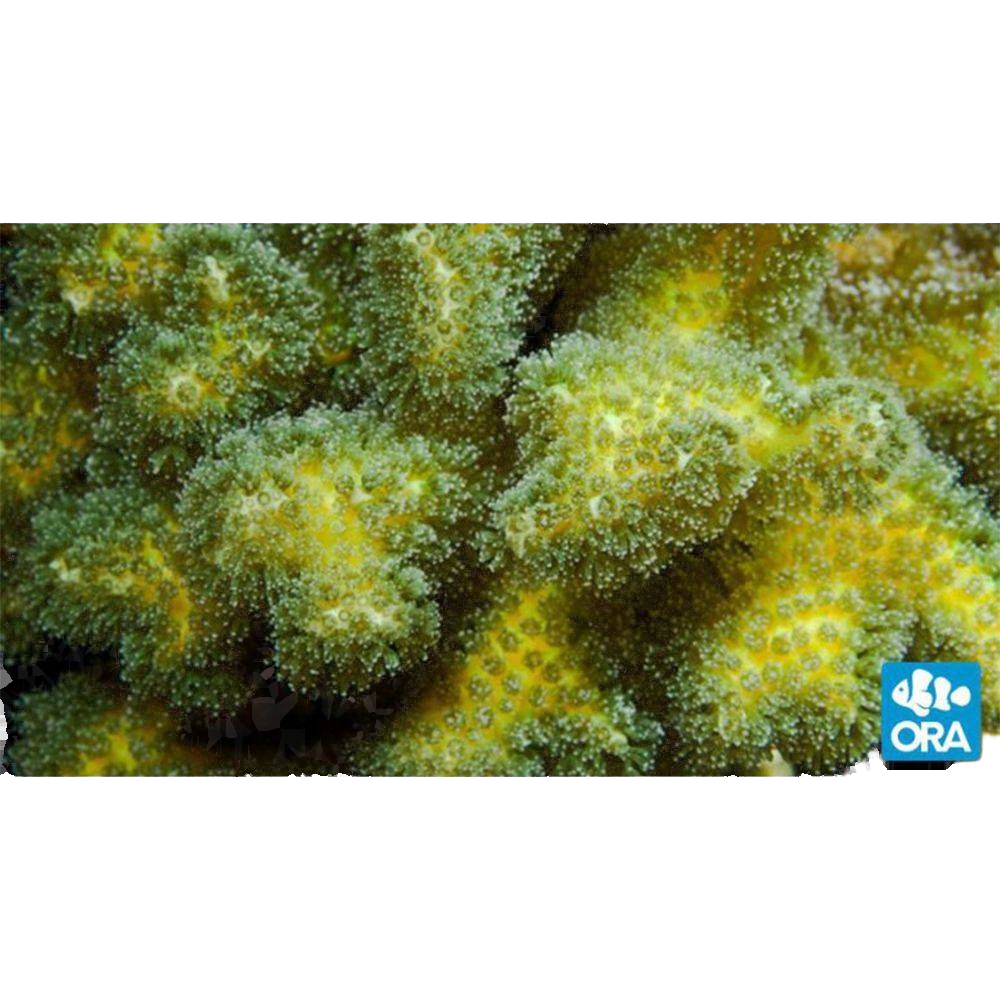
The ORA Green Pocillopora damicornis is a relatively fast-growing, short-branched aquacultured SPS coral with bright yellow-green coloration and fine green polyps. It is a hardy, beginner-friendly SPS species known for its ability to reproduce in aquariums through polyp bailout, doing best under medium light (150-250 PAR) and medium to high flow.
Quick facts
Handling caution: Short sweeper tentacles can sting neighboring corals; minor skin irritation possible with prolonged contact
Identity
- Also known as
- Cauliflower Coral; Lace Coral; Brush Coral
- Synonyms
- Pocillopora cespitosa; Pocillopora brevicornis
- Environment
- Saltwater
- Native to
- Indo-Pacific, Red Sea, Great Barrier Reef, Fiji, Indonesia
- Habitat
- Shallow reef fronts, lagoons, and mangrove edges from about 3-50 feet, often in areas with strong wave action and occasional low-tide exposure
- Sourcing
- Both
- Conservation
- Near Threatened
Care
- Care level
- Moderate
- Coral type
- SPS
- Temperament
- Peaceful
- Growth form
- Branching
- Adult size
- 1 – 12 in (2.5 – 30 cm)
- Spread
- 12 in (30 cm)
- Growth rate
- Fast
- Placement
- Middle, High
Water
- Temperature
- 74 – 80 °F (23 – 27 °C)
- pH
- 8.1 – 8.4
- dKH
- 8 – 12 dKH
- Salinity
- 1.023 – 1.026 SG
- PAR
- 150 – 320 PAR
- Flow
- Moderate-High
- Light
- High
Reef care
- Nutrient preference
- Low
- Alk/Ca uptake
- High
- Target feeding
- Beneficial
- Give it room
- 3 in (7.6 cm)
- Colors
- Green, Pink, Purple, Brown
Feeding & breeding
- Diet
- Photosynthetic
- Foods
- Zooplankton, Coral food, Phytoplankton
- Propagation
- Fragging
Something wrong or missing? Submit a correction
Care guide
Overview
Releases stray polyps that drift and settle into new colonies, a normal reproductive habit of this species. Short, densely packed branches show bright yellow-green tones with fine green polyp extension under 150-250 PAR and medium to high flow. A fast-growing, beginner-friendly SPS for stable reef systems.
Care
Cauliflower coral is one of the fastest-growing and most forgiving SPS species, making it a reasonable entry point for aquarists moving up from softies and LPS, though it still requires stable, low-nutrient reef conditions to do well long term. It adapts across a wide PAR range but colors intensify under strong lighting once acclimated slowly to brighter positions. Moderate to strong, varied flow keeps the branch surfaces clean and prevents tissue recession at the base of the colony.
Placement & acclimation
Acclimate new frags to lighting gradually, starting in a lower or mid-tank position around 150-250 PAR before moving toward brighter spots as the colony colors up. Mount frag plugs securely to rock or substrate with reef-safe cyanoacrylate glue or epoxy, choosing a spot with good water exchange but not so aggressive that it blasts one side of the colony.
Feeding
Most energy comes from photosynthesis via zooxanthellae, so daily feeding is not mandatory, but growth and polyp extension improve with supplemental feedings. Offer fine zooplankton such as baby brine shrimp, cyclops, or coral-specific blends a couple times a week, broadcast near the colony so polyps can capture drifting particles. Target feeding is not required but is beneficial for coloration and vigor.
Neighbors
Generally considered peaceful, but its sweeper tentacles can reach and irritate corals placed too close, so keep roughly 3 inches of clearance from neighbors. Avoid direct contact with more aggressive stingers like torch, elegance, or chalice corals, and be cautious near Cyphastrea, which can damage Pocillopora tissue on contact. Growth over time can crowd out slower species, so periodic pruning or spacing adjustments help maintain a tidy reefscape.
Fragging
Frags easily with a pair of shears or a coral cutter, cutting healthy branch tips and mounting them to plugs or rubble. The species also self-propagates through polyp bailout, where loose polyps drift and settle to form new satellite colonies elsewhere in the tank.
Pests & problems
Watch for shaded-base dieback where lower branches lose tissue from insufficient light or flow reaching the colony interior. Polyp bailout is common in this species, where individual polyps detach and settle elsewhere in the tank to form new volunteer colonies, which is a normal stress or reproductive response rather than a disease. Sudden parameter swings, especially in alkalinity or temperature, are riskier than modestly imperfect but stable conditions.
Sources
Varieties in the catalog
Something wrong or missing? Submit a correction
In the community
Popular tanks using ORA Green Pocillopora damicornis Coral
No public tanks are showcasing ORA Green Pocillopora damicornis Coral yet.