
Coral
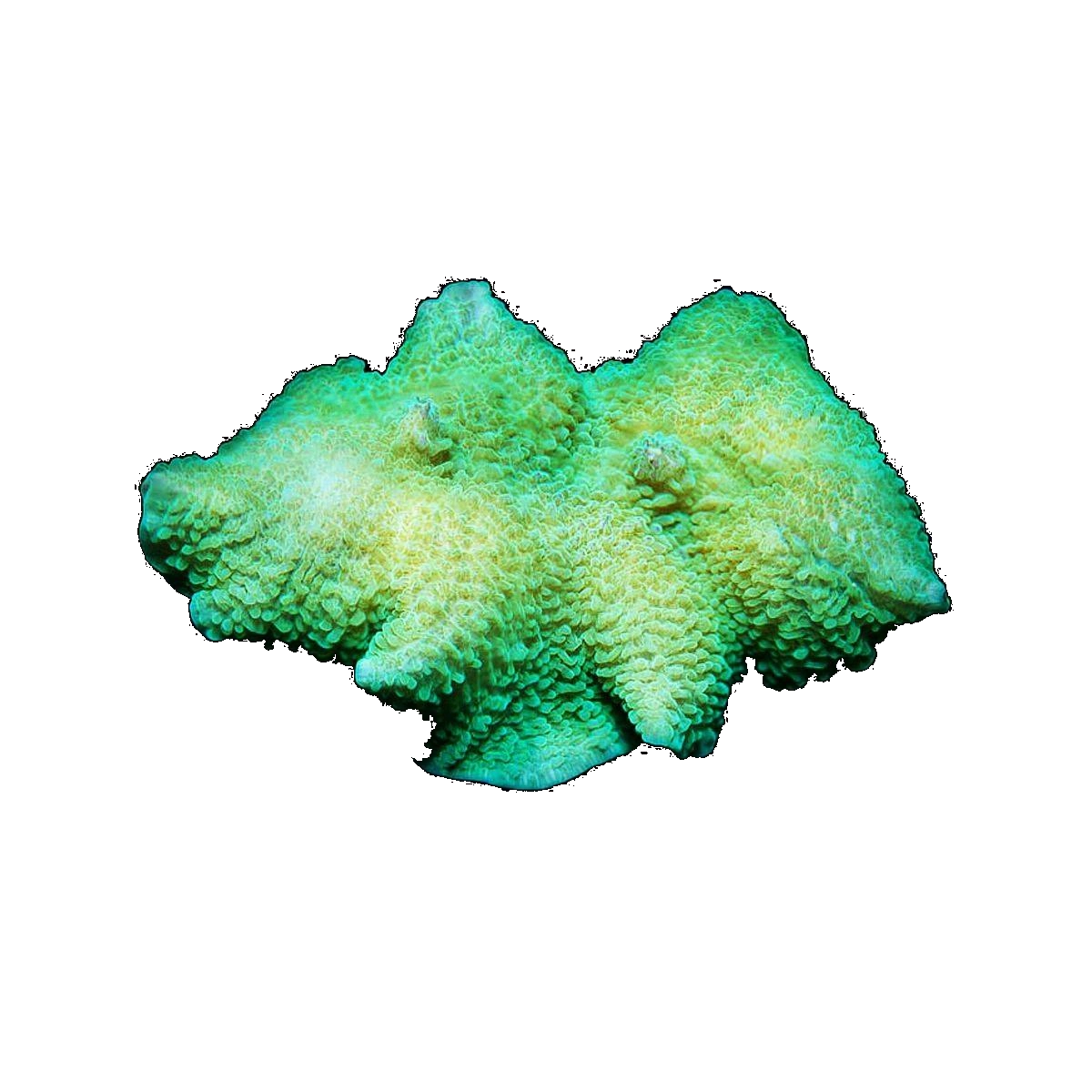
ORA Elephant Ear Mushroom
Rhodactis sp.DiscosomatidaeMushroom corals
Add from My tanks →1 photos
A captive-bred Golden angelfish (Centropyge aurantia) with a reddish-orange body marked with thin golden bars; shy and secretive, it needs a well-established tank with live rock for grazing and hiding, and may nip at corals and clam mantles, so reef caution is advised.
Quick facts
Handling caution: Mild sting from nematocysts; can irritate skin or eyes on contact
Identity
- Also known as
- Hairy Mushroom; Rhodactis Mushroom; Bounce Mushroom
- Synonyms
- Discosoma sp. (older usage)
- Environment
- Saltwater
- Native to
- Indo-Pacific, Philippines, Indonesia, Solomon Islands, Papua New Guinea
- Habitat
- Shallow to moderate-depth reef flats and lagoons, typically on rubble or rocky substrate in areas of reduced water motion and filtered light
- Sourcing
- Both
- Conservation
- Not Evaluated
Care
- Care level
- Easy
- Coral type
- Mushroom
- Temperament
- Semi-Aggressive
- Growth form
- Mushroom
- Adult size
- 1 – 8 in (2.5 – 20 cm)
- Spread
- 8 in (20 cm)
- Growth rate
- Moderate
- Placement
- Low, Middle
Water
- Temperature
- 76 – 80 °F (24 – 27 °C)
- pH
- 8.1 – 8.4
- dKH
- 8 – 10 dKH
- Salinity
- 1.024 – 1.026 SG
- PAR
- 50 – 150 PAR
- Flow
- Low-Moderate
- Light
- Low
Reef care
- Nutrient preference
- Medium
- Alk/Ca uptake
- Low
- Target feeding
- Beneficial
- Give it room
- 4 in (10 cm)
- Colors
- Green, Orange, Yellow, Brown, Purple, Red, Multicolor
Feeding & breeding
- Diet
- Omnivore
- Foods
- Frozen, Zooplankton, Phytoplankton, Coral food
- Propagation
- Fragging, Splitting
Something wrong or missing? Submit a correction
Care guide
Overview
ORA Elephant Ear Mushroom is a captive-propagated Rhodactis with a broad, ruffled disc that can spread to fill a rubble mound over time. Hardy and undemanding, it tolerates a wide swing of light and flow, making it suited to beginner reef tanks. Give it isolated placement, since its sting and chemical output can bother nearby zoanthids and sensitive SPS.
Care
Rhodactis mushrooms are among the hardiest corals in the trade, tolerating a wide range of lighting, flow, and water quality conditions that would stress stony corals. They do best under low to moderate light (roughly 50-150 PAR) with gentle, indirect flow that keeps detritus from settling without folding or retracting the disc. Place colonies on stable rubble or a small isolated rock so they can expand without crawling into neighboring corals, since they can sting and outcompete slower growers over time. New arrivals should be light-acclimated gradually over one to two weeks to avoid bleaching.
Placement & acclimation
Acclimate with a 30-60 minute drip and float to match temperature before introduction. Reduce light intensity by 30-50% for the first one to two weeks using shading or a mesh screen, then increase gradually once the disc is fully expanded and holding color. Mount on a small rock or rubble island in low to mid-tank placement to contain future spread.
Feeding
Most nutrition comes from symbiotic zooxanthellae, so feeding is supplemental rather than essential. Offering small meaty foods such as mysis, finely chopped seafood, or powdered coral food once or twice a week tends to improve growth rate and coloration. Turning off flow briefly during feeding helps the polyp capture food before it is swept away, and overfeeding should be avoided since excess waste can foul water quality.
Neighbors
Give at least three to six inches of clearance from other corals, since Rhodactis can extend its disc considerably and possesses a mild sting along with chemical defenses that can irritate zoanthids, palythoas, and sensitive SPS. It generally coexists well with other soft corals and leathers that share similar tolerance for allelopathy. Avoid placing it near slow-growing or immobile prized colonies that cannot be relocated if the mushroom begins to spread.
Fragging
Colonies propagate naturally through longitudinal fission, splitting in half over time to form new individuals, and this process can be encouraged by cutting a healthy disc in two with a sharp blade once it reaches a reasonable size. Allow fresh cuts to heal on a stable, low-flow surface before handling further. Fragged pieces are slower to recover than stony corals and should be kept in stable conditions during healing.
Pests & problems
Bleaching from excessive light is the most common problem, presenting as pale or washed-out coloration and shrinkage. Sudden swings in salinity, alkalinity, or temperature can cause the mouth to gape or the disc to detach from the rock. Nudibranchs and other predatory pests occasionally target mushroom corals, so new frags should be dipped and quarantined before introduction to the display tank.
Sources
Something wrong or missing? Submit a correction
In the community
Popular tanks using ORA Elephant Ear Mushroom
No public tanks are showcasing ORA Elephant Ear Mushroom yet.