
Terrarium Plant
Ophiopogon Pusillus
Ophiopogon pusillusAsparagaceaeTerrarium plants
Price: $8.99 USD
Add from My tanks →1 photos
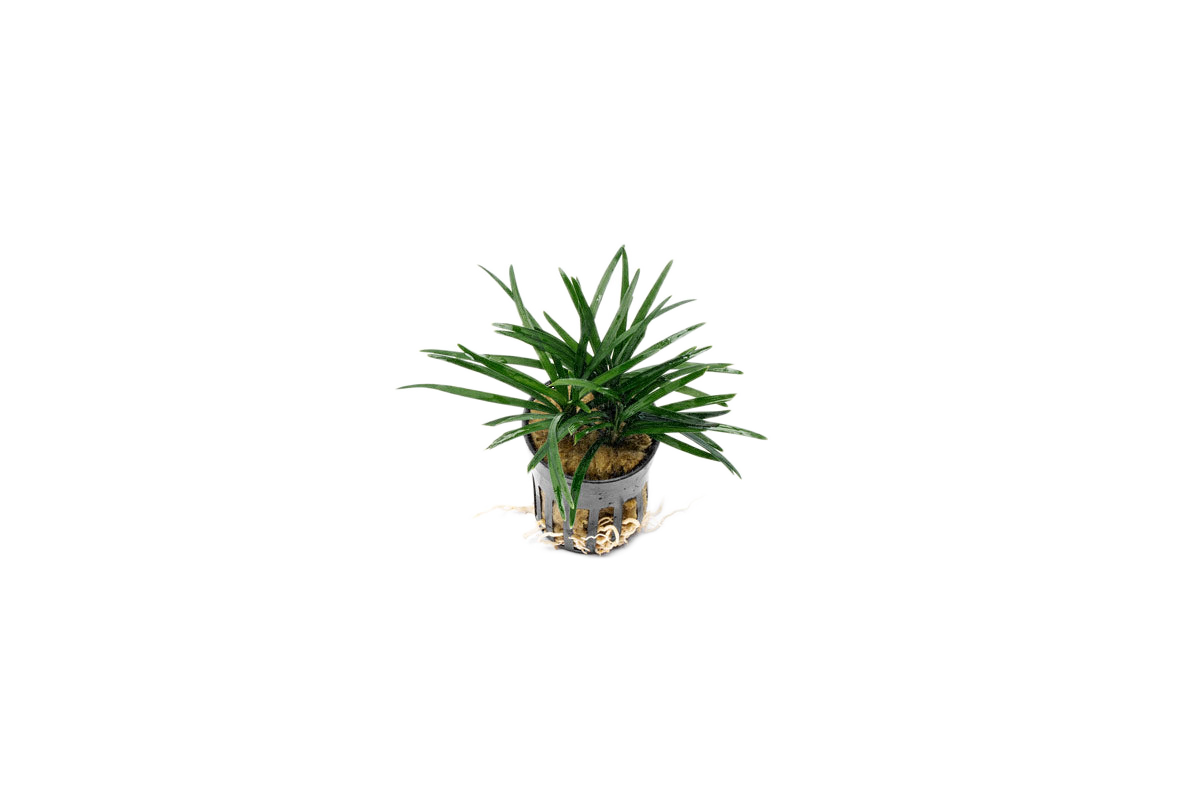
Ophiopogon pusillus (Mondo Grass) is a small, evergreen East Asian perennial forming dense tufts of arching, narrow dark green leaves, with occasional bell-shaped pale lilac to white flowers and dark purple berries. It prefers partial to full shade with regular watering, and is not a true aquatic plant, so prolonged submersion will cause it to deteriorate.
Quick facts
Identity
- Also known as
- Dwarf Mondo Grass; Mondo Grass
- Synonyms
- Ophiopogon japonicus 'Pusillus'
- Environment
- Terrestrial
- Native to
- Japan, China, East Asia
- Habitat
- Shaded forest floors and woodland margins in humid subtropical and temperate East Asia
- Sourcing
- Aquacultured
- Conservation
- Not Evaluated
Care
- Care level
- Easy
- Growth form
- Rhizome
- Max height
- 2 – 4 in (5.1 – 10 cm)
- Spread
- 6 in (15 cm)
- Growth rate
- Slow
- Placement
- Foreground, Carpet
Water
- Temperature
- 60 – 75 °F (16 – 24 °C)
- Humidity
- 60 – 90%
Planting
- Substrate
- Nutrient-rich preferred
- Feeds from
- Roots
- Fertilizer needs
- Low
- Colors
- Green
Feeding & breeding
- Propagation
- Rhizome division, Splitting
Something wrong or missing? Submit a correction
Care guide
Overview
Narrow, arching blades of dark green form dense, grass-like tufts that stay low and compact, useful for carpeting terrarium or paludarium foreground space. Growth is slow but steady in moist, well-draining substrate with low to moderate light. It is emersed-only, declining if kept submerged long term.
Care
Dwarf mondo grass forms neat, grass-like tufts of narrow dark green leaves that stay low and dense, making it useful for filling foreground space in terrariums and paludariums. It tolerates low to moderate light and grows slowly but steadily under stable humidity and moist, well-draining soil. Sudden changes in humidity, temperature, or lighting can stress the plant, so gradual acclimation after purchase is recommended.
Planting & trimming
Plant in moist, well-draining soil or terrarium substrate with the crown kept above the surface, since burying it can lead to rot. Works well as a foreground accent or small clump feature in paludariums and riparium banks, planted individually or in small groups for a miniature lawn effect. Trim only to remove old or damaged leaves, as growth is naturally compact and slow.
Fertilizing
A light dose of balanced liquid fertilizer or diluted terrestrial plant food during active growth supports fuller, greener foliage, though this species is not a heavy feeder. Deficiencies typically show as pale or yellowing leaf tips rather than dramatic discoloration. Overfeeding is unnecessary and can encourage algae or fungal growth on the moist substrate it prefers.
Propagation
Propagated by dividing mature clumps at the rhizome once they have filled out, separating sections with roots intact and replanting them in similarly moist, shaded substrate. Division is easiest during active growth periods and new divisions should be kept humid until established.
Problems
Extended submersion causes gradual decline and eventual rot, since this is not a true aquatic plant despite frequent mislabeling in the aquarium trade. Root or crown rot can develop if the substrate stays waterlogged or if the crown is buried too deeply when planted. Otherwise it is a hardy, low-maintenance grower with few pest issues in enclosed humid setups.
Sources
More Terrarium plants
Something wrong or missing? Submit a correction
In the community
Popular tanks using Ophiopogon Pusillus
No public tanks are showcasing Ophiopogon Pusillus yet.