
Terrarium Plant
Ophiopogon Japonicus Green
Ophiopogon japonicusAsparagaceaeTerrarium Grasses
Price: $11.99 USD
Add from My tanks →1 photos
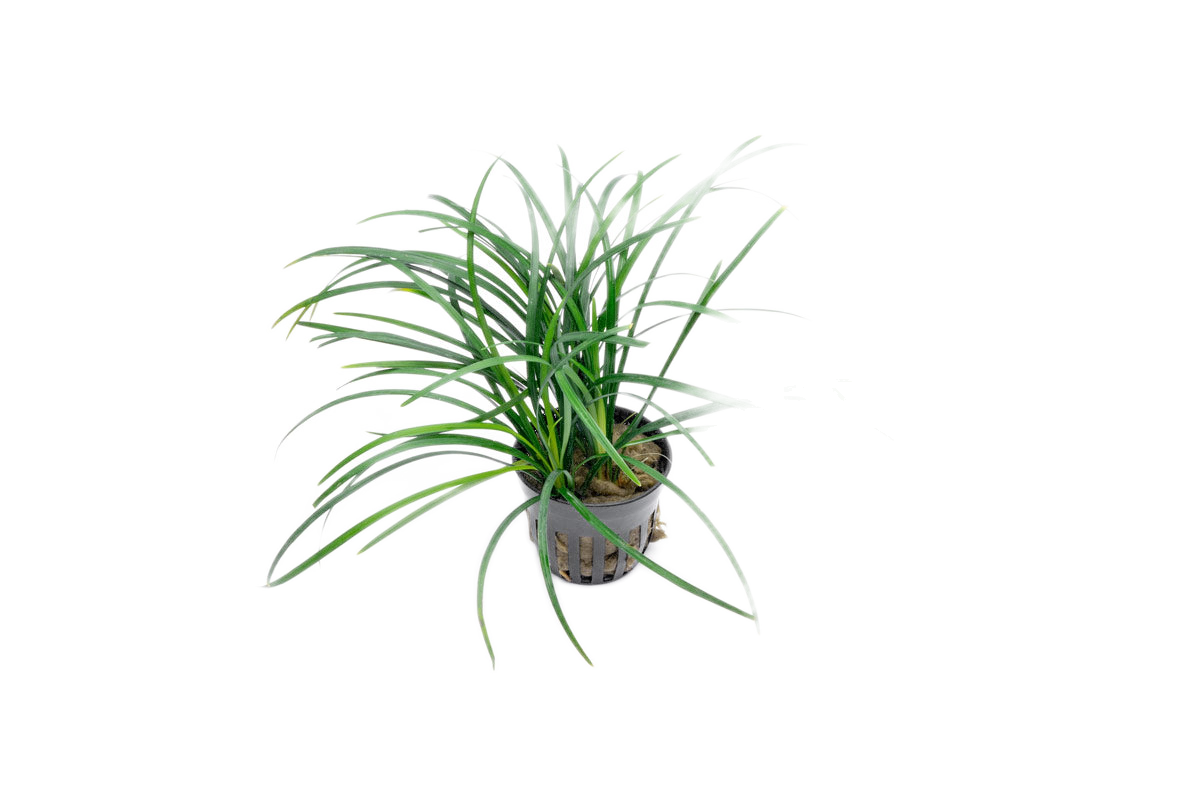
Ophiopogon Japonicus Green (Mondo Grass) is an evergreen perennial of the lily family with long, narrow, dark-green grass-like leaves that form a compact, slow-spreading ground cover. It prefers partial to full shade with moderate watering and quality soil; a terrestrial plant for terrariums and paludariums, it must not be grown submerged.
Quick facts
Identity
- Also known as
- Dwarf Lilyturf; Japanese Nettle; Monkey Grass
- Synonyms
- Convallaria japonica
- Environment
- Terrestrial
- Native to
- Japan, China, Korea
- Habitat
- Moist, well-drained soils in shady forests, woodland edges, and among rocks in temperate to subtropical East Asia
- Sourcing
- Aquacultured
- Conservation
- Not Evaluated
Care
- Care level
- Easy
- Growth form
- Rhizome
- Max height
- 4 – 8 in (10 – 20 cm)
- Spread
- 12 in (30 cm)
- Growth rate
- Slow
- Placement
- Foreground, Midground
Water
- Temperature
- 61 – 82 °F (16 – 28 °C)
- Humidity
- 60 – 90%
Planting
- Substrate
- Nutrient-rich preferred
- Feeds from
- Roots
- Fertilizer needs
- Low
- Colors
- Green
Feeding & breeding
- Propagation
- Rhizome division
Something wrong or missing? Submit a correction
Care guide
Overview
Long cultivated in Japan, China, and Korea as a woodland edge and rock garden ground cover, this clone forms dense tufts of narrow, dark green blades over slowly creeping rhizomes. Suited only to terrarium or paludarium foreground planting above the waterline, it needs humid, shaded conditions and consistently moist, well-draining soil rather than submersion.
Care
Mondo grass is a hardy, clumping terrestrial plant often mislabeled for aquarium use, though it is only suitable for emersed cultivation in terrariums, paludariums, and bog setups. It prefers filtered light to partial shade, humus-rich and well-draining soil kept consistently moist, and moderate to high humidity. Given time it forms a dense, lawn-like carpet of narrow dark green blades and tolerates a wide range of temperatures, making it forgiving for beginners in humid vivarium setups.
Planting & trimming
Plant divided clumps directly into moist, humus-rich, well-draining soil with the crown at soil level, keeping roots damp but never submerged. It works well as a foreground or midground ground cover in terrariums and paludariums, and can tolerate brief periods of splashing or high humidity but declines with continuous submersion. Shear back old or shaggy foliage in early spring before new growth resumes to keep clumps tidy.
Fertilizing
Mondo grass does not need heavy fertilizing and grows well in ordinary nutrient-rich terrarium soil with minimal supplementation. Occasional diluted liquid fertilizer or a light top-dressing of organic compost can support steadier growth, but overfeeding is rarely necessary. Yellowing or pale foliage usually points to insufficient light or waterlogged, poorly draining substrate rather than a nutrient deficiency.
Propagation
Propagation is by dividing established clumps, separating sections of rhizome with attached roots and at least several leaves per division. Divided sections can be replanted directly into moist soil where they will re-establish and slowly spread to form a continuous mat. This is a slow-growing species, so noticeable clump expansion takes patience over multiple growing seasons.
Problems
The main risk is rot from prolonged waterlogging or full submersion, since this species is terrestrial and not built for sustained underwater life despite being sold for aquascaping. Poor drainage or stagnant humid conditions can also encourage fungal issues at the base of the clump. Trimming ragged or browning leaf tips in early spring keeps the foliage looking presentable through the year.
Sources
Something wrong or missing? Submit a correction
In the community
Popular tanks using Ophiopogon Japonicus Green
No public tanks are showcasing Ophiopogon Japonicus Green yet.