
Aquatic Plant
Nymphoides Aquatica / Banana Plant
Nymphoides aquaticaMenyanthaceaeBulb and tuber plants
Price: $8.99 USD
Add from My tanks →1 photos
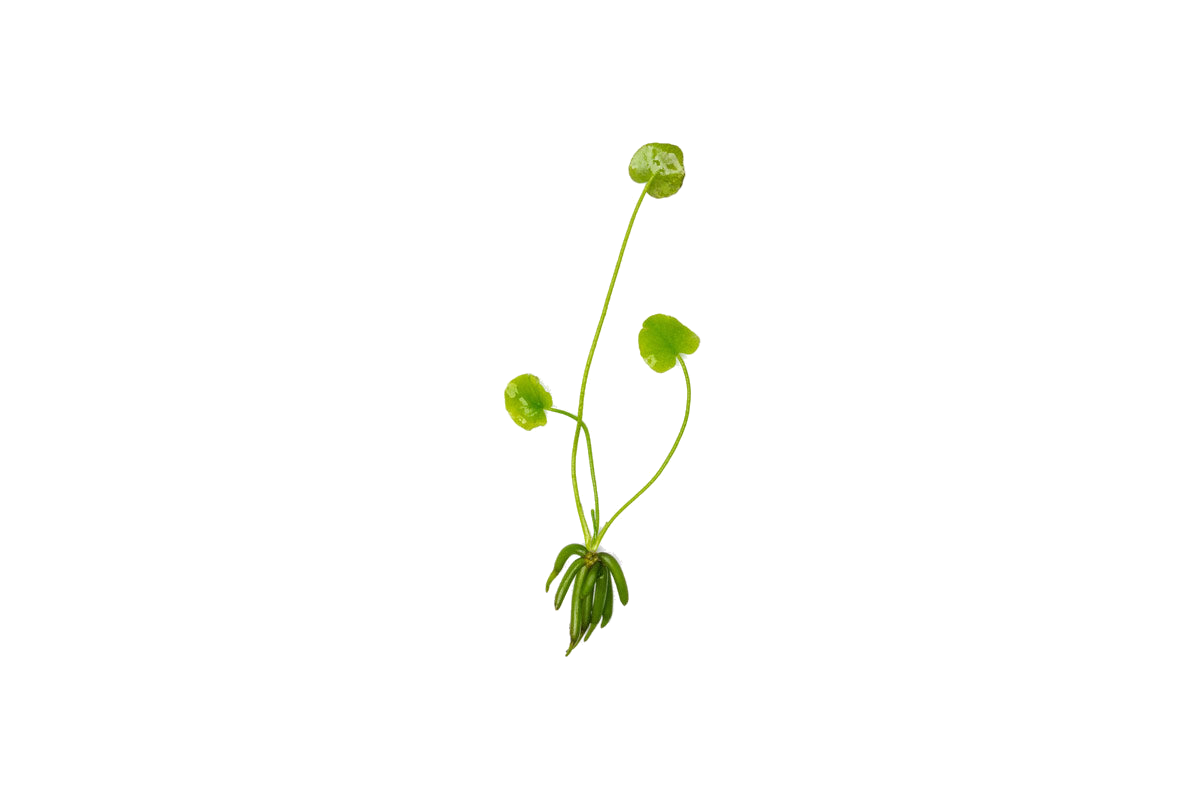
The Banana Plant (Nymphoides aquatica) is a charmingly distinct floating plant with rounded, heart-shaped leaves anchored by a cluster of swollen green tubers that look like a tiny bunch of bananas. Left to float or rested on substrate, its long stems form a canopy of miniature lily pads.
Quick facts
Identity
- Also known as
- Big floating heart; Dwarf water lily
- Synonyms
- Limnanthemum aquaticum
- Environment
- Freshwater
- Native to
- Southeastern United States
- Habitat
- Slow-moving ponds, ditches, and swamps with soft substrate in the southeastern US
- Sourcing
- Aquacultured
- Conservation
- Not Evaluated
Care
- Care level
- Easy
- Growth form
- Rosette
- Max height
- 4 – 20 in (10 – 51 cm)
- Spread
- 6 in (15 cm)
- Growth rate
- Moderate
- Placement
- Foreground, Midground
Water
- Temperature
- 68 – 80 °F (20 – 27 °C)
- pH
- 6.0 – 7.5
- GH
- 3 – 15 dGH
- Flow
- Low-Moderate
- Light
- Medium
- CO₂
- Beneficial
Planting
- Substrate
- Nutrient-rich preferred
- Feeds from
- Both
- Fertilizer needs
- Medium
- Colors
- Green
Feeding & breeding
- Propagation
- Cuttings, Plantlets, Seeds
Something wrong or missing? Submit a correction
Care guide
Overview
A cluster of banana-shaped tubers anchors this rosette plant, from which round, heart-shaped leaves rise on long stems toward the surface. It suits low-tech foreground or midground planting in tanks from 10 gallons, needing only medium light and no CO2. Keep the tuber crown exposed on the substrate to avoid rot, and trim surface pads to maintain a compact underwater form.
Care
The banana plant grows from a cluster of thick, banana-shaped tubers that must sit on top of the substrate or be only lightly pressed in, since burying them fully causes rot. Once established it tolerates a wide range of lighting and does not need CO2 supplementation, making it forgiving for low-tech setups. Left unchecked it will send long stems and lily-pad leaves to the surface, so surface leaves are usually trimmed off to keep a compact underwater rosette.
Planting & trimming
Rest the tuber on the substrate surface or bury only the lower portion, leaving the crown exposed, then allow roots to anchor it naturally. Give the plant space since mature specimens can spread widely, and periodically trim runaway surface leaves to keep the underwater form tidy. It can also be grown floating without substrate contact if a surface canopy is desired.
Fertilizing
Although the tubers store some nutrients, this plant benefits from a nutrient-rich substrate or an occasional root tab placed near, not directly on, the tuber. A weekly dose of liquid fertilizer helps supply iron and trace elements for the submerged leaves. Yellowing leaves or stalled growth are usually signs of a nutrient shortfall rather than disease.
Propagation
New plantlets commonly form on floating leaves or at leaf nodes and can be separated once they develop their own small roots. Mature tubers may also produce offset bulbs that can be detached and replanted separately. Seeds are occasionally produced from surface flowers in open-top tanks but are rarely used for hobby propagation.
Problems
The most common issue is algae building up on the slow-growing leaves, usually from excess light relative to available nutrients or weak flow. Some leaf drop after planting is normal as the plant adjusts to submersed conditions and new growth should follow within a few weeks. Rot at the tuber almost always traces back to burying it too deeply in the substrate.
Sources
Something wrong or missing? Submit a correction
In the community
Popular tanks using Nymphoides Aquatica / Banana Plant
No public tanks are showcasing Nymphoides Aquatica / Banana Plant yet.