
Terrarium Plant
Marcgravia Sintenisii
Marcgravia sintenisiiMarcgraviaceaeShingle plants
Price: $42.99 USD
Add from My tanks →1 photos
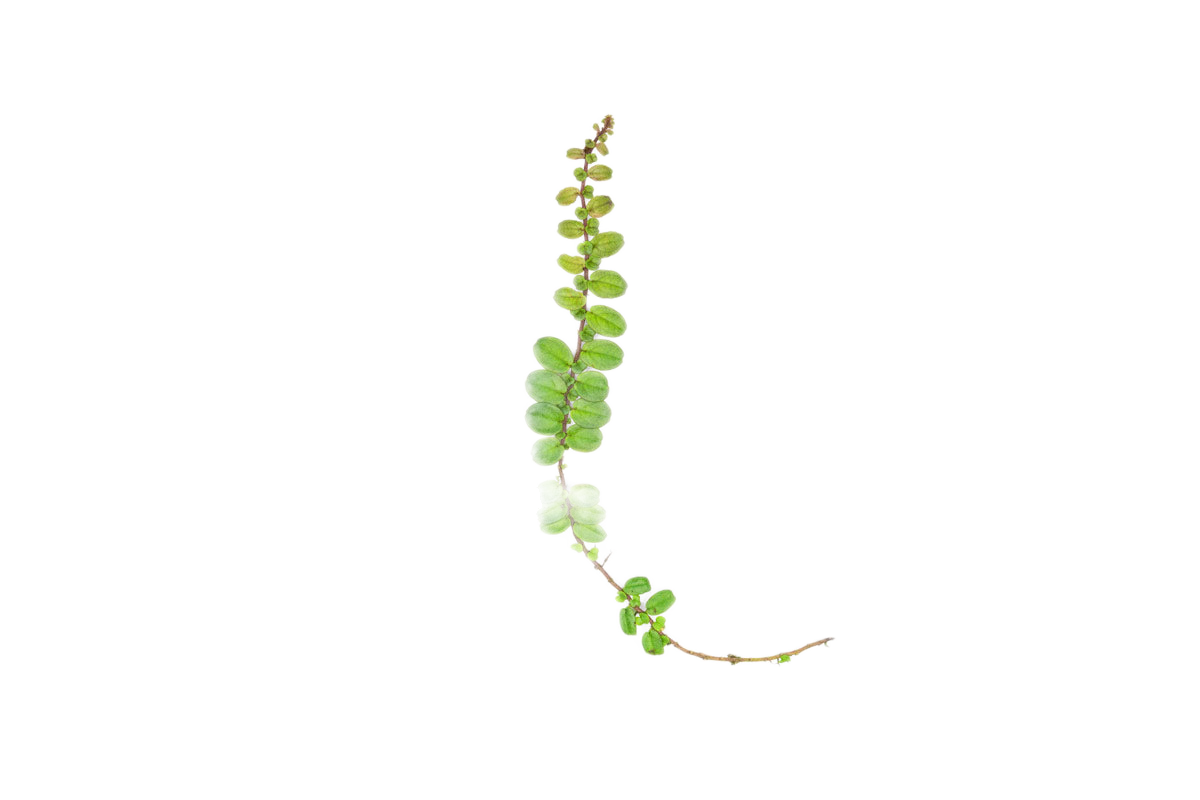
Marcgravia sintenisii is a South American tropical vine with shingling leaves that shift from red to orange to green, climbing vertical surfaces in terrariums and paludariums. This terrestrial plant needs low to medium light and slightly moist roots, and it will die if fully submerged.
Quick facts
Identity
- Also known as
- Rainbow Marcgravia; Sintenisii Shingle Vine
- Environment
- Terrestrial
- Native to
- Puerto Rico
- Habitat
- Humid montane forest edges, climbing over trees and rocks on the bright margin of the canopy
- Sourcing
- Captive-bred
- Conservation
- Not Evaluated
Care
- Care level
- Moderate
- Growth form
- Vine
- Max height
- 4 – 78 in (10 – 198 cm)
- Spread
- 39 in (99 cm)
- Growth rate
- Slow
- Placement
- Background, Epiphyte
Water
- Temperature
- 64 – 82 °F (18 – 28 °C)
- Humidity
- 70 – 90%
Planting
- Substrate
- Not needed
- Feeds from
- Roots
- Fertilizer needs
- Low
- Colors
- Red, Orange, Green
Feeding & breeding
- Propagation
- Cuttings
Something wrong or missing? Submit a correction
Care guide
Overview
Juvenile leaves emerge red before fading through orange to green as they mature, overlapping in flattened, shingled rows against whatever they climb. Slow-growing and epiphytic, it presses adventitious roots into cork bark or a moss pole rather than rooting in substrate. Full submersion kills it, so it belongs in a humid terrarium or paludarium background, not an aquatic setup.
Care
This shingling vine presses its overlapping juvenile leaves flat against bark, cork, or a moss pole, gradually climbing as adventitious roots grip the support. It needs consistently high humidity and warmth, bright but indirect light, and a growing surface that stays lightly moist rather than wet. Direct sun scorches the thin foliage, while low light causes new leaves to lose their red flush and emerge plain green. Growth is slow, so an established plant can hold the same footprint for years between repottings.
Planting & trimming
Mount the plant on damp cork bark, a moss pole, or another vertical surface so the climbing roots can attach and the shingling leaves lie flat against it. Alternatively, pot it in a loose, airy epiphytic mix of orchid bark, sphagnum, and perlite with a working drainage hole, since dense, water-retentive substrate suffocates the roots. Long vines can be cut back hard to control size, and the plant responds by branching out from the cut.
Fertilizing
Feed sparingly during active growth with a dilute balanced liquid fertilizer at quarter to half strength every few weeks, applied to the roots or as a light foliar mist on mounted specimens. Because this is a slow grower, overfeeding causes more harm than benefit and can burn the fine roots. Root tabs are not typically used since the plant is usually grown mounted rather than potted in substrate.
Propagation
Propagate by nodal stem cuttings taken just below a node, since leaves alone will not root. Cuttings of about 10-15 cm with two to three nodes can be rooted in water or pressed directly into moist sphagnum or soil under high humidity and bright indirect light. Roots typically appear within two to four weeks, with potting up at four to six weeks once roots reach a few centimeters long.
Problems
Loss of the red coloration in new growth is the most common issue and usually signals insufficient light rather than disease. Water sitting on the leaves or a soggy mount encourages rot at the nodes, so moisture should be directed to the roots and support instead of the foliage. Full submersion is fatal, making this a terrarium or paludarium background plant rather than a true aquatic species.
Sources
Something wrong or missing? Submit a correction
In the community
Popular tanks using Marcgravia Sintenisii
No public tanks are showcasing Marcgravia Sintenisii yet.