
Aquatic Plant
Ludwigia Sedioides
Ludwigia sedioidesOnagraceaeRosette floaters
Price: $12.99 USD
Add from My tanks →1 photos
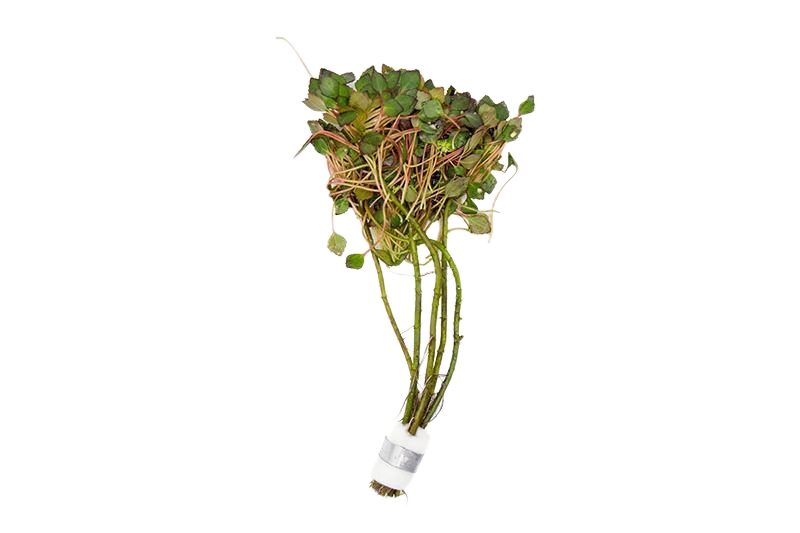
Ludwigia Sedioides (Mosaic Plant) is a one-of-a-kind floating aquatic plant from Central and South America. Diamond-shaped green leaves radiate from a central stem in a perfect mandala rosette drifting across the surface; in warm, high-light water it produces charming yellow, buttercup-like flowers.
Quick facts
Identity
- Also known as
- Mosaic flower; False loosestrife; Mosaic plant
- Synonyms
- Jussiaea sedioides; Ludwigia sedoides
- Environment
- Freshwater
- Native to
- Brazil, Venezuela, Colombia, Panama
- Habitat
- Standing or slow-moving swampy pools, pond margins, and wet swampy soils in tropical lowlands
- Sourcing
- Aquacultured
- Conservation
- Not Evaluated
Care
- Care level
- Difficult
- Growth form
- Stem
- Max height
- 4 in (10 cm)
- Spread
- 24 in (61 cm)
- Growth rate
- Fast
- Placement
- Floating
Water
- Temperature
- 70 – 82 °F (21 – 28 °C)
- pH
- 5.5 – 7.5
- GH
- 2 – 12 dGH
- dKH
- 2 – 15 dKH
- Flow
- Low
- Light
- High
- CO₂
- Beneficial
Planting
- Substrate
- Nutrient-rich required
- Feeds from
- Both
- Fertilizer needs
- High
- Colors
- Green, Red
Feeding & breeding
- Propagation
- Cuttings
Something wrong or missing? Submit a correction
Care guide
Overview
Wild populations grow across tropical lowland swamps and pond margins of Brazil, Venezuela, Colombia and Panama, where rooted stems reach the surface and fan into diamond-shaped rosettes. Kept under intense light and heavy nutrient dosing, it forms tight floating mandalas that occasionally flower yellow. It suits open-top paludariums, tubs and ponds rather than standard planted tanks, with brittle stems prone to melt if conditions swing.
Care
This rooted stem plant sends long stems to the surface, where the diamond-shaped leaves fan out into a floating rosette rather than staying free-floating like duckweed. It demands very strong light, ideally direct sun or a high-output fixture over an open-top tank or pond, since anything less produces weak, undersized rosettes. Because it shades everything beneath it and needs so much light and nutrition, it suits paludariums, tubs, and outdoor ponds far better than a standard planted aquarium. Warm, stable water is essential; temperatures below about 65°F or unstable parameters quickly cause decline.
Planting & trimming
Plant the roots in soft, nutrient-rich substrate below the water surface, leaving enough depth (roughly 12-24 inches) for the stem to reach up and the rosette to float freely on top. It spreads quickly across the surface and needs regular thinning to prevent it from shading out the rest of the tank or pond. New rosettes form readily on cuttings, so excess growth can simply be trimmed away as it spreads.
Fertilizing
Heavy feeding is required to sustain the rosettes, including both root tabs at the base for the substrate-bound roots and regular liquid macro and micronutrient dosing for the emergent growth. Iron and other micronutrients should be kept at the higher end of typical planted-tank dosing, as deficiency shows up as pale or stunted new rosettes. Rich CO2 and nutrient supplementation speed growth noticeably and can help trigger the yellow surface flowers under otherwise optimal light.
Propagation
Propagate by cutting off a floating rosette along with a short piece of its stem, then leaving the remaining main stem in place in the tank or pond. A new rosette will regenerate from the cut stem within a short time, making this an easy and reliable method once a healthy plant is established.
Problems
Sudden changes in water chemistry or temperature often cause melt and rotting of the rosettes, so acclimation should be gradual. The brittle reddish stems snap easily and can be damaged by boisterous fish, so tankmates should be calm surface dwellers. Under insufficient light the plant simply fails to form proper rosettes and may waste away rather than displaying obvious deficiency symptoms.
Sources
Something wrong or missing? Submit a correction
In the community
Popular tanks using Ludwigia Sedioides
No public tanks are showcasing Ludwigia Sedioides yet.