
Aquatic Plant
Hemigraphis Repanda / Dragon's Tongue
Hemigraphis repandaAcanthaceaeTerrarium plants
Price: $9.99 USD
Add from My tanks →1 photos
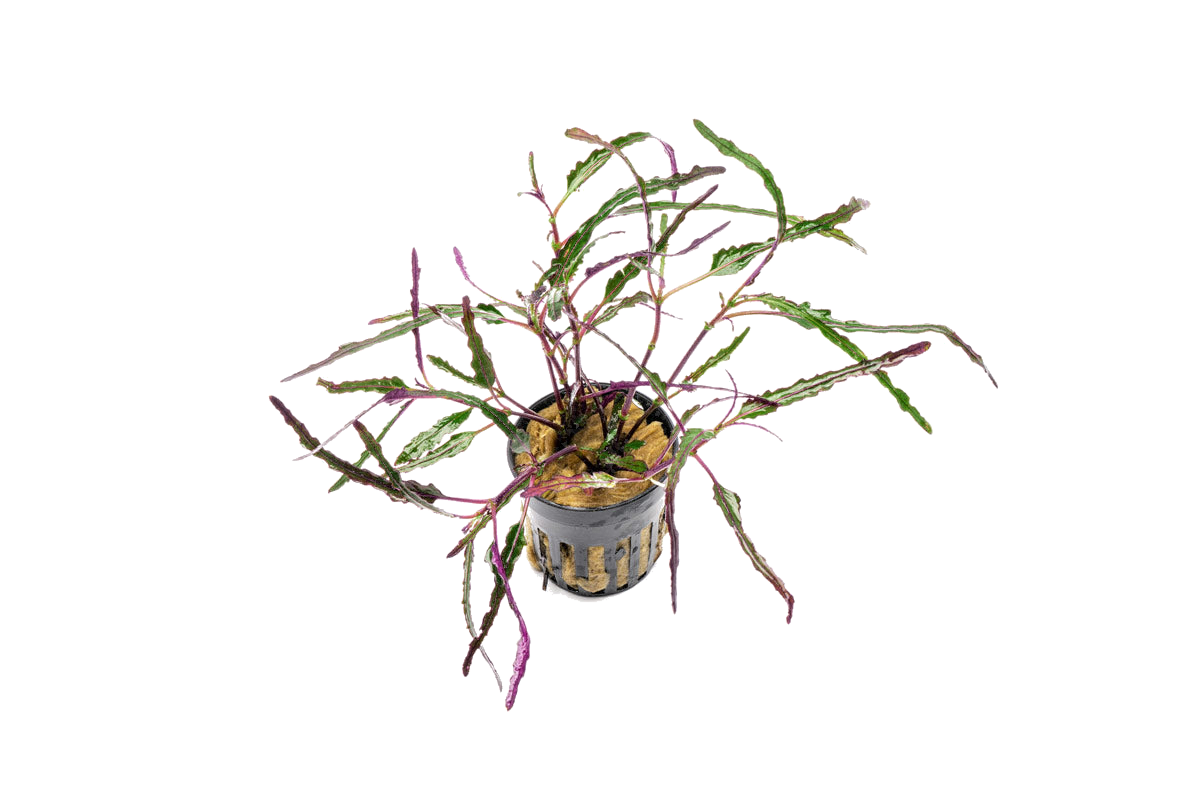
Hemigraphis Repanda (Dragon Tongue) is a unique terrarium plant with green leaf tops and bright purple undersides, its ruffled, wrinkly texture providing excellent contrast. Though often sold as aquatic, it is not fully aquatic and will melt if kept submerged long-term; it thrives emersed in high-humidity terrariums or paludariums with moderate to high light.
Quick facts
Identity
- Also known as
- Green Dragon's Tongue; Dragon Tongue
- Environment
- Freshwater
- Native to
- Malaysia, Indonesia, Southeast Asia
- Habitat
- Rainforest understory on constantly damp muddy soils and shaded, marshy stream edges
- Sourcing
- Captive-bred
- Conservation
- Not Evaluated
Care
- Care level
- Easy
- Growth form
- Upright
- Max height
- 4 – 10 in (10 – 25 cm)
- Spread
- 8 in (20 cm)
- Growth rate
- Moderate
- Placement
- Foreground, Midground
Water
- Temperature
- 68 – 82 °F (20 – 28 °C)
- pH
- 6.0 – 7.5
- Light
- Medium
- CO₂
- Not needed
Planting
- Substrate
- Nutrient-rich preferred
- Feeds from
- Roots
- Fertilizer needs
- Medium
- Colors
- Green, Purple
Feeding & breeding
- Propagation
- Cuttings, Rhizome division
Something wrong or missing? Submit a correction
Care guide
Overview
Grown from stock native to Southeast Asian stream banks and rainforest understory, this Hemigraphis is propagated for terrarium and paludarium use rather than true aquatic culture. Its ruffled leaves show green tops and purple undersides, and it needs emersed placement in humid, well-drained conditions, since prolonged submersion causes melt and root rot.
Care
Dragon's Tongue is a low, spreading shrub grown for its rippled green foliage that often shows a purple to burgundy underside in good light. It is not a true aquatic plant despite frequently being sold in aquarium stores, and permanent submersion leads to root rot and leaf melt within weeks to months. Keep it emersed in a paludarium, terrarium, or humid vivarium with well-drained soil and moderate to bright indirect light, misting or maintaining high ambient humidity to keep the foliage from drying out.
Planting & trimming
Rinse growing media or cotton from the roots before planting into a well-drained, organically rich terrestrial or paludarium soil, keeping the crown above the waterline. Some growers keep the root ball in wet substrate at the water's edge with the stems and leaves fully emersed, acclimating new plants to high humidity for the first few weeks before easing them toward ambient room conditions. Trim leggy stems to encourage bushier, low spreading growth and to propagate cuttings.
Fertilizing
Feed with a diluted liquid houseplant fertilizer at roughly half strength during active growth in spring and summer, tapering off in cooler months when growth slows. In soil-based paludarium setups the plant draws nutrients mainly through its roots, so a nutrient-rich terrestrial substrate or occasional root tabs support fuller growth. Pale or fading leaf color usually signals insufficient light rather than a nutrient deficiency, since foliage tends to green up under low light and deepen in purple tones under brighter exposure.
Propagation
Propagate readily from stem cuttings placed in moist soil or by dividing established root clumps, both of which root within a few weeks under humid conditions. Division is best performed during the active growing season in spring or summer rather than during winter dormancy.
Problems
The most common problem is melt and root rot brought on by prolonged submersion or waterlogged soil, since the roots need oxygen and cannot tolerate constant saturation. In overly still, humid enclosures with poor air exchange it can also develop fungal spotting on the leaves, so some ventilation helps. Cold drafts or temperature drops below the mid 60s F can trigger stem rot and should be avoided.
Sources
Varieties in the catalog
More Terrarium plants
Something wrong or missing? Submit a correction
In the community
Popular tanks using Hemigraphis Repanda / Dragon's Tongue
No public tanks are showcasing Hemigraphis Repanda / Dragon's Tongue yet.