
Terrarium Plant
Fenestratarum Culum
Fenestratarum culumAraceaeBucephalandra relatives
Price: $39.99 USD
Add from My tanks →1 photos
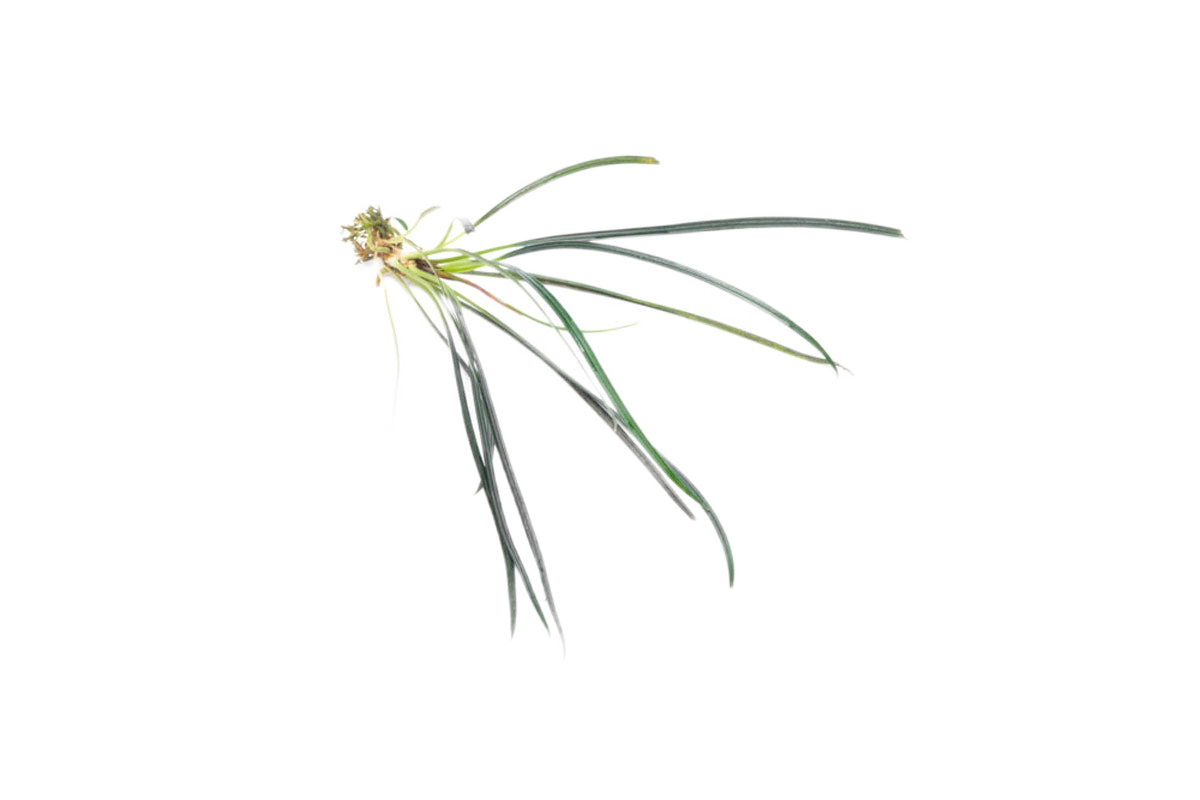
Fenestratarum Culum is a relatively rare, sophisticated rheophytic plant closely related to Aridarum, Piptospatha, and Bucephalandra. An epiphyte grown emersed on driftwood or rocks, it features slender, deep green, slightly leathery leaves sprouting from a thick central rhizome; ideal midground for vivariums or terrariums.
Quick facts
Identity
- Also known as
- Fenestratum Culum
- Environment
- Terrestrial
- Native to
- Borneo (Kalimantan, Indonesia)
- Habitat
- Obligate rheophyte growing on sandstone rocks and boulders along fast-flowing streams and riverbanks near open, humid plains, typically in shaded, low-light spots at low elevation
- Sourcing
- Aquacultured
- Conservation
- Not Evaluated
Care
- Care level
- Moderate
- Growth form
- Rhizome
- Max height
- 3 – 10 in (7.6 – 25 cm)
- Spread
- 6 in (15 cm)
- Growth rate
- Slow
- Placement
- Midground
Water
- Temperature
- 70 – 82 °F (21 – 28 °C)
- Humidity
- 70 – 100%
Planting
- Substrate
- Not needed
- Feeds from
- Water column
- Fertilizer needs
- Low
- Colors
- Green
Feeding & breeding
- Propagation
- Rhizome division
Something wrong or missing? Submit a correction
Care guide
Overview
Fenestratarum culum is a rheophytic aroid rare in cultivation, related to Bucephalandra and Piptospatha. Slender, leathery green leaves emerge from a thick rhizome that grips driftwood or rock rather than substrate, mirroring its life on sandstone boulders along Bornean streams. Growth is slow and best suited to humid paludariums or high-humidity emersed setups.
Care
This rheophytic aroid grows attached to hardscape rather than rooted in substrate, closely mimicking its native habitat on rocks along fast Bornean streams. It tolerates a wide range of water chemistry once established but does best in soft, slightly acidic water with low to medium lighting. Growth is slow, and the plant is more commonly kept emersed in paludariums or terrariums than fully submerged, since it prefers humidity and splash zones over constant submersion.
Planting & trimming
Attach the rhizome to driftwood or rock using aquarium-safe glue, thread, or fishing line, positioning it so the rhizome sits on top of the hardscape surface. Never bury the rhizome in substrate, as this leads to rot and melt. Given time, the roots will grip the hardscape firmly, similar to Bucephalandra or Anubias.
Fertilizing
Liquid fertilizer dosed into the water column supports steady leaf development, since the rhizome and roots absorb nutrients directly from water or humid air rather than from a substrate. Root tabs are not useful here because the plant is not planted in soil or gravel. Pale or yellowing new leaves usually point to a lack of micronutrients, particularly iron, and can be corrected with a balanced comprehensive fertilizer dosed regularly.
Propagation
New plants are produced by dividing the rhizome into sections, each with at least one growth point and a few leaves, then reattaching the divisions to fresh hardscape. Stolons or offshoots produced by the parent plant can also be cut away and grown on independently. Propagation is slow given the plant's overall growth rate.
Problems
Leaf melt is the main risk after acquisition or transplanting, usually triggered by sudden shifts in water parameters, humidity, or lighting rather than disease. Because the leaves are thick and leathery, established plants resist algae fouling better than soft-leaved species, though poor flow or stagnant water can still allow algae to settle on older foliage. Keeping conditions stable during the acclimation period is the best way to avoid dieback.
Sources
Something wrong or missing? Submit a correction
In the community
Popular tanks using Fenestratarum Culum
No public tanks are showcasing Fenestratarum Culum yet.