
Aquatic Plant
Eriocaulon sp Vietnam
Eriocaulon sp.EriocaulaceaeEriocaulons
Price: $17.39 USD
Add from My tanks →1 photos
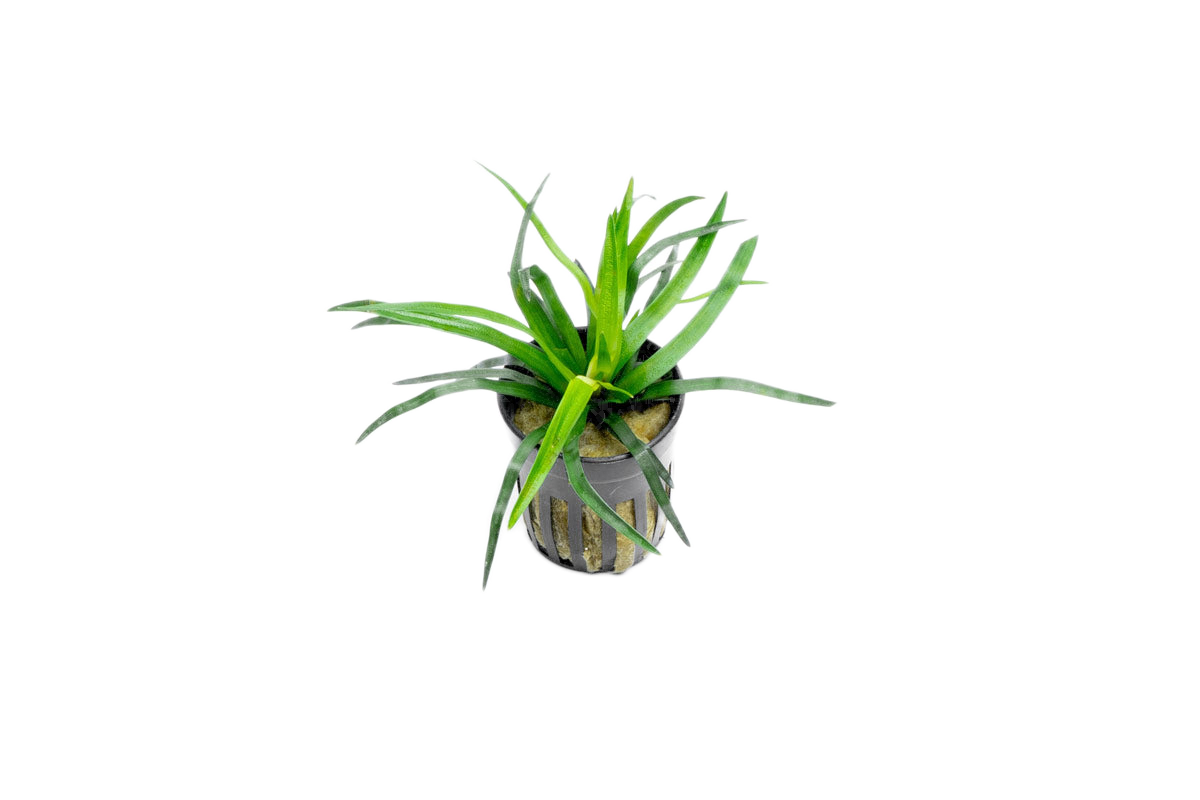
Eriocaulon sp. 'Vietnam' is a demanding Southeast Asian plant with tall stems and long, whitish needle-like leaves that grows bushy with many lateral shoots. Difficult to grow, it needs acidic substrate, soft water, high light, high CO2 and balanced nutrients, making it a green accent or filler for midground or background.
Quick facts
Identity
- Also known as
- Vietnam Pipewort; Eriocaulon Vietnam
- Synonyms
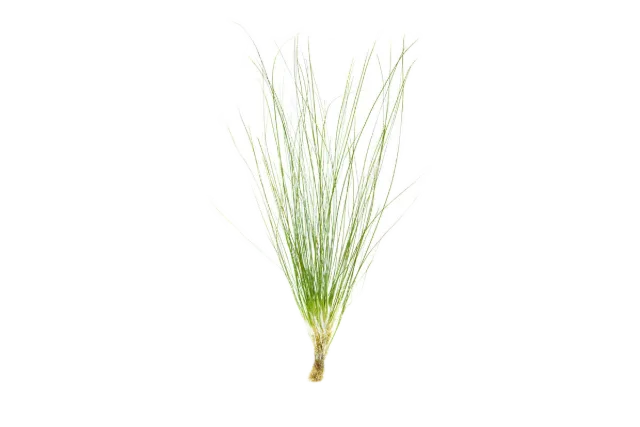
- Eriocaulon breviscapum (trade name for some Feather Duster stock)
- Environment
- Freshwater
- Native to
- India, Southeast Asia (Vietnam)
- Habitat
- Shallow, soft, acidic streams and seasonally flooded rocky riverbeds, often rooted in gravel between boulders in mountain rivers
- Sourcing
- Both
- Conservation
- Not Evaluated
Care
- Care level
- Moderate
- Growth form
- Rosette
- Max height
- 4 – 24 in (10 – 61 cm)
- Spread
- 8 in (20 cm)
- Growth rate
- Slow
- Placement
- Midground, Background
Water
- Temperature
- 68 – 78 °F (20 – 26 °C)
- pH
- 5.5 – 6.8
- GH
- 1 – 6 dGH
- dKH
- 0 – 2 dKH
- Flow
- Moderate
- Light
- High
- CO₂
- Beneficial
Planting
- Substrate
- Nutrient-rich preferred
- Feeds from
- Both
- Fertilizer needs
- Medium
- Colors
- Green
Feeding & breeding
- Propagation
- Rhizome division
Something wrong or missing? Submit a correction
Care guide
Overview
Eriocaulon sp. Vietnam is a rosette-forming pipewort from Southeast Asian mountain rivers, sending up whitish needle-thin leaves and branching into dense clumps of lateral shoots over time. It ranks among the more demanding members of the genus, needing high light, consistent CO2 and soft, low-mineral water to avoid crown rot or stalled growth. Root establishment after planting is often slow.
Care
Eriocaulon species form a rosette of narrow, grass-like or needle-thin leaves radiating from a central rhizome, gradually producing offshoot rosettes that build into a dense clump. Most named forms in the trade, including Feather Duster, do reasonably well under medium to strong lighting and appreciate soft, slightly acidic water with stable parameters. The Vietnam form is considerably more demanding, requiring higher light, consistent CO2 injection and low mineral content to avoid stalling or rotting at the crown. Sudden changes in water chemistry or poor root establishment after planting are the most common causes of failure with this genus.
Planting & trimming
Plant the rhizome shallowly with roots tucked into the substrate but the crown left exposed, since burying the growing point invites rot. Space clumps to allow the fine leaves to fan out and sway without excessive shading from neighboring plants. Established clumps are trimmed by removing older, yellowing outer leaves and separating overcrowded daughter rosettes at the rhizome.
Fertilizing
Water column dosing of a complete macro and micronutrient fertilizer is usually sufficient, since a nutrient-rich substrate is not strictly required though it can support faster establishment. Iron and trace element supplementation helps prevent the pale or yellowing new growth that signals a micronutrient deficiency. CO2 supplementation is beneficial for all forms and close to mandatory for finicky variants like the Vietnam type, which struggles without it.
Propagation
Propagation is done by dividing mature clumps and separating the individual daughter shoots that form along the branching rhizome. As plants age the rootstock can grow upward above the substrate; the upper portion with its leaf rosette can then be cut free and replanted, leaving the remaining base to branch further. Growth is slow enough that plantlets take some time to reach a size worth separating.
Problems
New imports often arrive with a reduced root system and can sit without visible growth for weeks while they rebuild roots, sometimes shedding a few older leaves in the process. Melting of outer leaves shortly after planting is common and not necessarily fatal as long as the crown and rhizome remain firm. Algae fouling on the fine leaves can become a persistent problem in tanks with excess nutrients or insufficient flow, since the thin foliage is hard to clean by hand.
Sources
Varieties in the catalog
Something wrong or missing? Submit a correction
In the community
Popular tanks using Eriocaulon sp Vietnam
No public tanks are showcasing Eriocaulon sp Vietnam yet.