
Aquatic Plant
Echinodorus Helanthium Tenellus
Echinodorus tenellusAlismataceaeChain swords
Price: $6.99 USD
Add from My tanks →1 photos
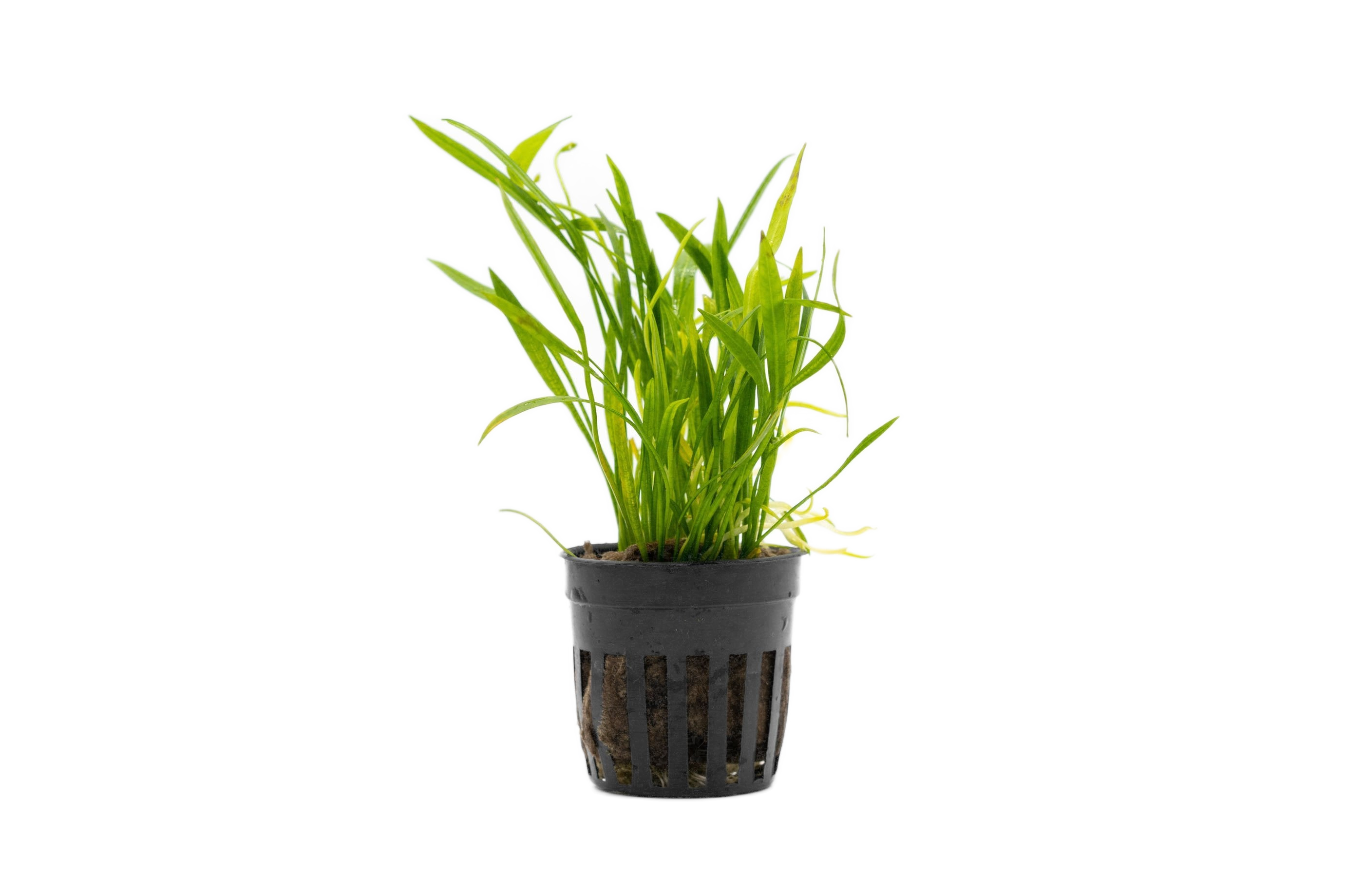
Echinodorus Tenellus (Chain Sword, Dwarf/Pygmy Chain Sword) is a carpeting grass-like plant resembling a mix of dwarf hair grass and micro swords. It spreads via lateral runners to cover the foreground under proper conditions; in nano tanks it can serve as a short background plant with adequate light and CO2.
Quick facts
Identity
- Also known as
- Chain Sword; Pygmy Chain Sword; Dwarf Chain Sword; Narrow Leaf Chain Sword
- Synonyms
- Helanthium tenellum
- Environment
- Freshwater
- Native to
- United States, Mexico, Central America, Brazil, South America
- Habitat
- Shallow riverbanks, pond margins, and seasonal marshy wetlands with fluctuating water levels, growing both emersed and submersed
- Sourcing
- Aquacultured
- Conservation
- Not Evaluated
Care
- Care level
- Easy
- Growth form
- Carpeting
- Max height
- 2 – 4 in (5.1 – 10 cm)
- Spread
- 12 in (30 cm)
- Growth rate
- Fast
- Placement
- Foreground, Carpet
Water
- Temperature
- 68 – 84 °F (20 – 29 °C)
- pH
- 6.2 – 7.5
- GH
- 2 – 15 dGH
- Flow
- Low-Moderate
- Light
- Medium
- CO₂
- Beneficial
Planting
- Substrate
- Nutrient-rich preferred
- Feeds from
- Both
- Fertilizer needs
- Medium
- Colors
- Green, Red
Feeding & breeding
- Propagation
- Runners, Rhizome division, Seeds
Something wrong or missing? Submit a correction
Care guide
Overview
Reaching just 2-4 inches, this grass-like carpeter spreads by runners into a low connected mat suitable for foregrounds or, in nano tanks, a short background stand. It handles a range of lighting but stays denser and greener under medium-high light with root feeding. Expect gradual melt of emersed leaves after planting before fresh submersed growth fills in.
Care
A low, grass-like carpeting plant that spreads by sending out horizontal runners, each producing a new plantlet a short distance from the parent to form a connected chain. It tolerates a wide range of lighting but stays more compact and colorful under medium to high light, while low light produces sparser, taller growth. CO2 is not mandatory but speeds up carpet fill-in and improves density considerably.
Planting & trimming
Plant small bare-root portions or plantlets about an inch apart with the crown sitting right at the substrate surface, since burying it too deep causes the plant to push itself back up. Runners will fill the gaps between plantings over several weeks to a couple of months, forming the characteristic connected carpet. Trim escaping runners and any overly tall leaves regularly to keep the mat low and tidy, especially since growth can become tangled if left unchecked.
Fertilizing
Root tabs pushed into the substrate every few months support strong runner production, since this plant feeds substantially through its roots. Liquid fertilizer with iron and trace elements helps maintain deep green coloration and prevents pale, washed-out new leaves. Pale or yellowing foliage usually points to iron or nitrogen deficiency rather than a light problem.
Propagation
Propagates primarily through horizontal runners that produce daughter plants at intervals, which can be separated once rooted and replanted elsewhere to expand coverage. Emersed-grown specimens may also produce seeds, though runner division is by far the more practical and common method in aquarium culture.
Problems
New growth after planting often looks thin and different from the emersed leaves it arrived with, which reflects the adjustment to submersed life rather than disease. Poor flow or heavy detritus buildup within a dense carpet can encourage algae on older leaves, so periodic thinning helps keep the mat healthy. Melting of the original emersed leaves shortly after planting is common and is followed by fresh submersed growth within a couple of weeks.
Sources
Something wrong or missing? Submit a correction
In the community
Popular tanks using Echinodorus Helanthium Tenellus
No public tanks are showcasing Echinodorus Helanthium Tenellus yet.