
Coral
ECC Yellow Polyps
Parazoanthus gracilisParazoanthidaeZoanthids
Add from My tanks →1 photos
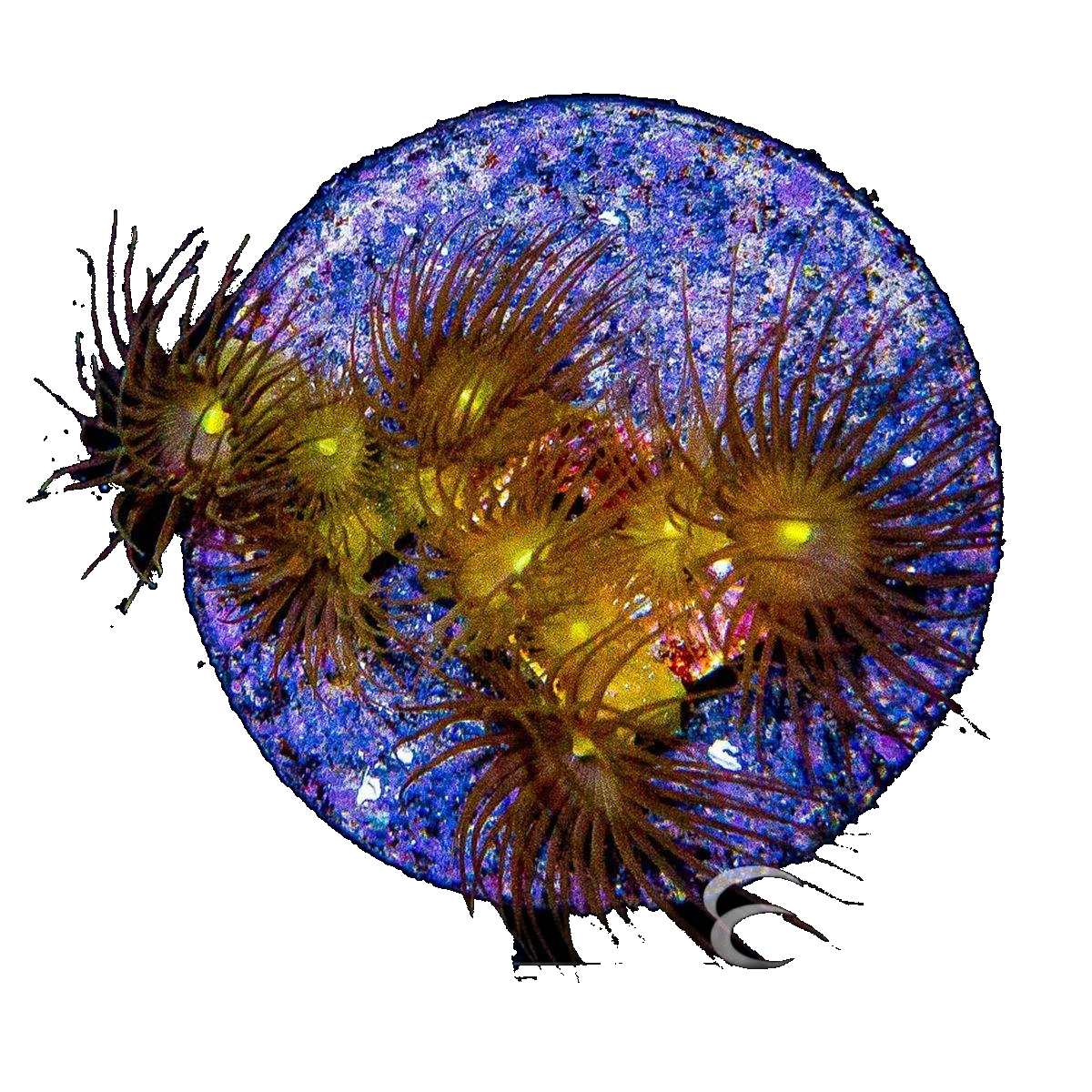
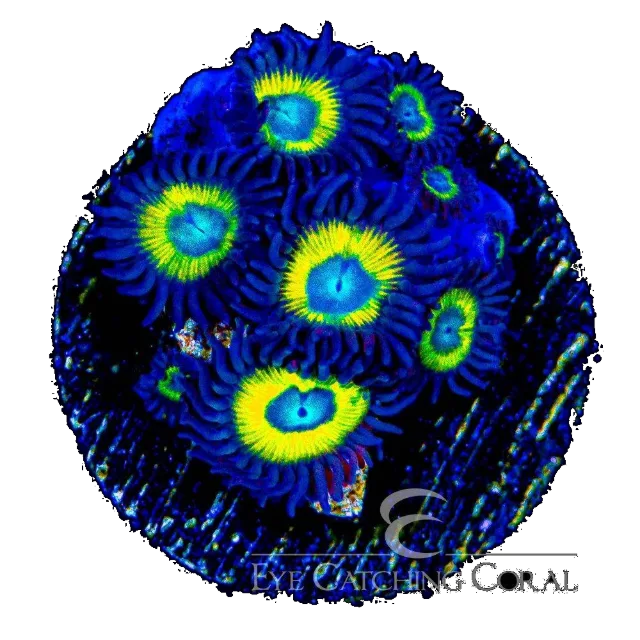
ECC Yellow Polyps are a hardy, beginner-friendly soft coral whose long, bright yellow tentacles move with the current. They adapt to lighting from low to high, need no special feeding, and spread quickly once established, so they are best kept on their own rock to prevent overgrowth.
Quick facts
Handling caution: Contains palytoxin-like compounds; avoid skin contact and never handle with open cuts
Identity
- Also known as
- Yellow Colonial Polyps; Colonial Yellow Polyps; Sea Mat
- Synonyms
- Hydrozoanthus gracilis
- Environment
- Saltwater
- Native to
- Indo-Pacific
- Habitat
- Shallow reef environments, encrusting rock, sponges, gorgonians and hydroids under ledges and in crevices with moderate light and moderate water movement
- Sourcing
- Aquacultured
- Conservation
- Not Evaluated
Care
- Care level
- Easy
- Coral type
- Zoanthid
- Temperament
- Peaceful
- Growth form
- Colonial polyps
- Adult size
- 0.3 – 0.5 in (0.6 – 1.3 cm)
- Spread
- 12 in (30 cm)
- Growth rate
- Fast
- Placement
- Middle
Water
- Temperature
- 74 – 80 °F (23 – 27 °C)
- pH
- 8.1 – 8.4
- dKH
- 8 – 12 dKH
- Salinity
- 1.023 – 1.025 SG
- PAR
- 30 – 150 PAR
- Flow
- Moderate
- Light
- Medium
Reef care
- Nutrient preference
- Medium
- Alk/Ca uptake
- Low
- Target feeding
- Beneficial
- Give it room
- 4 in (10 cm)
- Colors
- Yellow
Feeding & breeding
- Diet
- Carnivore
- Foods
- Frozen, Live, Micro-pellets, Coral food, Zooplankton
- Propagation
- Fragging
Something wrong or missing? Submit a correction
Care guide
Overview
ECC Yellow Polyps are an aquacultured strain of Parazoanthus gracilis, a fast-spreading colonial zoanthid encrusting rock in a mustard-to-bright-yellow mat. Polyp size and hue shift with light intensity, and the colony budds quickly across its base rock. Best mounted alone on a frag plug, well clear of slower corals, given moderate flow and occasional meaty feedings.
Care
This zoanthid tolerates a wide range of lighting from low to fairly high intensity, though color and polyp size shift noticeably with light strength: dimmer conditions produce larger, mustard-toned polyps while brighter light yields smaller, more intensely yellow ones. Moderate, randomized flow keeps detritus from settling among the polyps without closing them down. It spreads readily across rockwork once settled, so isolating the colony on its own rock or frag plug prevents it from overtaking neighboring corals.
Placement & acclimation
Acclimate gradually to aquarium lighting, starting in a lower-light or shaded spot before moving to the intended position, since sudden intense light can cause polyps to stay closed. Mount frags on a small rock or plug rather than directly onto display rockwork, allowing the colony to be relocated or removed if it grows too aggressively. Place at mid-tank height with moderate, indirect flow so polyps stay extended.
Feeding
Regular feeding of small meaty and planktonic foods such as brine shrimp, cyclops, and mysis speeds growth and improves coloration, since this genus relies less on zooxanthellae than many other zoanthids. Powdered or liquid coral foods and finely divided frozen preparations are readily accepted a few times a week. Some specimens will even take flake food broken into small pieces.
Neighbors
Because it spreads across substrate and can grow directly onto neighboring coral tissue, it is best kept isolated on a separate rock away from slower-growing corals. Faster or more aggressive stinging corals placed nearby can burn back its advancing edge, so leave a clear buffer zone. It poses little direct threat to fish or motile invertebrates.
Fragging
Propagated by cutting or fragging sections of the encrusting mat along with the attached rock, then allowing the fragment to heal and re-encrust a new surface. New polyps also bud naturally from the spreading tissue over time, gradually enlarging the colony without intervention.
Pests & problems
Colonies can decline or dissipate if hair algae establishes on the same rock, so keeping nuisance algae in check helps maintain a healthy mat. Polyps commonly retract after water changes or physical disturbance but usually reopen within hours to a couple of days once conditions stabilize. Watch for encroachment onto or by neighboring corals, which can cause tissue damage on either side.
Sources
More Zoanthids
Something wrong or missing? Submit a correction
In the community
Popular tanks using ECC Yellow Polyps
No public tanks are showcasing ECC Yellow Polyps yet.