
Coral
ECC Waving Hand Anthelia
Anthelia glaucaXeniidaeWaving hand corals
Add from My tanks →1 photos
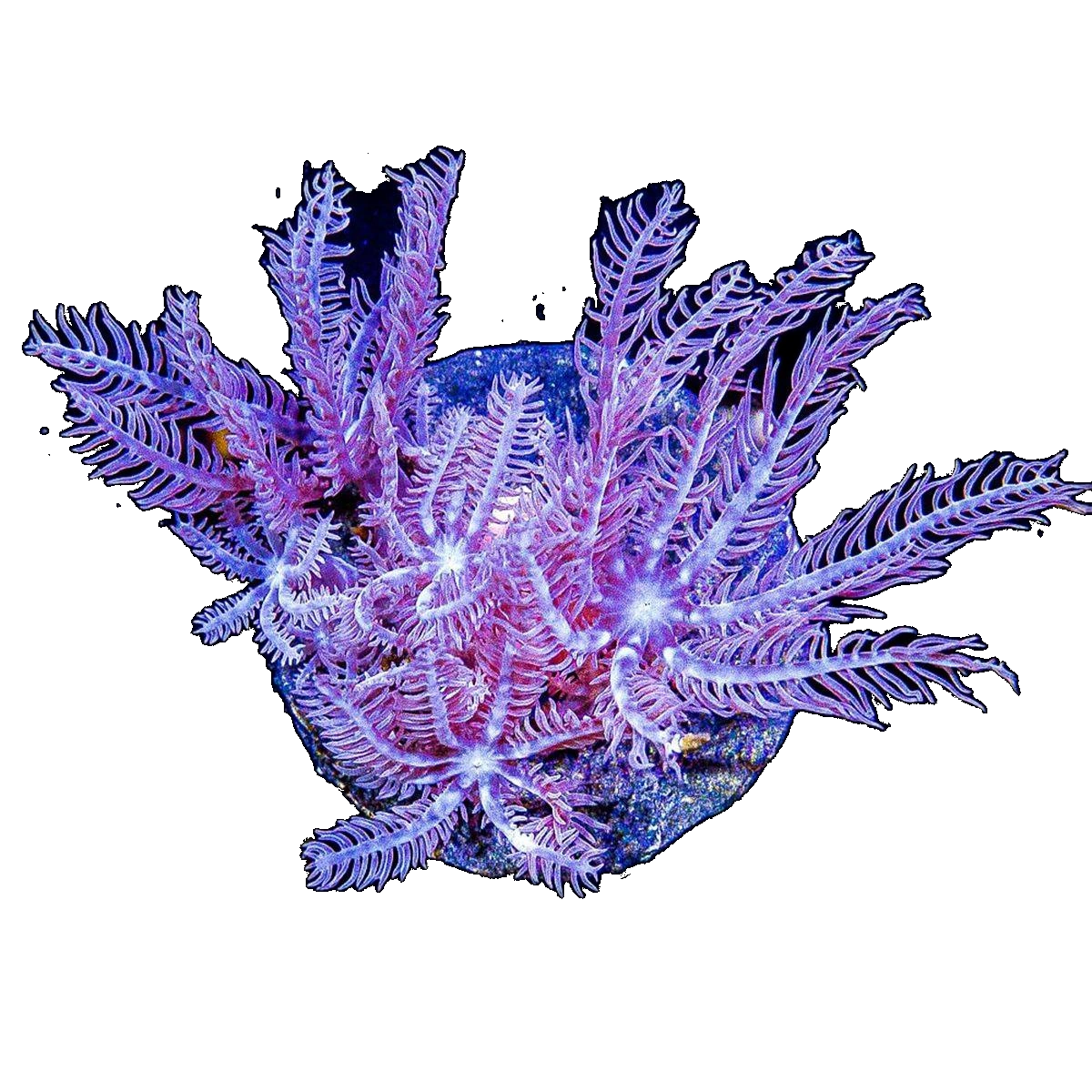
Waving Hand Anthelia is a hardy, fast-growing soft coral known for its long, feathery polyps and constant waving motion; the polyps extend from thick stalks and sway continuously in the current, adding natural movement to the aquarium. It spreads quickly across rock surfaces, so place it where its growth can be monitored and managed — ideally isolated on its own rock island; an easy coral preferring medium lighting (150-250 PAR) and moderate flow, peaceful but able to crowd out slow growers, primarily relying on photosynthesis with occasional amino acid feedings to enhance growth and coloration.
Quick facts
Identity
- Also known as
- Glove Coral; Pom-Pom Coral; Feather Star Coral
- Synonyms
- Anthelia grandiflora
- Environment
- Saltwater
- Native to
- Indonesia, Philippines, Solomon Islands, Papua New Guinea, Indian Ocean
- Habitat
- Shallow reef flats, lagoons, and reef slopes with strong water movement, typically in well-lit zones from near-surface to about 25 meters depth
- Sourcing
- Both
- Conservation
- Not Evaluated
Care
- Care level
- Easy
- Coral type
- Soft
- Temperament
- Semi-Aggressive
- Growth form
- Colonial polyps
- Adult size
- 1 – 6 in (2.5 – 15 cm)
- Spread
- 12 in (30 cm)
- Growth rate
- Fast
- Placement
- Low, Middle
Water
- Temperature
- 75 – 80 °F (24 – 27 °C)
- pH
- 8.1 – 8.4
- dKH
- 7.5 – 10 dKH
- Salinity
- 1.023 – 1.026 SG
- PAR
- 75 – 200 PAR
- Flow
- Moderate
- Light
- Medium
Reef care
- Nutrient preference
- Medium
- Alk/Ca uptake
- Low
- Target feeding
- Beneficial
- Give it room
- 4 in (10 cm)
- Colors
- Green, Cream, Blue, Brown
Feeding & breeding
- Diet
- Photosynthetic
- Foods
- Phytoplankton, Zooplankton, Coral food
- Propagation
- Fragging, Splitting
Something wrong or missing? Submit a correction
Care guide
Overview
Long feathery polyps rise from thick stalks and sway continuously in even mild current, creating a carpet of motion across the rockwork. This colonial soft coral spreads rapidly via creeping stolons, so most keepers confine it to an isolated rock island under medium lighting and moderate flow. It tolerates a wide parameter range and needs little target feeding, but its aggressive growth warrants regular monitoring around slower-growing neighbors.
Care
Anthelia is one of the easiest soft corals for a reef tank, tolerating a wide range of moderate lighting and flow as long as parameters stay stable. It grows as a creeping mat of stolons topped with long, feathery polyps that sway continuously in the current, giving constant motion to the aquascape. Because it spreads rapidly over bare rock, most keepers isolate it on its own rock island or frag plug separated from the main aquascape by a sand gap. Sudden swings in alkalinity, salinity, or light intensity can cause the polyps to stay closed for extended periods, so gradual acclimation is worthwhile.
Placement & acclimation
Acclimate new colonies to light gradually over one to two weeks, starting at lower intensity, since sudden increases can cause bleaching or prolonged polyp closure. Mount frags or colonies on an isolated rock or frag plug set apart from the main aquascape, using reef-safe cyanoacrylate gel or a small gap of sand to prevent stolons from spreading onto surrounding rockwork. Provide moderate, indirect flow strong enough to keep the polyps waving without battering the tissue.
Feeding
Most of its nutrition comes from zooxanthellae through photosynthesis, so no regular target feeding is required. Occasional broadcast feeding of phytoplankton, micro-plankton, or coral foods formulated for filter feeders once or twice a week can improve polyp extension and coloration. Avoid heavy feeding, since excess nutrients in the water column tend to fuel nuisance algae rather than benefit this coral directly.
Neighbors
Keep several inches of clearance between Anthelia and other sessile invertebrates, since its rapid stolon growth can overrun slower-growing neighbors and its own tissue is easily damaged by stinging corals or grazing fish and crabs. It pairs well with other soft corals, mushrooms, and zoanthids that tolerate similar moderate light and flow. Avoid placing it near stony corals with long sweeper tentacles, which can sting and damage the thin tissue.
Fragging
Anthelia is among the simplest soft corals to frag, requiring only sharp scissors, a scalpel, or a razor blade rather than specialized tools. Cut a section of the stolon mat with attached polyps and affix it to a new frag plug or rock with cyanoacrylate gel or by wedging it into a crevice. Frags taken from healthy, actively spreading colonies establish and begin producing new stolons within a few weeks.
Pests & problems
Prolonged polyp closure is usually a sign of unstable water chemistry, poor flow, or a recent lighting change rather than disease. Bleaching can occur if lighting is increased too quickly after introduction, so a gradual acclimation period of one to two weeks is recommended. Pest hitchhikers are uncommon on this genus, but new frags should still be dipped before introduction to avoid transferring pests from other corals on the same rock.
Sources
Something wrong or missing? Submit a correction
In the community
Popular tanks using ECC Waving Hand Anthelia
No public tanks are showcasing ECC Waving Hand Anthelia yet.