
Coral
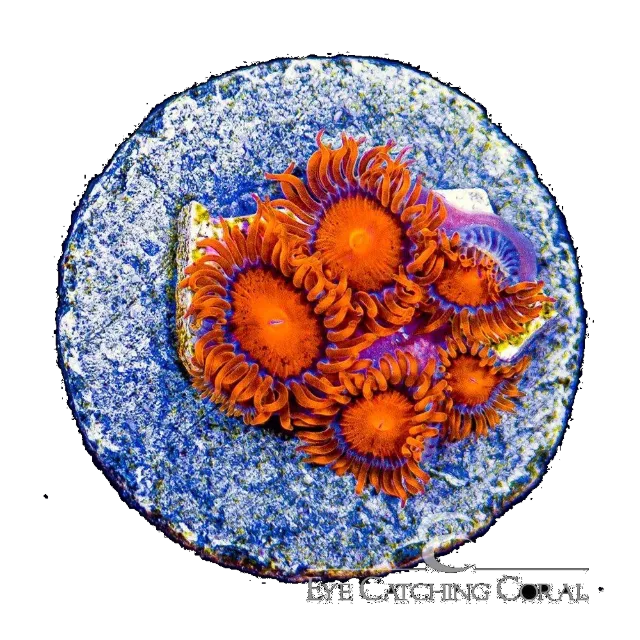
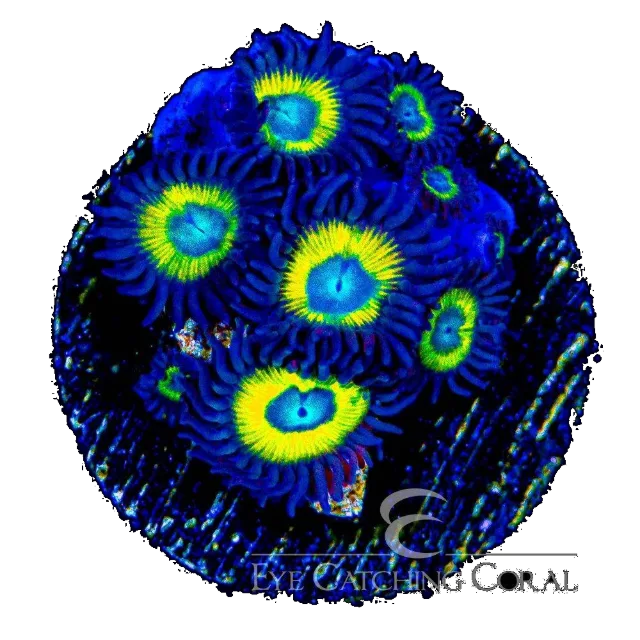
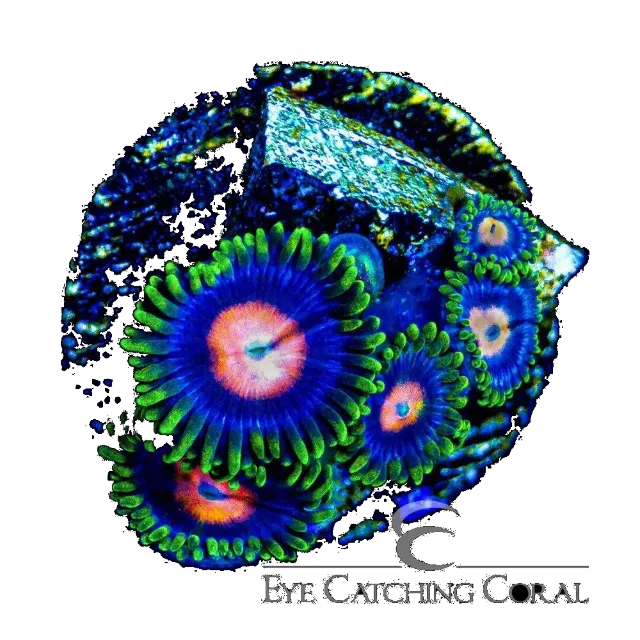
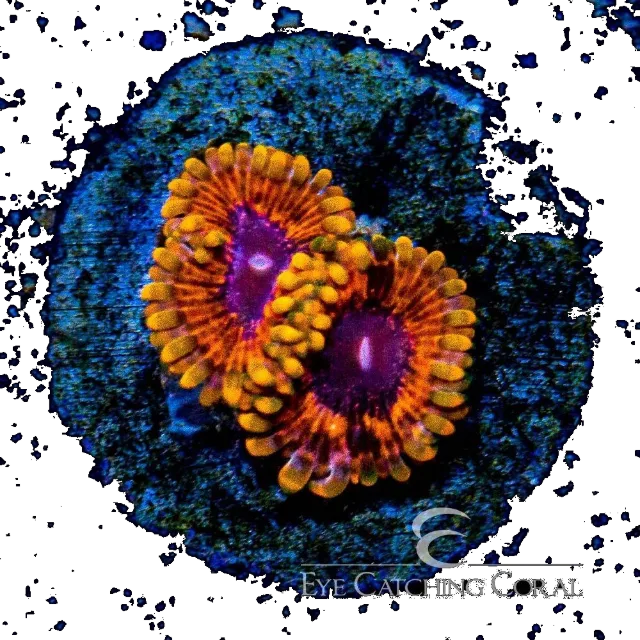
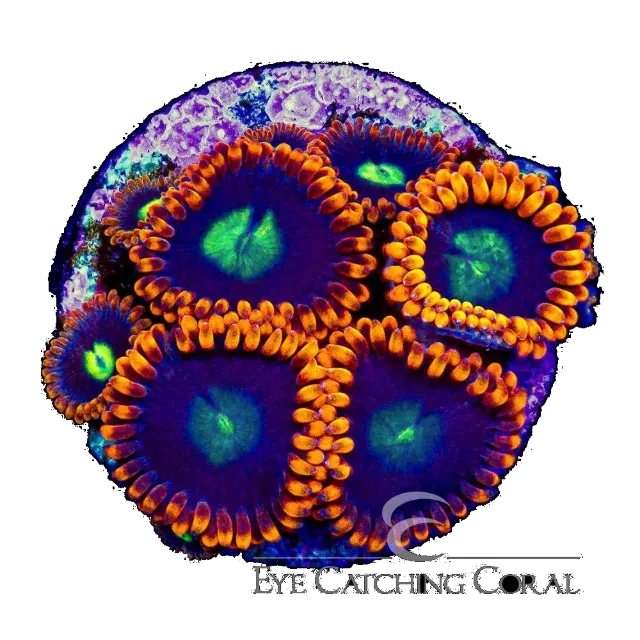
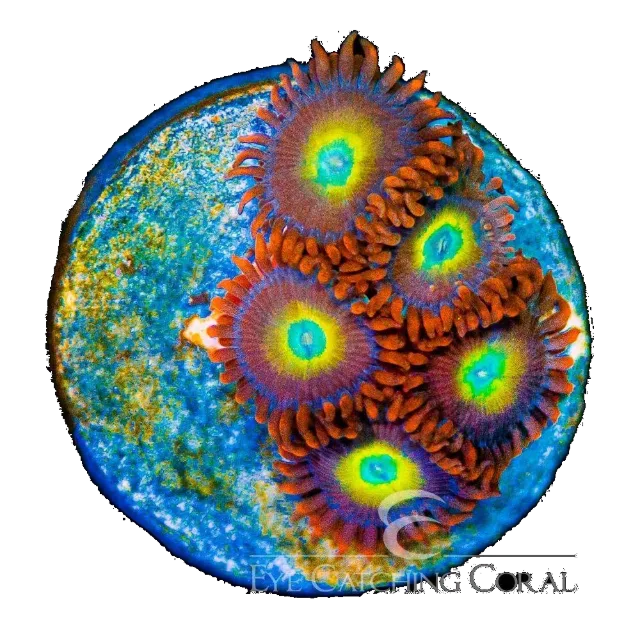
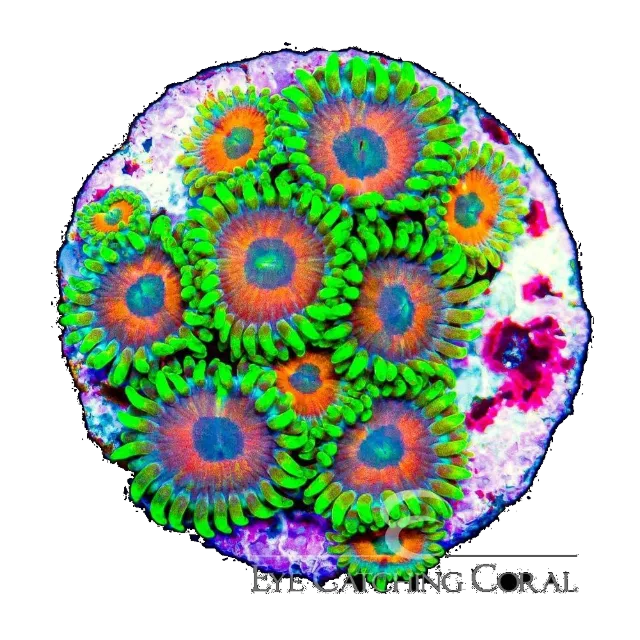
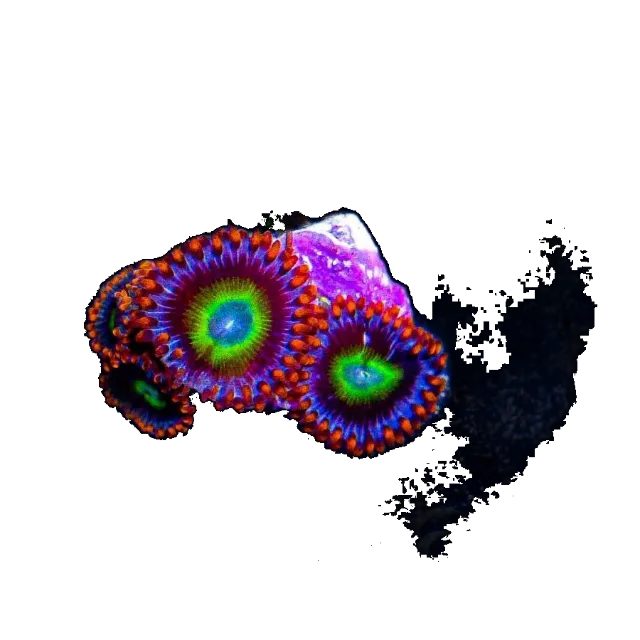
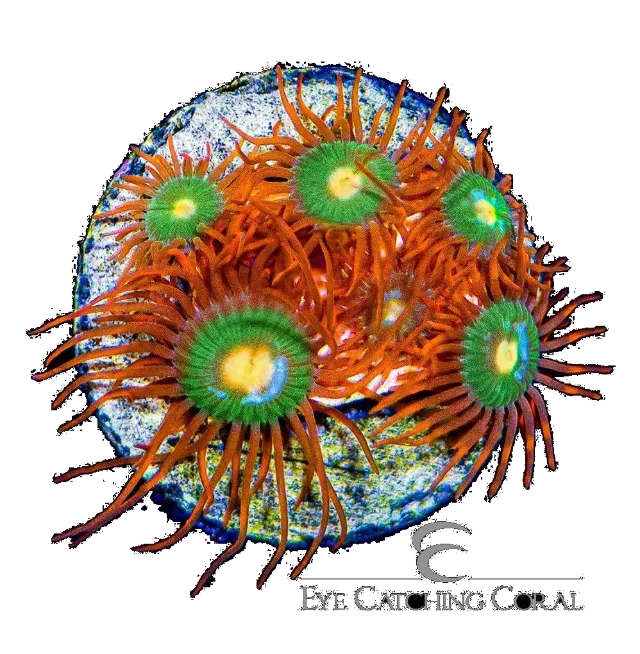
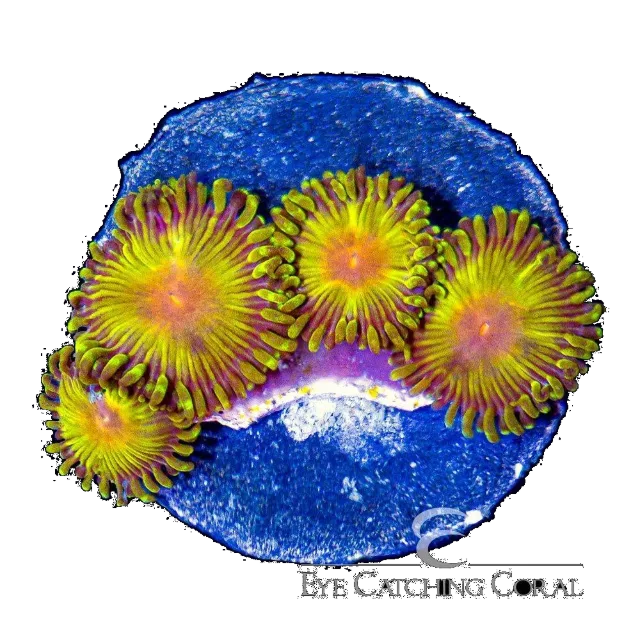
ECC Sunburst Zoanthid
Zoanthus sp.ZoanthidaeZoanthids
Add from My tanks →1 photos
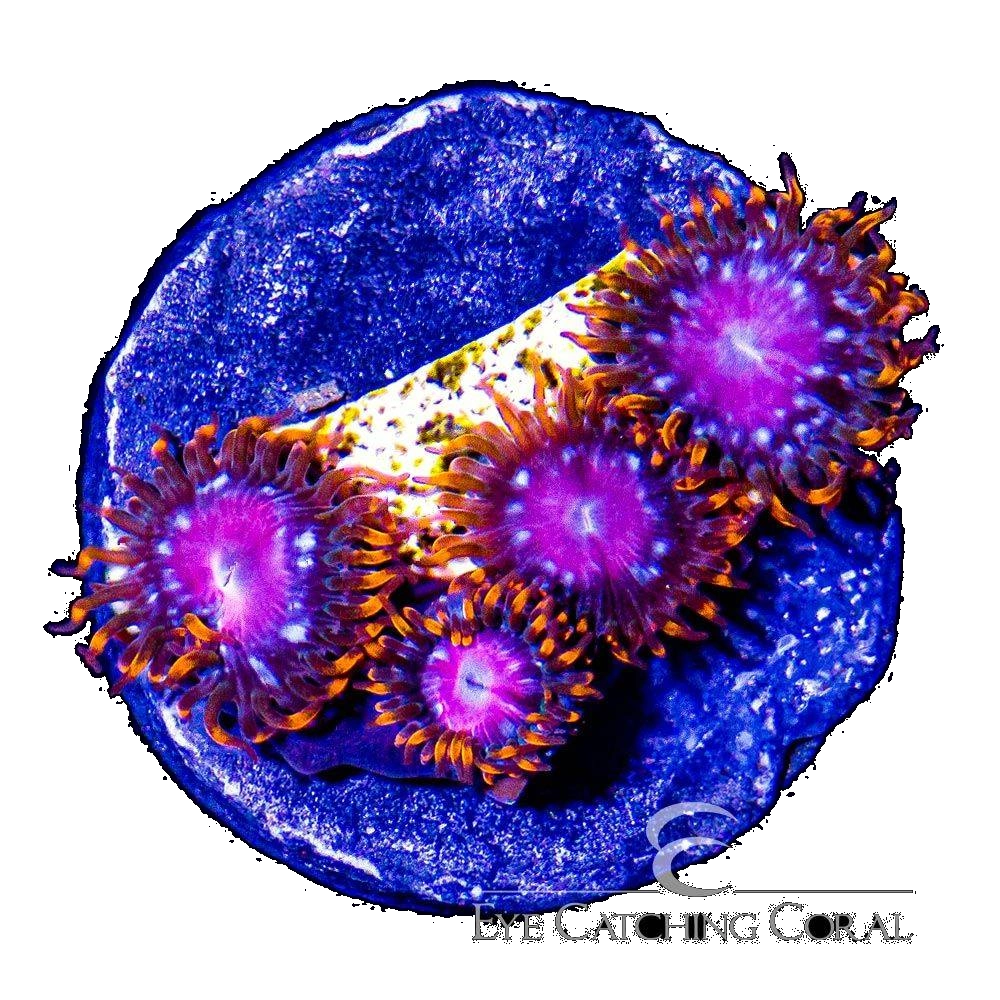
The ECC Sunburst Zoanthid (Zoanthus sp.) is an easy-to-care-for soft coral with bright, sun-inspired coloration. It is a peaceful coral suited to low to medium light (75-250 PAR) and moderate flow, placed on rockwork where it can spread and add bold color to a wide range of reef aquariums.
Quick facts
Handling caution: May contain palytoxin; wear gloves and eye protection when handling or fragging
Identity
- Also known as
- Sunburst zoa; sunburst button polyp
- Synonyms
- Palythoa sp. (often confused, but distinct genus)
- Environment
- Saltwater
- Native to
- Indo-Pacific, Caribbean, tropical reefs worldwide
- Habitat
- Shallow reef flats, tide pools, and wave-swept rocky shorelines with high light and periodic exposure to air at low tide
- Sourcing
- Aquacultured
- Conservation
- Not Evaluated
Care
- Care level
- Easy
- Coral type
- Soft
- Temperament
- Peaceful
- Growth form
- Colonial polyps
- Adult size
- 0.5 – 1 in (1.3 – 2.5 cm)
- Spread
- 12 in (30 cm)
- Growth rate
- Fast
- Placement
- Low, Middle
Water
- Temperature
- 75 – 78 °F (24 – 26 °C)
- pH
- 8.1 – 8.4
- dKH
- 8 – 9.5 dKH
- Salinity
- 1.025 – 1.026 SG
- PAR
- 75 – 150 PAR
- Flow
- Moderate
- Light
- Medium
Reef care
- Nutrient preference
- Medium
- Alk/Ca uptake
- Low
- Target feeding
- Beneficial
- Give it room
- 2 in (5.1 cm)
- Colors
- Green, Orange, Yellow, Purple, Pink, Blue, Multicolor
Feeding & breeding
- Diet
- Photosynthetic
- Foods
- Coral food, Zooplankton, Phytoplankton
- Propagation
- Fragging
Something wrong or missing? Submit a correction
Care guide
Overview
ECC Sunburst Zoanthid is a Zoanthus sp. colony bearing warm yellow-to-orange polyps with a radiating central pattern. It encrusts over rock under low to medium light and moderate flow, tolerating the wide swings in water chemistry typical of a mixed reef. Budding is asexual, so colonies expand steadily once settled on a dedicated rock space.
Care
Zoanthids are among the most forgiving corals available to reef keepers, tolerating a wide swing in light, flow, and water chemistry that would stress more delicate species. Colonies encrust over rock rather than growing upward, so they need lateral space to spread without crowding neighboring corals. New acquisitions should be acclimated to lighting gradually over one to two weeks, since a sudden jump in intensity can cause bleaching or polyp retraction.
Placement & acclimation
Frags are typically mounted onto rock or plugs with reef-safe epoxy or cyanoacrylate gel in a spot with gentle to moderate flow. Introduce new colonies at lower light levels than the target placement and increase exposure gradually over one to two weeks to prevent bleaching. Position away from aggressive stony corals to avoid tissue damage during the encrusting phase.
Feeding
Most of their nutrition comes from photosynthetic zooxanthellae housed in their tissue, so direct feeding is optional rather than essential. Occasional target feeding with fine zooplankton or coral food can boost polyp size and coloration, especially in low-nutrient systems. Broadcast feeding of the tank with phytoplankton also benefits colonies indirectly by supporting overall system productivity.
Neighbors
Zoanthids lack sweeper tentacles and generally do not sting neighboring corals, making them easy to mix with other soft corals and LPS. Faster-growing morphs can eventually overrun slower corals through sheer encroachment, so leave a buffer zone or place them on a dedicated rock island. Avoid direct contact with corals that do sting, such as some LPS or anemones, since zoanthid tissue can be damaged even though it is not itself aggressive.
Fragging
Colonies are fragged by cutting the connective mat between polyps with a sharp blade or scissors, ideally leaving several polyps per frag for faster recovery. Cutting should always be done underwater or with the rock submerged to avoid aerosolizing any palytoxin, and protective gloves and eyewear are recommended. Frags reattach to new substrate within one to two weeks under stable conditions.
Pests & problems
Polyps that stay closed for extended periods usually indicate flow that is too strong, lighting that was changed too quickly, or poor water quality rather than disease. Zoanthid-eating nudibranchs and spiders are the most common pest, and can decimate a colony if not caught early through close visual inspection of new frags. Bleaching from light shock is reversible if the colony is moved back to lower intensity promptly.
Sources
Varieties in the catalog
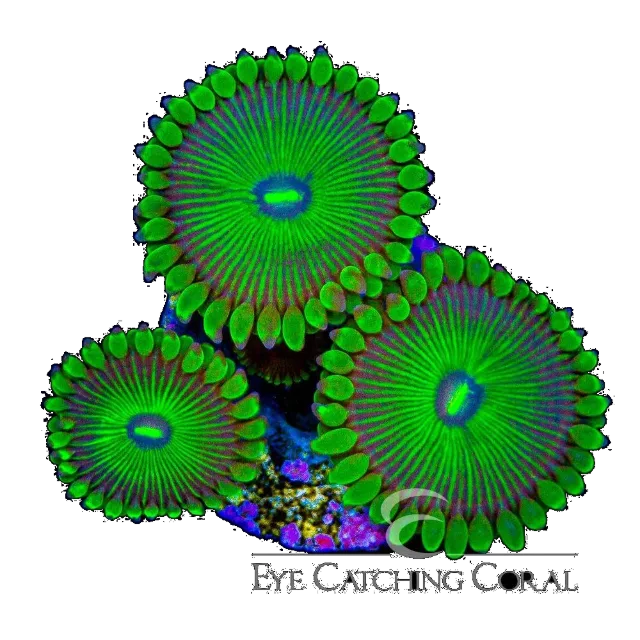
More Zoanthids
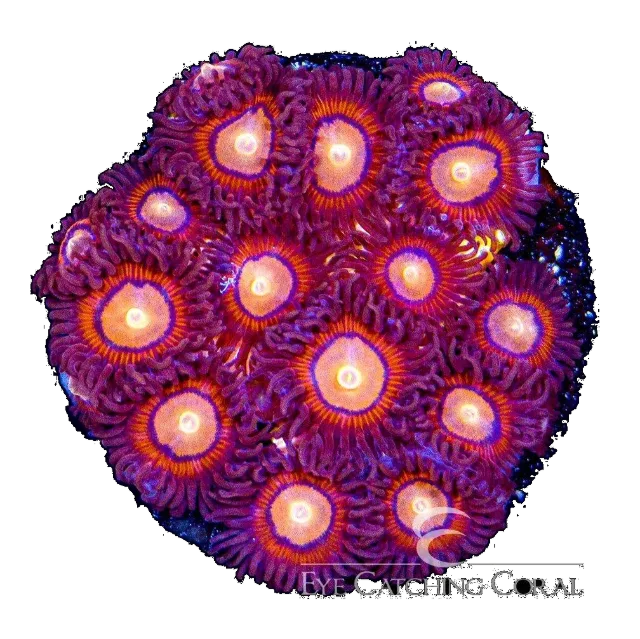
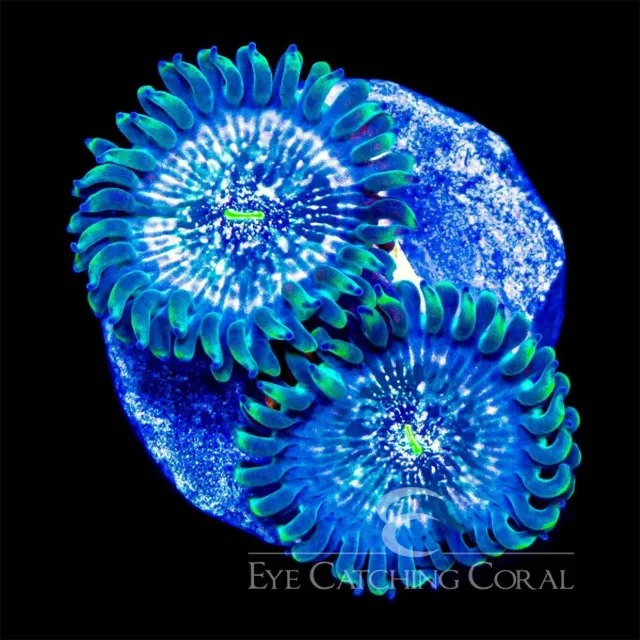
Something wrong or missing? Submit a correction
In the community
Popular tanks using ECC Sunburst Zoanthid
No public tanks are showcasing ECC Sunburst Zoanthid yet.