
Coral
ECC Electric Daisy Favia
Favia sp.MerulinidaeFavia corals
Add from My tanks →1 photos
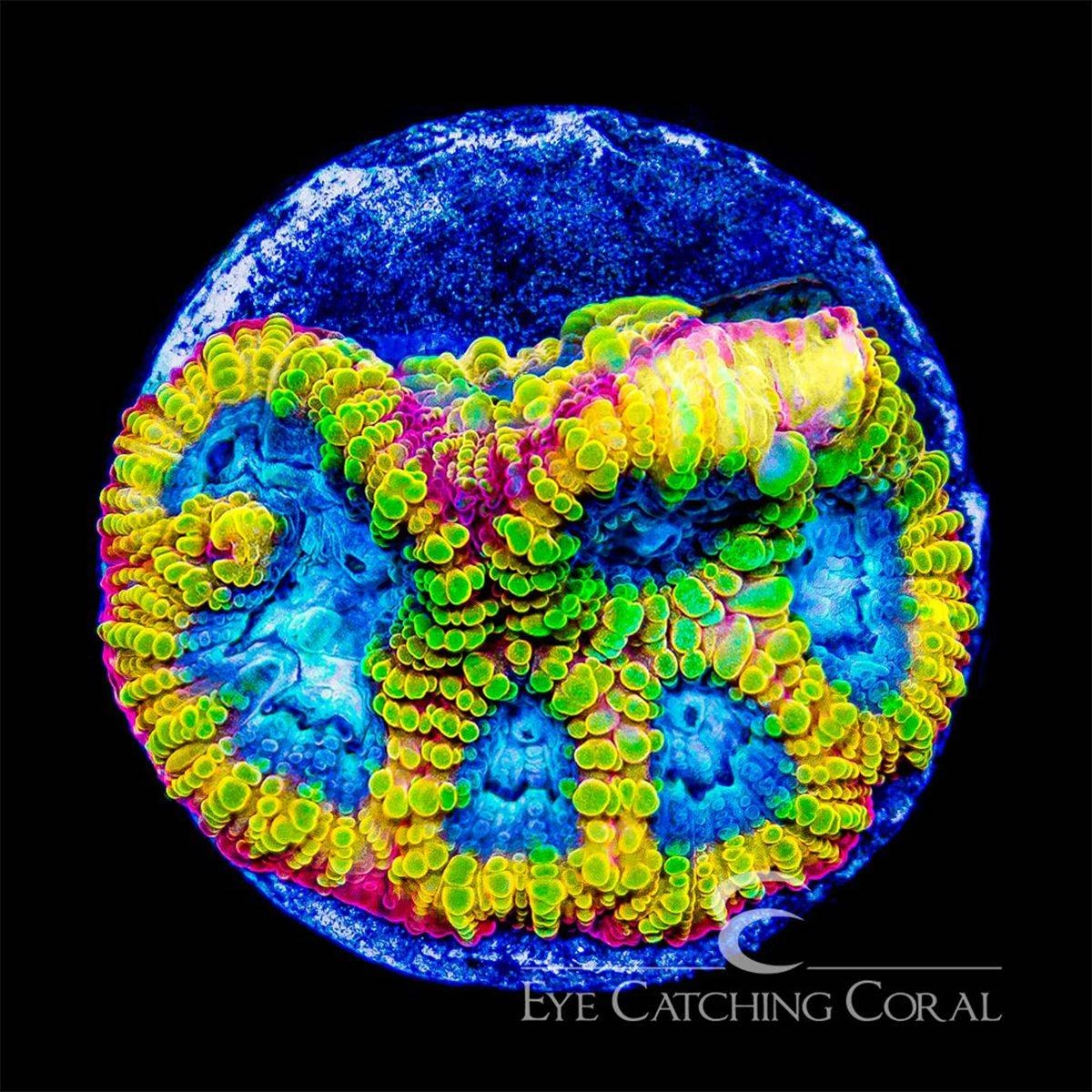
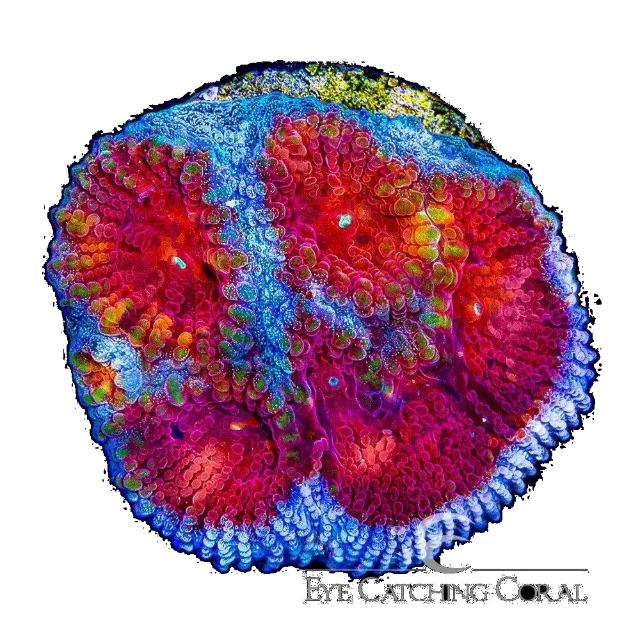
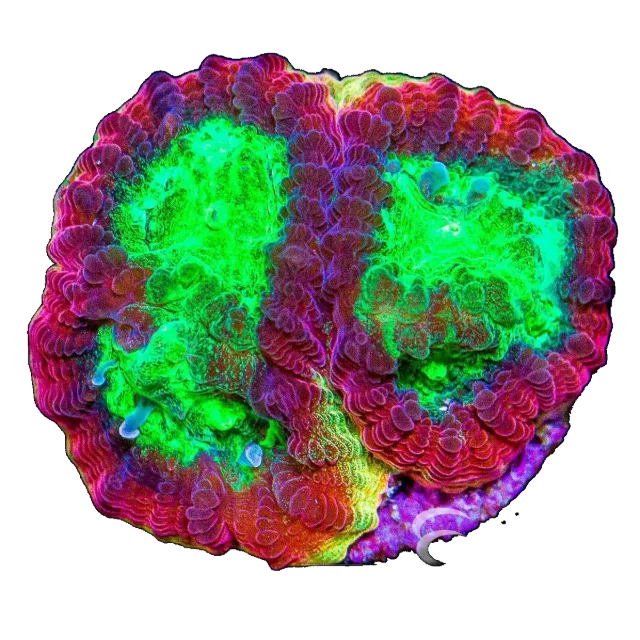
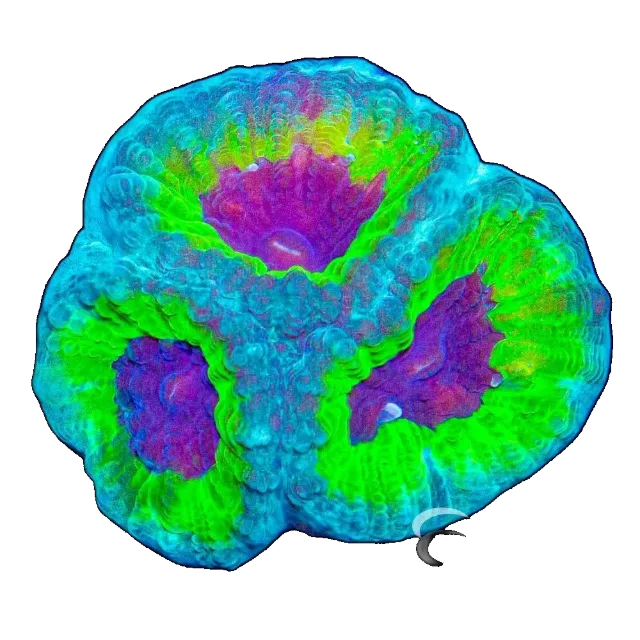
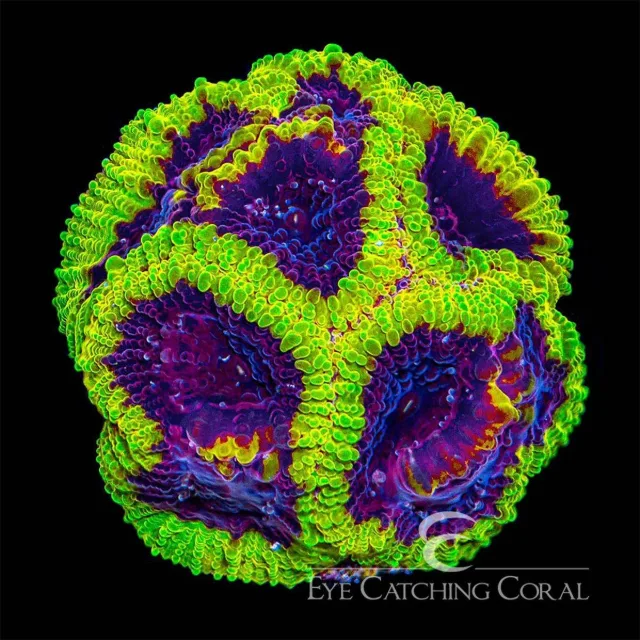
The ECC Electric Daisy Favia displays intense neon coloration with glowing yellow ridges, bright green eyes, and a vibrant blue-purple base. This high-contrast LPS coral brings bold color and a defined skeletal pattern to the reef, growing in an encrusting pattern under stable conditions with moderate light (150-250 PAR) and low to moderate flow; it is semi-aggressive and should be given space from neighboring corals.
Quick facts
Handling caution: Can sting via nighttime sweeper tentacles; wear gloves when handling frags due to sharp calcareous skeleton
Identity
- Also known as
- Brain coral; Pineapple coral; Moon coral
- Synonyms
- Favites (closely related, formerly grouped together)
- Environment
- Saltwater
- Native to
- Indo-Pacific, Red Sea
- Habitat
- Reef flats and slopes, typically in areas of moderate light and water movement
- Sourcing
- Aquacultured
- Conservation
- Not Evaluated
Care
- Care level
- Moderate
- Coral type
- LPS
- Temperament
- Semi-Aggressive
- Growth form
- Encrusting
- Adult size
- 0.8 – 8 in (1.9 – 20 cm)
- Spread
- 12 in (30 cm)
- Growth rate
- Slow
- Placement
- Low, Middle
Water
- Temperature
- 75 – 78 °F (24 – 26 °C)
- pH
- 8.1 – 8.4
- dKH
- 8 – 9.5 dKH
- Salinity
- 1.025 – 1.026 SG
- PAR
- 75 – 200 PAR
- Flow
- Low-Moderate
- Light
- Medium
Reef care
- Nutrient preference
- Medium
- Alk/Ca uptake
- Medium
- Target feeding
- Beneficial
- Give it room
- 4 in (10 cm)
- Colors
- Green, Red, Orange, Purple, Blue, Yellow, Multicolor
Feeding & breeding
- Diet
- Omnivore
- Foods
- Frozen, Coral food, Zooplankton
- Propagation
- Fragging
Something wrong or missing? Submit a correction
Care guide
Overview
Extends feeding tentacles after lights dim, revealing glowing yellow ridges, bright green eyes, and a blue-purple base beneath its daytime skeletal pattern. Growth stays encrusting and steady under moderate light and low to moderate flow. Being semi-aggressive, it needs open space from tankmates to avoid nighttime stinging contact.
Care
Favia is a hardy large polyp stony coral that tolerates a range of lighting and flow, making it a reasonable choice for reef keepers moving beyond softies into LPS. It does best under moderate lighting rather than intense light, since excessive PAR can cause fading or tissue recession over time. Stable alkalinity, calcium, and magnesium levels support steady encrusting growth, and new frags should be acclimated slowly by starting in a lower, shadier spot before moving upward.
Placement & acclimation
Mount frags on rubble rock or frag plugs using coral glue or epoxy, placing them on stable rockwork in the lower to middle sections of the tank away from other corals. Acclimate gradually to light by starting in a shadier position and moving the piece higher over several weeks if more intense lighting is desired. Leave at least three to four inches of open space around the colony to accommodate both growth and nighttime sweeper tentacles.
Feeding
Favia derives most of its energy from photosynthesis but responds well to occasional target feeding of small meaty foods such as mysis, chopped shrimp, or prepared coral blends. Feeding tentacles extend mainly after the lights dim, so offering food in the evening produces the best response. Regular feeding is optional but tends to speed growth and deepen coloration in mature colonies.
Neighbors
Favia is semi-aggressive and known for extending sweeper tentacles several inches at night, so it needs a few inches of clearance from neighboring corals, especially slower-growing or more delicate species. It is best kept away from SPS and other corals sensitive to stinging contact. Give newly placed frags room to grow into, since colonies expand outward as they encrust.
Fragging
Colonies are fragged by cutting or cracking the shared skeleton between corallites with a bandsaw, angle grinder, or bone shears, ideally leaving several polyps per fragment for faster recovery. Cut fragments should be given time to heal on a stable surface with gentle flow before returning to normal placement. Fragging is most successful when done on healthy, well-fed colonies rather than stressed or recently acquired specimens.
Pests & problems
Tissue recession or bleaching usually points to excessive light or unstable water chemistry rather than disease. Brown jelly infection can take hold quickly if tissue is damaged by pests, stinging neighbors, or physical injury during handling, so any wounded areas should be watched closely. Flatworms and Acropora-eating flatworm relatives occasionally target favia colonies, and a dip after acquiring frags helps catch hitchhikers early.
Sources
Varieties in the catalog
Something wrong or missing? Submit a correction
In the community
Popular tanks using ECC Electric Daisy Favia
No public tanks are showcasing ECC Electric Daisy Favia yet.