
Coral
ECC Cookies & Cream Cauliflower Coral
Botryocladia sp.RhodymeniaceaeMacroalgae
Add from My tanks →1 photos
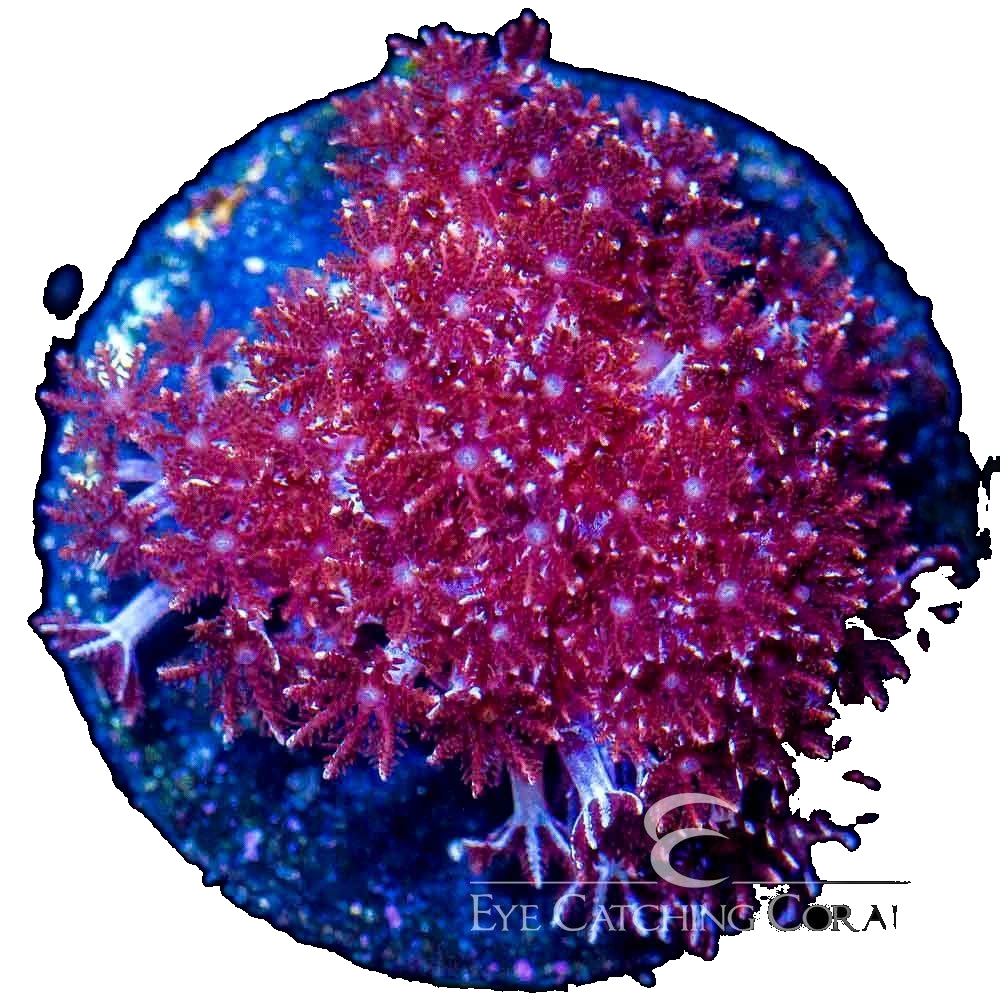
A red macro algae (Botryocladia sp.) with distinctive grape-like clusters, aquacultured by Eye Catching Coral; prized for display refugiums and as a natural food source for herbivorous fish, while helping with nutrient export.
Quick facts
Identity
- Also known as
- Red Grape Algae; Red Grape Kelp; Sea Grapes; Grape Macroalgae
- Synonyms
- Botryocladia occidentalis; Botryocladia botryoides; Botryocladia skottsbergii
- Environment
- Saltwater
- Native to
- Tropical and subtropical oceans worldwide, including Caribbean, Mediterranean, and Atlantic coastal waters
- Habitat
- Attaches to rock and shell substrate in coastal and reef waters, often in shaded or moderately lit areas with some water movement
- Sourcing
- Aquacultured
- Conservation
- Not Evaluated
Care
- Care level
- Easy
- Temperament
- Peaceful
- Growth form
- Branching
- Adult size
- 2 – 6 in (5.1 – 15 cm)
- Spread
- 6 in (15 cm)
- Growth rate
- Slow
- Placement
- Middle
Water
- Temperature
- 73 – 81 °F (23 – 27 °C)
- pH
- 8.0 – 8.4
- dKH
- 8 – 12 dKH
- Salinity
- 1.023 – 1.026 SG
- PAR
- 20 – 100 PAR
- Flow
- Low-Moderate
- Light
- Medium
Reef care
- Nutrient preference
- Medium
- Target feeding
- Not needed
- Give it room
- 4 in (10 cm)
- Colors
- Red, Pink
Feeding & breeding
- Diet
- Photosynthetic
- Foods
- Coral food
- Propagation
- Cuttings
Something wrong or missing? Submit a correction
Care guide
Overview
Clusters of translucent, grape-like vesicles bud from short branching stalks, slowly filling rockwork without turning invasive. Nutrient uptake happens directly through the bladders, so moderate nitrate and phosphate levels keep them plump, while moderate lighting and gentle flow prevent bleaching or tearing. Best housed in a refugium or fed off to herbivores, since grazing fish strip it quickly.
Care
This red macroalgae forms clusters of fluid-filled, grape-like vesicles on short branching stalks and holds up well in nano and reef tanks without becoming invasive. It does best under moderate lighting, since intense light can bleach or burn the delicate bladders, while very dim conditions slow growth and dull the color. Moderate water flow keeps the vesicles clean and intact without tearing them loose, and it tolerates the same temperature and pH range as most tropical reef setups.
Placement & acclimation
Attach fragments to live rock or rubble with cyanoacrylate gel glue or a small rubber band, positioning the holdfast in a spot with moderate rather than intense light. Acclimate gradually to tank lighting over one to two weeks since a sudden jump in intensity can bleach the vesicles. Placement in the midground or a shaded rock crevice shows off the grape-like clusters while protecting them from the most direct light.
Feeding
Nutrition comes almost entirely from nitrate and phosphate absorbed directly through the vesicle membranes rather than through roots or rhizoids anchored in substrate. Modest, steady nutrient levels keep the bladders plump and richly colored, while very lean systems can cause them to shrink or lose color over time. Occasional trace supplementation of iron and iodine is reported to help maintain vigor in low-nutrient reef systems.
Neighbors
Herbivorous fish and grazing invertebrates will readily eat the vesicles, so this algae is best confined to a refugium or sump if the goal is long-term display rather than fish food. It grows harmlessly alongside corals and live rock and does not sting or compete aggressively for space, though its brittle stalks can be dislodged by boisterous tankmates. Many hobbyists deliberately grow it as a renewable supplemental food source, trimming portions for herbivores in the main display.
Fragging
Propagation is simple: healthy branches can be cut or pinched off and reattached to a new piece of rock or rubble with glue or thread. Fragments left loose on the sand bed or tucked into rockwork will often reattach and continue growing on their own. Growth is slow to moderate, so regular but light trimming is usually enough to control spread and generate new frags.
Pests & problems
The main problem in captivity is bleaching or disintegration from excessive light or elevated temperature, which causes the vesicles to fade to white or rust and eventually rupture. Rough handling or strong flow can knock loose individual bladders, though detached fragments often reattach to rock on their own. Otherwise the alga is resilient and rarely troubled by disease when nutrient and light levels are kept stable.
Sources
Something wrong or missing? Submit a correction
In the community
Popular tanks using ECC Cookies & Cream Cauliflower Coral
No public tanks are showcasing ECC Cookies & Cream Cauliflower Coral yet.