
Marine Invertebrates
ECC Blue Plating Photosynthetic Sponge
Porifera sp.ThorectidaeSponges
Add from My tanks →1 photos
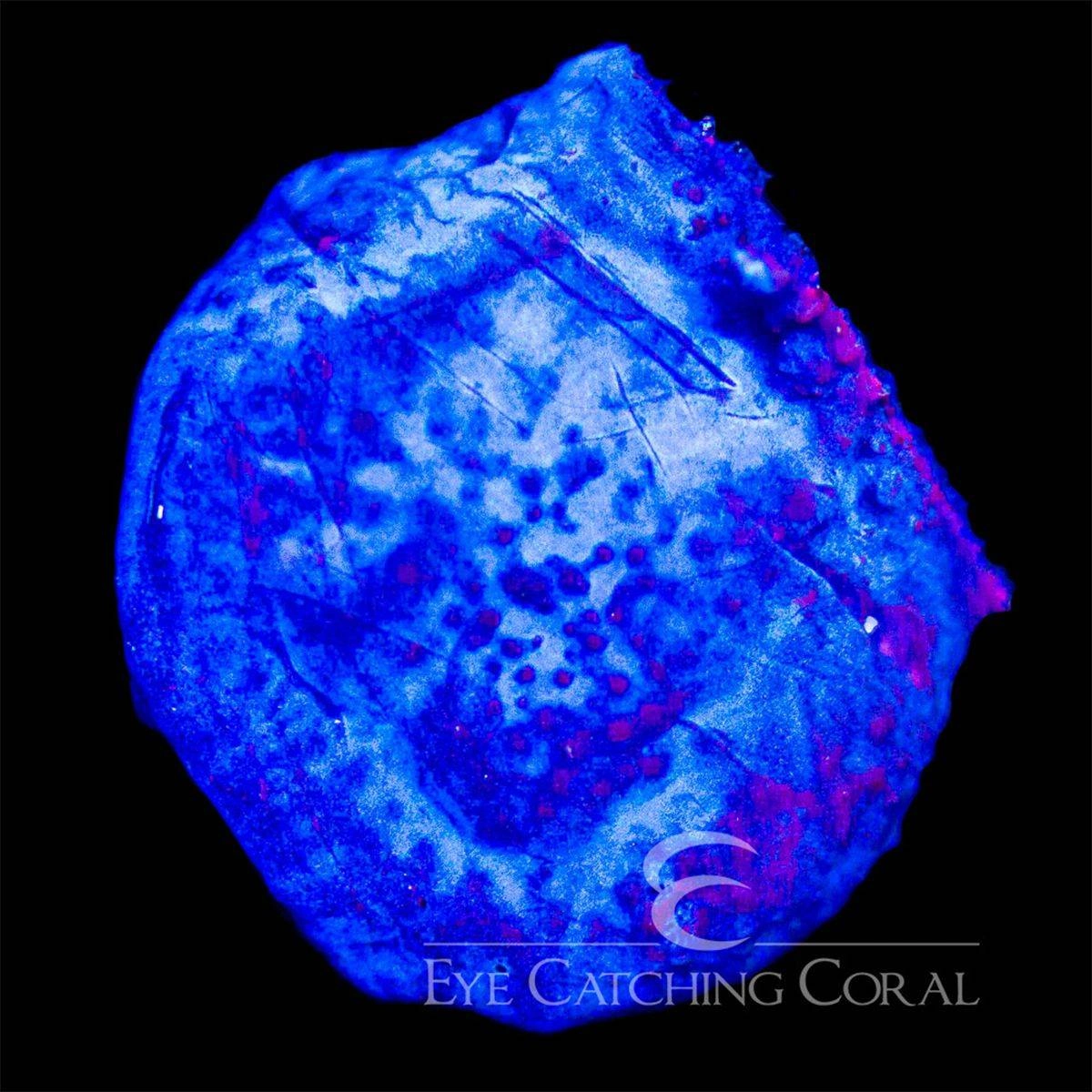
The ECC Blue Plating Photosynthetic Sponge is a rarely seen, eye-catching addition to a reef tank; its deep blue color and smooth, plating growth bring a fresh twist to aquascaping. An easy, fast-growing sponge with one simple rule — never expose it to air; as long as it stays submerged during acclimation and placement, place it on rockwork in the middle regions with moderate, indirect flow, and it primarily photosynthesizes while benefiting from live phytoplankton feedings.
Quick facts
Identity
- Also known as
- Blue Photosynthetic Sponge; Blue Plating Sponge; Blue & Red Plating Sponge
- Synonyms
- Porifera sp.
- Environment
- Saltwater
- Native to
- Indo-Pacific
- Habitat
- Shaded reef overhangs, crevices, and vertical rock faces in shallow to moderate depth reef environments with steady flow
- Sourcing
- Aquacultured
- Conservation
- Not Evaluated
Care
- Care level
- Easy
- Temperament
- Peaceful
- Adult size
- 0.8 – 6 in (1.9 – 15 cm)
- Lifespan
- 2 – 5 yrs
- Min tank
- 20 gal (76 L)
- Growth rate
- Fast
- Placement
- Middle
Water
- Temperature
- 75 – 78 °F (24 – 26 °C)
- pH
- 8.1 – 8.4
- dKH
- 8 – 9.5 dKH
- Salinity
- 1.025 – 1.026 SG
- Flow
- Moderate
Behavior & compatibility
- Social
- Colony
- Aggression to own kind
- Low
- Active
- Daytime
- Reef safe
- Yes
- Invert safe
- Yes
- Shrimp safe
- Yes
- Population boom risk
- Low
Feeding & breeding
- Diet
- Photosynthetic
- Foods
- Phytoplankton, Coral food
- Breeding difficulty
- Not bred in captivity
- Sexing
- Not applicable; sponges do not display external sex differences and most aquarium specimens reproduce asexually via fragmentation
- Target feeding
- Beneficial
Something wrong or missing? Submit a correction
Care guide
Overview
Spreads across rockwork as a smooth, folded plating sheet in deep blue, encrusting shaded overhangs and vertical faces much like a plating Montipora. Growth is fast once settled, so give it clearance from neighboring corals. It relies mainly on symbiotic algae for nutrition, with occasional phytoplankton dosing as a supplement, and must never be exposed to air during handling.
Care
This sponge grows as a smooth, folded or plating sheet in a deep blue color and can spread quickly once settled on the rockwork. The single non-negotiable rule with any sponge is that it must never be exposed to air, even briefly during acclimation or placement, since trapped air bubbles inside its internal channels kill the surrounding tissue and can collapse the whole colony. Moderate, indirect flow keeps detritus from settling on its surface without physically stressing the tissue, and moderate lighting in the blue spectrum supports its symbiotic algae. Give it room to expand since fast growth in favorable conditions can lead to it overgrowing or shading slower neighbors.
Feeding
Most of its nutrition comes from photosynthetic symbionts, so direct feeding is not strictly required in a well-lit tank. It does benefit from a mature system with measurable dissolved organics and occasional dosing of phytoplankton or very fine plankton foods. Avoid large particulate foods intended for other filter feeders, since sponges take up nutrition at a much finer scale.
Tank mates
Keep a few inches of clearance between this sponge and stinging corals such as LPS with long sweeper tentacles or aggressive soft corals, since contact can damage its tissue. It is not aggressive toward tankmates itself, but its fast growth rate means it can eventually crowd or shade slower-growing corals if left unchecked. Trimming or refragging back the plating edges periodically helps manage its footprint in a mixed reef.
Health
The most common cause of death is accidental air exposure during acclimation, handling, or water changes, which introduces bubbles into the internal canal system and leads to tissue die-off that can spread through the whole colony. Bleaching can occur under excessive light or in nutrient-starved systems, while poor flow or sediment buildup can cause localized tissue recession or algae and cyanobacteria overgrowth on the surface. Improving flow and husbandry generally resolves early-stage decline if caught quickly.
Sources
Something wrong or missing? Submit a correction
In the community
Popular tanks using ECC Blue Plating Photosynthetic Sponge
No public tanks are showcasing ECC Blue Plating Photosynthetic Sponge yet.